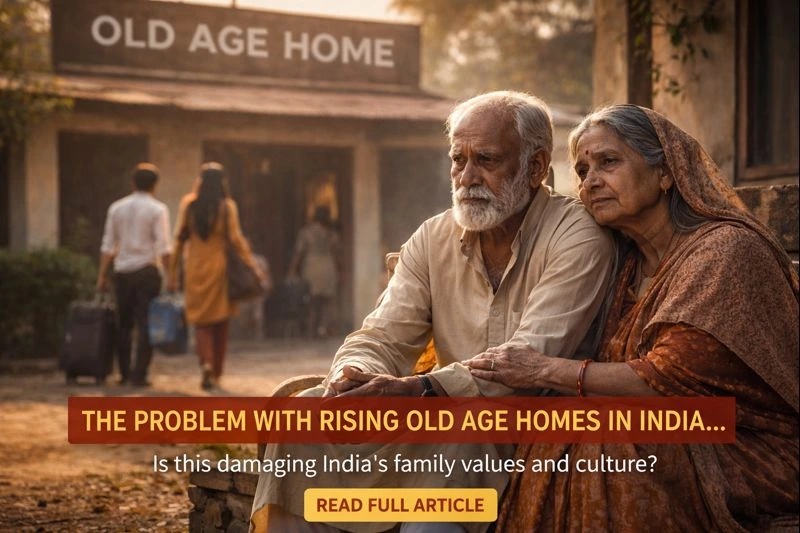
There was a time in India when aging parents were revered as living libraries — fountains of wisdom, history, values and tradition. Grandparents held an honored place in every household, from morning prayers to late-night family gatherings. Today, that age-old rhythm is changing. India, a country woven together by family bonds and cultural warmth, is quietly witnessing an unsettling shift, a growing dependence on old age homes.
This isn’t just a demographic shift. It is a social turning point — one that is reshaping the very soul of Indian family and cultural ethos.
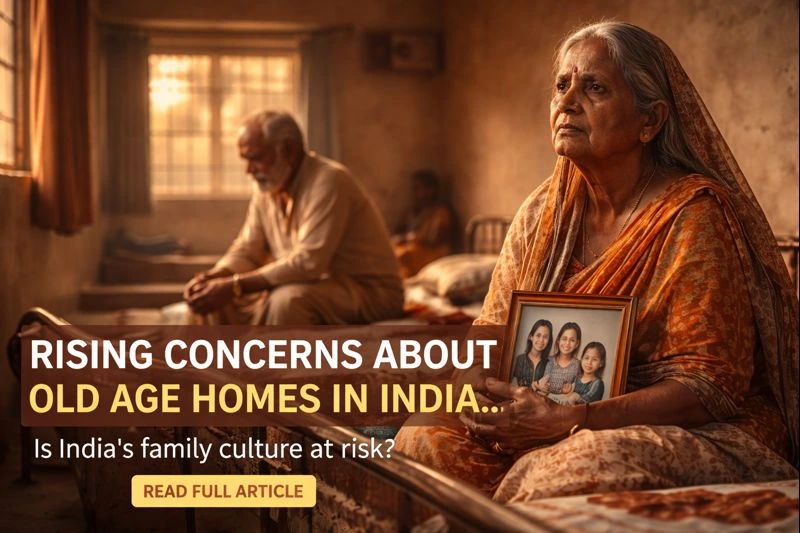
Why Are Old Age Homes Increasing in India?
Look around urban India today — the pace of life has become breathtakingly fast. Young couples move cities for better opportunities, shifting not just their homes, but their support systems. Nuclear families are replacing joint families. Career pressures, long work hours and distant job postings mean many children can’t physically be present for their aging parents.
But the rise of old age homes is not only about urbanization. It also reflects deep changes in mindset:
- Growing Individualism: The idea of personal freedom and self-fulfillment is no longer confined to the West. Many Indian households now prioritize individual aspirations over collective family responsibility.
- Economic and Time Constraints: With both partners working in many families, there simply isn’t time to provide round-the-clock care. Healthcare and caregiving can feel overwhelming without professional support.
- Perceived Better Care: Some believe that old age homes with trained staff and medical facilities offer better physical care than family members can provide. This belief drives decisions, especially when elderly parents have chronic health issues.
- Strained Relationships: Beyond physical necessities, emotional friction within families sometimes leads to distancing. Misunderstandings, unresolved conflicts or simply a lack of patience may push families to “choose” old age homes.
The result? A sharp increase in facilities catering to the elderly, not just in big cities like Mumbai, Bengaluru, Delhi and Chennai — but also in smaller towns.
Where Is the Issue Most Visible?
The increase in old age homes is a pan-India trend, but it is especially visible in:
- Metropolitan Cities: High cost of living, demanding jobs and long work commutes make elderly care at home challenging.
- Tier-2 and Tier-3 Towns: These places are experiencing cultural shifts faster than expected. Traditional joint family setups are thinning out as younger generations move to bigger cities.
- Border Areas and Smaller Villages: As young adults migrate for education and employment, elderly parents are left behind with limited community support.
The common thread is clear, wherever there’s a disconnect between elders and their families — whether due to career demands or migration — the presence of old age homes increases.
A Cultural Fault Line: How Old Age Homes Affect Indian Family Bonds
This isn’t simply about placement of seniors in care facilities. This is about the erosion of something deeper — the foundation of Indian family bonds.
India’s culture has always rested on intergenerational relationships. Grandparents teach children about folklore, festivals, values, respect and resilience. Parents and children are embedded in daily routines that build emotional connection, mutual dependency and lifelong care.
When elderly parents are sent to old age homes, this rhythm is disrupted.
Here’s how this issue is damaging social and family culture:
1. Loss of Emotional Anchors
Elders often act as stabilizers during family conflicts or emotional turbulence. Their presence reminds younger generations of patience, history and long-term perspective. Removing them weakens these emotional anchors.
2. Weakening Value Transmission
Without close interaction, kids grow up knowing elders more as a concept than as lived experience. Stories about festivals, traditions, sacrifices and family history lose depth. Values are no longer passed through lived moments — only through words.
3. Growing Sense of Loneliness
Old age homes, even the best ones, can’t replicate the warmth of a family environment. Seniors often face loneliness, sadness and a sense of abandonment — emotional states deeply linked to deteriorating physical health.
4. Shifting Definitions of Duty
In Indian culture, caring for aging parents is considered sacred — a lifelong promise. When this responsibility is outsourced, it slowly changes how future generations view duty, compassion and familial respect.
Is There a Balance Between Care and Independence?
The answer isn’t simple. Not every family can provide professional medical care around the clock. But the question worth asking is: Can we create solutions that protect dignity without sacrificing family bonds?
Some ideas are emerging:
Community-Based Elder Care
In many neighborhoods, groups of families are forming support systems — rotating caregiving duties, sharing meals with elders and organizing health check-ups together. This gives seniors company and reduces individual burden.
Flexible Work Policies
If companies support flexible hours, remote work or caregiver leaves, adult children can participate more actively in elder care.
Home Assistance Services
Professional caregivers who visit homes can help with medical needs, mobility support and daily chores — without seniors having to leave their familiar environment.
Senior Social Clubs
Elders need emotional connection too. Clubs where they can interact with peers — sharing experiences, laughter and hobbies — can prevent isolation and improve mental well-being.
Rethinking Responsibility Without Blame
It’s important to understand that choosing an old age home does not always stem from cruelty or ignorance. Many families are honestly overwhelmed — financially, emotionally or physically — and make decisions they believe are best.
But at the same time, we must recognize that out of sight should not mean out of heart.
The challenge for India is to find a path that balances modern realities with timeless cultural values.
What Can Each of Us Do?
If old age homes are becoming more common, then our approach to aging and family must evolve too. Here are gentle reminders, woven into everyday life:
- Visit often, even without a reason. Random calls and surprise visits bring joy that scheduled outings sometimes can’t match.
- Share memories with the young ones. Ask grandparents about their childhood, school, first job or first love. These stories connect generations.
- Create routines together. A weekly walk, cooking sessions or evening chai time can sustain emotional bonds.
- Talk openly about aging. Planning for health, finances, caregiving and comfort can be collaborative rather than unilateral decisions.
- Bring communities into the picture. Family and friends caring together reduces burnout and spreads emotional support.
A Call for Compassionate Change
Old age homes might continue to rise. But that should not mean the disappearance of caring families or dissolving of culture.
We have an opportunity — as individuals, families, communities and as a nation — to reimagine elder care in ways that embrace dignity without disconnecting hearts.
Respecting elders isn’t just about providing physical care. It’s about valuing their presence, seeking their wisdom, remembering their sacrifices and including them in life’s daily moments.
Because when the last page of life is written in togetherness and love — that’s the legacy that truly matters.
For more Parenting Related Posts, Follow Popnewsblend.com

Hi, I’m Prashant Jain — a curious soul, storyteller, and content creator at heart.I’ve always been drawn to the world of entertainment, travel, sports, health & lifestyle — not just as a writer, but as someone who genuinely lives these experiences. Whether I’m binge-watching the latest OTT series, exploring offbeat spiritual destinations in India, or diving deep into wellness routines and cricket match insights, I love sharing what I discover with like-minded readers.
PopNewsBlend is my way of blending personal journeys with meaningful stories — ones that inform, inspire, and keep you ahead of the curve. Everything I write comes from real observations, hands-on experiences, and a deep passion for understanding the world around us.
Discover more from Popnewsblend
Subscribe to get the latest posts sent to your email.
Related posts:
 How To Protect Kids From Bullying : A Parent’s Guide to Understanding, Preventing, and Responding the Right Way
 Dreaming of a U.S. Green Card? Here’s the New Citizenship Rule Every Indian Must Know
 Apollo Tyres Takes Over as Indian Cricket Team’s Jersey Sponsor: A Deep Dive
 Fatima Bosch from Mexico Crowned Miss Universe 2025: Complete Highlights, Winner Breakdown, Runners-Up and India’s Final Position