

The American Dream, Redefined
For decades, Indians have been at the heart of the American Dream, whether as IT professionals, students in top universities, or families building a new life. But now, there’s a major update in the U.S. citizenship process that could impact every Indian who dreams of holding a U.S. passport one day.
The U.S. Citizenship and Immigration Services (USCIS) has introduced a new element in the evaluation of Good Moral Character (GMC). And it’s not just about keeping a clean record anymore, it’s about proving you’re ready to embrace America’s culture, values, and community spirit.
So, what does this mean for Indians preparing for their Green Card or citizenship journey? Let’s break it down.
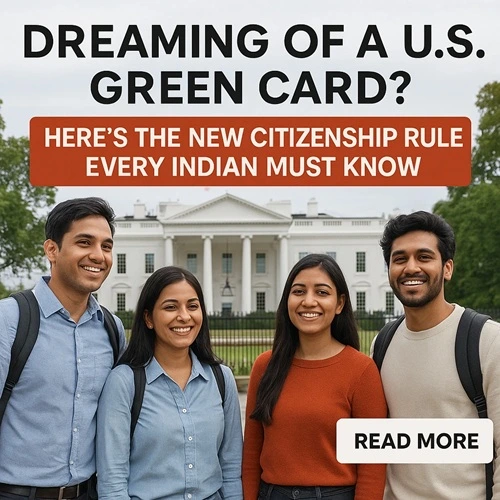
What Changed in the U.S. Citizenship Process?
Effective from August 15, 2025
USCIS has redefined how they assess whether an applicant has “good moral character.” Earlier, it was mostly about having no criminal record. Now, they want to see positive contributions to society.
Not enough: Just “not doing anything wrong”
Now required: Actively doing good, being engaged, and showing civic responsibility
This means the immigration authority is taking a holistic view of your life, your community involvement, values, and even how you integrate with American society.
Why This Matters for Indians
If you’re an Indian professional, student or family aiming for a Green Card or citizenship, this update could directly affect your eligibility.
- No more passive compliance: You need to show how you contribute.
- Opportunity to shine: Your cultural leadership, charity work and volunteering can now be powerful assets.
- Stronger connections matter: Networking and community involvement in both India and the U.S. could help build your case.
Think of it this way—America now wants its newest citizens to be contributors, not just residents.
How to Build Your Good Moral Character (GMC) Profile
Here’s a practical roadmap every Indian aspirant should follow:
1. Start Volunteering Early
Help at community centers, NGOs, schools, or religious groups, whether in India before moving or once in the U.S.
2. Be Visible in Cultural Events
Organize or participate in Indian cultural festivals abroad, it highlights both your roots and your ability to bring people together.
3. Collect Testimonials
Get character reference letters from professors, mentors, community leaders, or employers.
4. Document Your Journey
Keep photos, certificates, or proof of your activities. These can strengthen your case during evaluation.
5. Think Long-Term
It’s not about one-time participation. Continuous involvement shows your commitment to values and community life.
Interactive Question for You
If you were asked today to prove your Good Moral Character, what examples could you show?
- Volunteering?
- Cultural involvement?
- Leadership roles?
Drop your answer in the comments, let’s inspire each other to prepare better!
Final Thoughts: Turning Dreams into Reality
For Indians aspiring to settle in the U.S., this new rule isn’t a roadblock, it’s actually an opportunity.
Instead of only proving that you’ve stayed out of trouble, you can now showcase your true value as a future American citizen. By volunteering, engaging with communities, and highlighting your cultural impact, you’re not just building a stronger case, you’re building a better future.
The American Dream has always been about more than success, it’s about contribution. And now, USCIS has made it official.
Key Takeaways
- USCIS will evaluate “Good Moral Character” holistically from Aug 15, 2025.
- Indians must prove positive community contributions, not just clean records.
- Volunteering, cultural involvement, and references will play a big role.
- This is a chance to stand out and embrace American values while staying true to your Indian identity.
For Latest Trending News, Please follow Popnewsblend.com.

Hi, I’m Prashant Jain — a film enthusiast and critic who lives and breathes cinema. From big-screen releases to the latest drops on OTT, I watch extensively and review honestly, without hype or bias.
I believe a good review should go beyond just “good” or “bad.” It should help you understand what works, what doesn’t, and whether a film is truly worth your time. My reviews focus on storytelling, performances, direction, and overall impact — all through the lens of a genuine viewer.
I regularly cover new movie releases and trending web series across OTT, bringing clear, no-nonsense insights for audiences who want real opinions, not paid praise.
Through PopNewsBlend, I aim to cut through the noise and give you reviews you can trust — whether you’re deciding what to watch next or just love discussing cinema as much as I do.
Discover more from Popnewsblend
Subscribe to get the latest posts sent to your email.
Related posts:
 Quick commerce vs kirana stores: Are Quick Commerce Apps Burning a Hole in Your Pocket?
 Elon Musk Officially Launches “America Party”: What It Means for the U.S., Global Politics, and the Future of Power
 Trump Proposes 25% Tariff on Indian Goods: What It Means for India and the World
 UPI Rules Overhaul from August 1, 2025: What Every Indian Needs to Know


I don’t think the title of your article matches the content lol. Just kidding, mainly because I had some doubts after reading the article.
Your article helped me a lot, is there any more related content? Thanks!
Your point of view caught my eye and was very interesting. Thanks. I have a question for you.
I don’t think the title of your article matches the content lol. Just kidding, mainly because I had some doubts after reading the article.