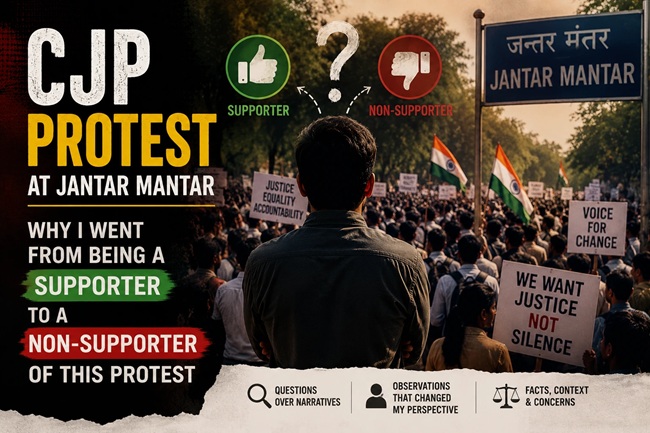
I’ll be honest about something before I get into this: I watched this whole thing unfold in real time, over WhatsApp forwards, Instagram reels, and news tickers, and my own opinion changed at least three times in six weeks. That’s not a great look for a “hot take” blog post, but it’s the truth, and I think it’s actually the more useful story than a clean, confident verdict either way. So this is less a lecture and more a diary entry — what happened, why it happened, and why my gut reaction went from “finally, someone’s saying it” to “wait, what are we even protesting anymore.”
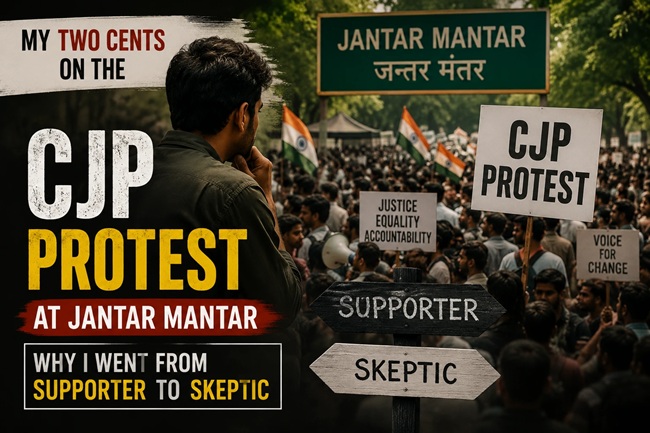
How a “Cockroach Party” Became India’s Loudest Youth Movement
If you’d told me in April that a satirical outfit called the Cockroach Janta Party would out-follow the BJP and Congress on Instagram within days, I’d have laughed you out of the room. But that’s roughly what happened.
The origin story is almost too on-the-nose to be real. The Chief Justice of India, Surya Kant, made a remark comparing unemployed youth to “cockroaches” and “parasites of society.” Whatever the intent behind those words, the internet did what the internet does — it took the insult and turned it into a badge. Within days, a political communications strategist named Abhijeet Dipke, who’d previously worked with the Aam Aadmi Party, registered the Cockroach Janta Party‘s website and social handles. It was never meant to be a real, Election Commission-registered party. It was satire with teeth — a meme that grew into a movement, built on self-mockery, and it exploded past twenty million followers in a matter of days, eclipsing both national parties.
That’s the part that made me sit up. Not the jokes, not the cockroach costumes people wore to clean-up drives — but the sheer scale of pent-up frustration that surfaced the moment someone gave it a punchline.
What They’re Actually Asking For
Strip away the memes and the theatre, and the demands are pretty specific, not vague “youth anger” venting:
- The resignation of Union Education Minister Dharmendra Pradhan, over what protesters see as the government’s failure to take moral responsibility for repeated exam irregularities, especially around NEET-UG, the medical entrance test.
- Justice and accountability for the NEET-UG paper leak controversy, which isn’t new — it’s been simmering since 2024, when the Supreme Court had to cancel results for over 1,500 candidates who’d received grace marks, and Bihar Police reportedly built a case involving arrests over leaked question papers.
- A compensation demand of one crore rupees for the families of NEET aspirants who died by suicide, a detail that, frankly, is the one part of this whole saga that should silence anyone tempted to dismiss the protest as just noise.
- The release of activist Sonam Wangchuk, who joined the movement on hunger strike and was hospitalised during it.
Whatever you think of the theatrics around this protest, that core list is not frivolous. Paper leaks in an exam that decides whether a teenager gets to become a doctor are not a small governance failure. Families have genuinely lost children to the despair that comes with a rigged shot at their future. That’s the emotional center of gravity here, and it’s worth remembering every time the conversation drifts elsewhere — which, as you’ll see, it did, a lot.
The Timeline, In Brief
- Mid-May 2026: CJP is born out of the “cockroach” remark, grows explosively online.
- Early June: The movement goes offline. A protest is announced and held at Jantar Mantar in Delhi, with the explicit demand for Dharmendra Pradhan’s resignation over the paper-leak controversy.
- Through June and into July: The protest holds, grows, and picks up prominent support, including Sonam Wangchuk’s hunger strike, which raises both the profile and the stakes.
- Mid-July: Comedian Kunal Kamra addresses the gathering, and one specific line detonates online — more on that in a second.
- July 20: The movement escalates to a “Chalo Sansad” march toward Parliament. This is where things turn genuinely ugly — stone-pelting is reported, a Delhi Police sub-inspector and a DCP are among more than a hundred police personnel reportedly injured, tear gas and baton charges are used on the crowd, dozens are detained, and multiple FIRs are registered on both sides of the ledger. CJP leaders do get a meeting with BJP president J.P. Nadda, who reportedly promises to take their demands to the party leadership, but as of this writing, Pradhan has not resigned and no clear resolution has been announced.
So: five-plus weeks in, real demands still unmet, real injuries on both sides, and a protest that started as a fairly disciplined single-issue campaign now sitting at the center of a much messier political storm.
The Kamra Moment That Changed the Conversation
Here’s where I think the movement lost the plot, at least in terms of public perception. Kunal Kamra, a comedian with a long history of needling the government and getting into legal trouble for it, was invited on stage. Addressing the government’s record, he said, in Hindi, that the ruling party keeps “taking the name of Sita’s husband” — a reference to Lord Ram — while actually working for “Nita’s husband,” a jab clearly aimed at the government’s perceived closeness to Mukesh Ambani. Dipke, standing nearby, was seen laughing and clapping.
Within hours, that clip had completely eclipsed the paper-leak story it was supposed to be supporting. A large chunk of the online reaction wasn’t about NEET, or Pradhan, or grieving families anymore — it was about whether a religious figure had been mocked, whether “satire” is being used as a shield for disrespect, and whether the people on stage laughing at it said something about the character of the whole movement.
I want to be careful here, because this is exactly the kind of moment where people reach for the most convenient interpretation. Kamra’s defenders will tell you this is squarely inside the tradition of political satire — that the joke was aimed at the government’s hypocrisy, not at the deity, and that reading it as blasphemy says more about the current climate around free expression than about the joke itself. His critics will tell you that invoking a widely revered religious figure for a punchline, in a country where religious sentiment runs deep and has real-world consequences, was needless, and that laughing at it on stage, in front of thousands, wasn’t a great look for people who wanted to be taken seriously on a student-safety issue. Both of those things can be true reactions held by genuinely well-meaning people, and I don’t think either side gets to claim a monopoly on good faith here.
What I do think is fair to say: the remark handed critics of the movement — and by extension, critics of the broader “anti-establishment, anti-Modi” framing that quickly got layered on top of it — a gift. It let the conversation shift from “why hasn’t the education minister answered for a leaked medical exam” to “look what these people really think of our beliefs.” That’s a real cost, whether or not you think the backlash was proportionate.
Why This Became a Full-Blown Political Flashpoint
A few things collided at once, and it’s worth naming them separately instead of blurring them together, because I think that blurring is exactly what made this protest turn “ugly” in the way you’re describing:
One, a genuine, sympathetic grievance — students harmed by exam irregularities — that cuts across ideology and should, in a functioning system, be resolvable through accountability and reform.
Two, a movement that grew so fast, and so loosely organised, that it became a magnet for every unrelated frustration people have with the current government — economic anxiety, unemployment, free-speech debates, and yes, criticism of the BJP, the RSS, and the broader Hindutva project. Once a protest becomes “the place where you go to vent at Modi,” it stops being just about NEET, and it starts drawing in people, and opposition, that have nothing to do with paper leaks.
Three, real violence. Stone-pelting at police, injured officers, tear gas, baton charges, mass detentions — once that happens, a chunk of the public conversation shifts from “are the demands legitimate” to “are these people dangerous,” and that shift is not irrational. People who might have sympathised with grieving families start distancing themselves the moment they see visuals of police being hurt, regardless of who started it or why.
Four, the religious flashpoint from the Kamra remark, which gave critics — including those aligned with Hindutva politics and RSS-adjacent commentary — a clean, emotionally resonant reason to reframe the entire movement as disrespectful and out of touch with what most Indians actually value, rather than as a legitimate accountability campaign.
Put those four things in a blender and you get exactly what’s happening now: a protest that started with a specific, defensible ask, and ended up as a proxy war over religion, free speech, generational identity, and who gets to define patriotism.
Why I Soured on It — And Why I’m Not Fully Comfortable With That Either
I supported this when it was about NEET. I still support the underlying demand — accountability for exam leaks, dignity for the families who lost children to that despair, a straight answer from the education minister instead of the usual parliamentary stonewalling. That part of me hasn’t changed.
What changed is my confidence that the movement, as it now stands, is actually built to deliver that. When a protest’s most viral moment is a joke about a deity rather than a fact about a leaked exam paper, when the loudest online arguments are about Hindutva and free speech rather than about the specific reforms needed at the National Testing Agency, and when the images making the rounds are of stone-pelting and injured police officers rather than testimony from affected students — the original cause gets buried under everything it accidentally became a stage for. That’s not necessarily the fault of the students who showed up in good faith. It’s what happens when a genuinely popular, under-organised movement becomes everyone’s outlet at once.
And here’s the part I’ll admit I go back and forth on: maybe that’s an unfair standard. Every big protest in history has been messy, has had moments its organisers wish hadn’t happened, has been used by people with agendas the original organisers didn’t share. Judging a movement by its worst five minutes of footage is exactly the trap that’s easiest to fall into, and it’s a trap that gets set deliberately by people who’d rather talk about a joke than about a dead nineteen-year-old’s NEET score. So take my “souring” for what it is — one person’s read of a genuinely confusing, fast-moving situation, not a verdict.
What I’d Actually Say to Gen Z Here
Not a lecture, more an ask: don’t let the loudest five minutes become the whole story you tell about this. The reason CJP had twenty million followers in a matter of days wasn’t Kamra’s joke, and it wasn’t the stone-pelting — it was because an entire generation recognised something true in being called cockroaches, and in watching friends and siblings lose years of their lives to a system that couldn’t guarantee a fair exam. That’s worth protecting, and it’s worth fighting to keep that thread separate from every other fight this moment has gotten dragged into. A movement that can hold its focus tends to win. A movement that becomes a stage for every grievance in the country tends to get remembered for its worst clip instead of its best argument.
The Other Side of This, Fairly Stated
Because I think any honest post owes you this: plenty of smart, fair-minded people would push back hard on parts of what I’ve written above. They’d argue that focusing on Kamra’s joke or the stone-pelting is itself a way of changing the subject from a government that, going back to 2024, has repeatedly denied paper leaks that courts and state police investigations found real. They’d point out that student anger didn’t invent the paper-leak scandal, the government’s own record did, and that asking a grieving movement to be endlessly polite about it is a convenient way to never have to answer the actual question. That’s a legitimate reading of events too, and depending on which clips you saw first, it probably feels like the more obvious one.
Where you land on all this will likely depend on what you were already inclined to believe about this government, this generation, and how much room protest should get to be messy. I don’t think there’s a clean, satisfying answer here, and I’d be suspicious of anyone — including me, on a good day — who tells you there is.
To get the regular updates Latest Trending News, Please Follow Popnewsblend.com
FAQ
What is the Cockroach Janta Party (CJP)? It’s not a registered political party. It’s a satirical youth movement founded in mid-May 2026 by political strategist Abhijeet Dipke, after the Chief Justice of India compared unemployed youth to “cockroaches.” It grew into a genuine protest movement centered on accountability for exam irregularities, particularly the NEET-UG paper leak issue.
What are the protesters actually demanding? Chiefly: the resignation of Union Education Minister Dharmendra Pradhan, accountability and reform following the NEET-UG paper leak controversy, one crore rupees in compensation for the families of NEET aspirants who died by suicide, and the release of activist Sonam Wangchuk.
Has the government taken any action on the paper leak case? The paper-leak controversy dates back to 2024, when the Supreme Court cancelled results for over 1,500 candidates who’d received contested grace marks and ordered a retest. Bihar Police built a case involving arrests over an alleged leak. The government and the National Testing Agency have repeatedly denied systemic paper leaks. As of this protest, Dharmendra Pradhan has not resigned, though CJP representatives did meet BJP president J.P. Nadda, who reportedly said he’d raise their demands with party leadership.
What did Kunal Kamra actually say about Lord Ram? Addressing the crowd, Kamra said the government keeps invoking “Sita’s husband” (Lord Ram) while, in his telling, actually serving the interests tied to “Nita’s husband” (a reference to Mukesh Ambani). It was framed as a political jab at the government’s alleged corporate closeness, not an attack on the deity itself, but it was widely read by critics as disrespectful, and it dominated the news cycle for days.
Why did the protest turn violent on July 20? During the “Chalo Sansad” march toward Parliament, clashes broke out between protesters and Delhi Police. Stone-pelting was reported, more than a hundred police personnel were reportedly injured including a sub-inspector and a DCP, tear gas and baton charges were used, and multiple people were detained. Both sides have disputed accounts of how the clash started.
Why has this become such a big political issue beyond the original demand? Because the protest grew fast enough, and loosely enough, to absorb unrelated frustrations — economic anxiety, free-speech debates, criticism of the BJP and RSS, and broader Hindutva politics — on top of its original, narrower ask about exam accountability. That mixing is what makes the story feel bigger and messier than the original complaint.
Is CJP linked to any political party? No. It presents itself as independent and satirical, though its founder has a past professional association with the Aam Aadmi Party, a fact critics have pointed to and supporters have dismissed as irrelevant to the movement’s current demands.
Disclaimer
This piece reflects one person’s evolving opinion on a fast-moving, contested news story, written from publicly available reporting as of July 21, 2026. The situation was continuing to develop at the time of writing — statements, arrests, resignations, or negotiated outcomes may have occurred since. This is not investigative journalism, legal analysis, or an official account from any party, government body, or the CJP itself, and it should not be treated as a definitive record of events. Views on the Kamra remark, the police clash, and the movement’s broader political framing are genuinely contested among reasonable people, and this post tries to represent more than one side rather than declare a winner. Readers are encouraged to verify current developments through original news sources before forming a final view. In the interest of transparency, this post was drafted with the assistance of an AI writing tool based on the author’s direction and researched facts; readers should not assume it is free of AI involvement.

Hi, I’m Prashant Jain — a film enthusiast and critic who lives and breathes cinema. From big-screen releases to the latest drops on OTT, I watch extensively and review honestly, without hype or bias.
I believe a good review should go beyond just “good” or “bad.” It should help you understand what works, what doesn’t, and whether a film is truly worth your time. My reviews focus on storytelling, performances, direction, and overall impact — all through the lens of a genuine viewer.
I regularly cover new movie releases and trending web series across OTT, bringing clear, no-nonsense insights for audiences who want real opinions, not paid praise.
Through PopNewsBlend, I aim to cut through the noise and give you reviews you can trust — whether you’re deciding what to watch next or just love discussing cinema as much as I do.
Discover more from Popnewsblend
Subscribe to get the latest posts sent to your email.
Related posts:
 Dreaming of a U.S. Green Card? Here’s the New Citizenship Rule Every Indian Must Know
 Apollo Tyres Takes Over as Indian Cricket Team’s Jersey Sponsor: A Deep Dive
 Fatima Bosch from Mexico Crowned Miss Universe 2025: Complete Highlights, Winner Breakdown, Runners-Up and India’s Final Position
 Asha Bhosle (1933–2026): A Voice That Defined Generations, A Legacy That Will Never Fade