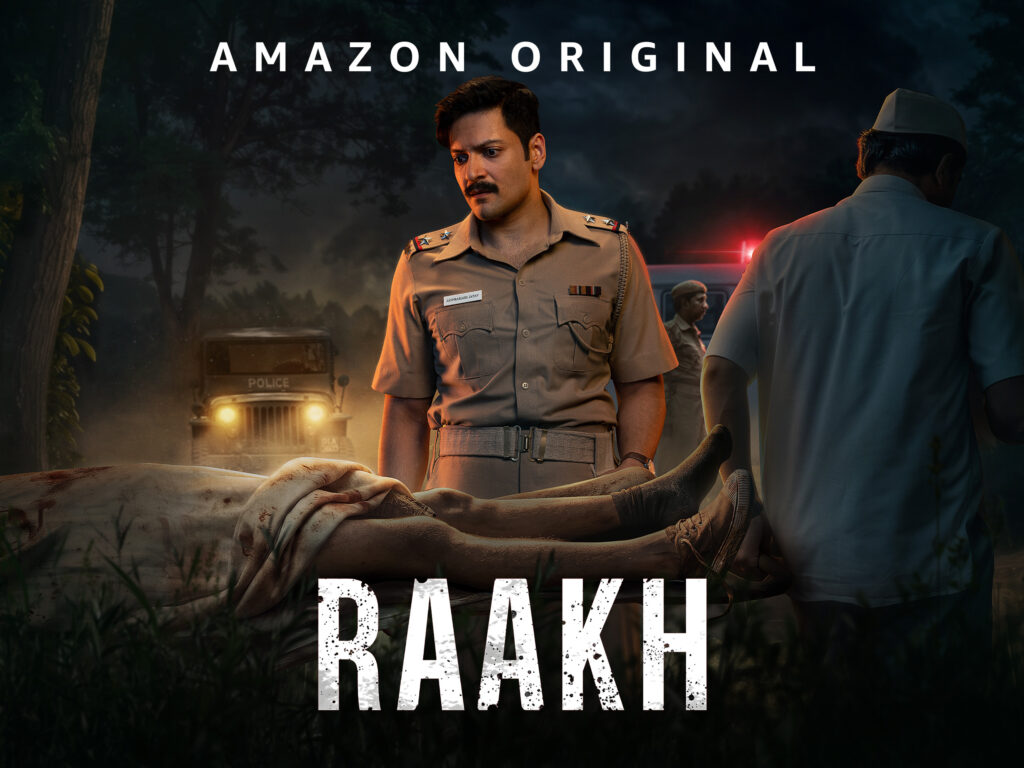
Platform: Amazon Prime Video | Release Date: June 12, 2026 | Episodes: 8 | Language: Hindi | Genre: Crime, Drama, Psychological Thriller
There’s a particular kind of dread that comes with watching a true-crime series when you already know how the story ends. You sit there watching two teenagers accept a lift on a rainy Delhi evening, and you desperately want to reach through the screen and stop them. You know what’s coming. The show knows you know. And yet, somehow, Raakh makes you feel every single moment of that helplessness as if you’re hearing it for the very first time.
That is the quiet, devastating power of Amazon Prime Video’s latest original series — and it deserves a lot more conversation than it’s currently getting.
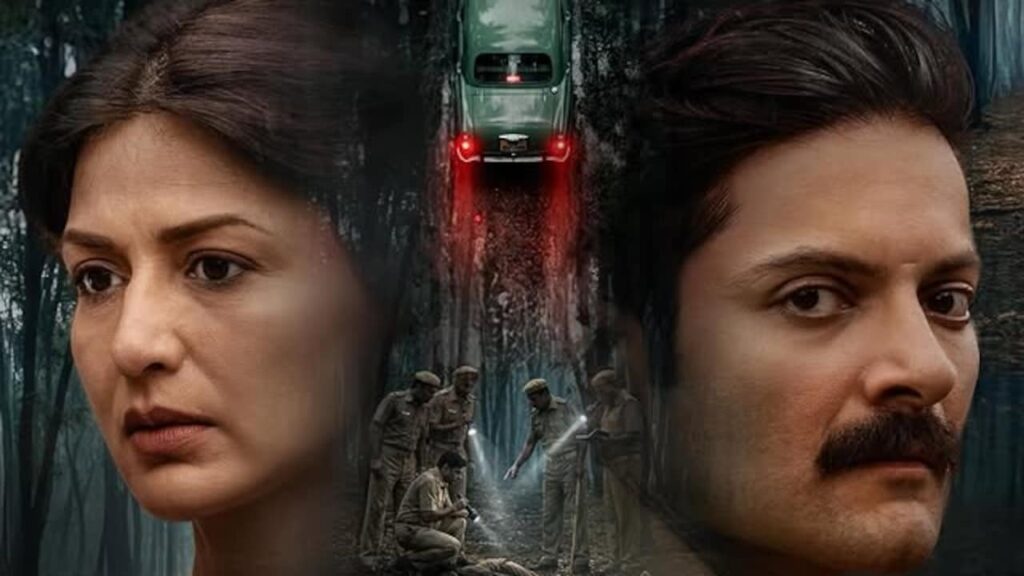
What Is Raakh About? The Story Behind the Series
Raakh is an eight-episode investigative crime drama set in 1978 Delhi, loosely inspired by the real-life Billa-Ranga case — one of the most horrifying kidnapping and murder cases in independent India’s history. In real life, the victims were Geeta and Sanjay Chopra, children of a naval officer, who were abducted and killed by two career criminals, Kuljeet Singh (Ranga) and Jasbir Singh (Billa), in August 1978. The case shocked a nation and became one of India’s most consequential capital punishment cases, widely cited in later legal proceedings as a benchmark for the “rarest of rare” doctrine.
In the series, the siblings are renamed Suman and Sahil Arora, children of Lt. Colonel Ashok Arora (Aamir Bashir), an army officer — a fictionalization of the real naval officer father. Suman, 16, is heading to All India Radio for her singing debut. Sahil, 14, tags along. On a rainy evening, a green Fiat pulls up and two men offer them a ride. The children accept. They never make it home.
The criminals are called Babu (Akash Makhija) and Rajjo (Ramandeep Yadav) in the show — stand-ins for Billa and Ranga. The investigation falls to Sub-Inspector Jayprakash Jatav, played by Ali Fazal, a rookie cop from a lower-caste family who is trying to prove himself in a police force that has never made it easy for men like him.
What unfolds across eight episodes is not just a police procedural. It is a study in grief, systemic failure, human depravity, and a city losing its innocence.
The True Crime Connection: The Ranga-Billa Case Explained
You don’t need to know the Ranga-Billa case to watch Raakh. But knowing it makes the experience significantly richer — and significantly heavier.
Kuljeet Singh (Ranga) and Jasbir Singh (Billa) were petty criminals who had escalated to robbery and violence before the abduction of Geeta and Sanjay Chopra on August 26, 1978. The real siblings were the children of Captain Madan Mohan Chopra, a naval officer heading the Judge Advocate General’s office. Geeta, 16, was a student at Jesus and Mary College; Sanjay, 14, attended Modern School. That evening, they had left home for Yuv Vani, a popular youth programme on All India Radio. They never reached the studio.
The children were abducted in a stolen Fiat, taken to the Delhi Ridge forest, and killed that night. Their bodies were found two days later, on August 28, 1978. The killers had originally planned a ransom kidnapping, but when they realized their victims were the children of a Navy officer — and not from a wealthy family — the situation turned fatal. Both siblings resisted fiercely, a fact documented in court records that eventually led to both men being posthumously awarded the Kirti Chakra.
Ranga and Billa were arrested on September 8, 1978, when they boarded the Kalka Mail train near Agra and mistakenly entered a compartment reserved for military personnel. Lance Naik A.V. Shetty recognized them from a newspaper photograph. They were handed over to the Delhi Police the following day.
After a widely followed trial, both men were convicted on charges of kidnapping and murder. Their death sentences were upheld by the Delhi High Court and the Supreme Court, which used some of its strongest language in affirming the “rarest of rare” doctrine. Both men were hanged at Tihar Jail on January 31, 1982. Their bodies were not claimed by relatives.
The case changed how India thought about child safety and public trust in ways that have never fully reversed. The Indian Council for Child Welfare instituted two annual bravery awards in the siblings’ memory — the Geeta Chopra Award and the Sanjay Chopra Award — which are given each year alongside the National Bravery Awards to children who display exceptional courage.
Raakh is not trying to retell this story beat for beat. It fictionalizes names, alters timelines, and takes dramatic liberties. But the soul of what happened — the randomness of the violence, the broken family, the institutional scramble — stays intact and hits with full force.
This same incident was referenced in Netflix’s Black Warrant, where it briefly appears through the eyes of a Tihar jailer. But Raakh is the first time it has been given the full, unflinching treatment it deserved.
Direction and Storytelling: Prosit Roy’s Return to Dark Territory
If you watched Paatal Lok on Amazon Prime, you already know what Prosit Roy is capable of. He has a rare ability to tell stories about violence without ever glorifying it, to enter the headspace of broken people without excusing them, and to use silence as effectively as any piece of dialogue.
Raakh reunites him with Prime Video in what feels like the natural next chapter after Paatal Lok. The two series aren’t directly connected, but they exist in the same moral universe — one where the system is failing everyone from multiple directions simultaneously, and where good men are trying to do right things inside deeply flawed institutions.
Roy’s most important creative decision in Raakh is structural. The series unfolds in two parallel timelines with different aspect ratios. One timeline follows Jayprakash and his investigation in the present, after the children go missing. The other tracks Babu and Rajjo in the days before the crime, charting their escalating path of violence from Bombay to Delhi. These two tracks converge as the episodes progress, and the way they finally meet — organically, inevitably, tragically — is a testament to genuinely skilled storytelling.
The series also makes the bold choice of revealing its killers in the very first episode. There’s no whodunit here. The point isn’t to surprise you with who did it. The point is to make you understand how something like this happens — and why it keeps happening. That decision shifts the entire emotional weight of the show. You’re not watching a mystery. You’re watching a reckoning.
Co-creators Anusha Nandakumar and Sandeep Saket wrote the series, with dialogues by Ayush Trivedi that feel genuinely period-appropriate — spare, direct, occasionally cutting. The production is under Endemol Shine India with Deepak Dhar producing.
The 1978 Delhi production design is exceptional. Rotary phones, government-issue furniture, old Ambassador cars, the foggy Ridge forest — none of it feels like costume drama posturing. It feels like a world that actually existed, and the absence of CCTV cameras, mobile phones, and digital tools quietly shapes the entire investigation. The cops here work with witness statements, bad pencil sketches, radio alerts, and gut instinct. That limitation isn’t just a period detail. It’s a storytelling device that makes every breakthrough feel genuinely earned.
Cast and Performances: Where Raakh Truly Earns Its Place
Ali Fazal as SI Jayprakash Jatav
Let’s talk about Ali Fazal, because the conversation around his performance in Raakh has been almost unanimous in its praise — and for good reason.
Fazal has spent years being somewhat underestimated. He was the breakout star of 3 Idiots, the lovable idiot in Fukrey, the charming lead in Mirzapur’s Guddu Pandit arc, and even made his mark internationally in Victoria & Abdul and Death on the Nile. But Raakh may be the first time he’s been given a character as genuinely complex and quietly demanding as SI Jayprakash.
What makes the performance remarkable is precisely what he doesn’t do. He doesn’t grandstand. He doesn’t deliver monologues. He doesn’t have a single moment where the camera lingers on his face while a swelling background score tells you how to feel. Jayprakash is a man who carries the weight of his ambition, his caste identity, his father’s legacy, and this case — all at once, all quietly. Fazal holds all of it without ever spilling any of it unnecessarily.
Jayprakash is a lower-caste officer in a system that views him as an outsider even in his own department. The series handles this with remarkable restraint, never turning it into a speechmaking moment but keeping it as a constant, ambient pressure. He gets the difficult cases, not as recognition, but as tests designed to see him fail. And when he doesn’t fail, the discomfort among his superiors is palpable.
What sets this performance apart is its physical honesty. Fazal looks exhausted, driven, and slightly undone in a way that feels real rather than performed. There’s an urgency in his movement, a restlessness that communicates desperation more effectively than any dialogue could. Critics across the board have called it a career-best, and it is hard to argue otherwise. This is not a flashy performance. It’s a lived-in one.
Sonali Bendre as Mona Arora
Sonali Bendre’s return to dramatic acting has been one of the most quietly powerful elements of Raakh, and it hasn’t received nearly enough attention.
As Mona Arora, the mother of the missing children, Bendre is required to carry an almost unbearable amount of grief across the series. The early scene where denial slowly shifts to terror — where her face moves through every stage of a mother realizing something is deeply wrong — is the kind of restrained, precise acting that is far harder to pull off than emotional explosion. She never reaches for melodrama. She sits with the horror of not knowing, and then with the even worse horror of knowing.
Outlook India specifically praised her for this restraint, noting that she captures unbearable possibility without theatrical excess. This is a comeback performance that deserves awards consideration.
Aamir Bashir as Ashok Arora
A veteran of Sacred Games, Haider, and Inside Edge, Aamir Bashir gives Lt. Colonel Ashok Arora a quiet, devastating dignity. Where Mona’s grief is visible and vocal, Ashok’s is internalized to a degree that is almost painful to watch. The contrast between how these two characters process the same loss speaks volumes without a single line of dialogue to explain it.
Akash Makhija and Ramandeep Yadav as Babu and Rajjo
If Ali Fazal and Sonali Bendre are the emotional heart of the series, Akash Makhija and Ramandeep Yadav are its most disturbing dimension.
India TV News called their performances “deeply unsettling,” noting they “never play the characters for effect.” That’s the right way to put it. Makhija’s Babu has an unsettling unpredictability — he’s not a movie villain. He’s a damaged man who has normalized violence so thoroughly that it no longer registers as abnormal to him. Yadav’s Rajjo is volatile in a different way, with a wounded quality underneath the menace that makes him almost pitiable, and then immediately more frightening because of that.
Their relationship — part loyalty, part fear, part something that defies easy categorization — is one of the most compelling dynamics the show offers. There is affection between them and there is also domination, dependence, and something bordering on cruelty within their own partnership. The ambiguity is deliberate and expertly handled.
The Taj Mahal sequence, where both of them share a rare moment of something approaching peace, is one of the most memorable scenes in the entire series. It shouldn’t work, but it does — because by that point, you understand just enough about these two men to feel the tragedy of what they are, alongside the horror of what they’ve done.
Rakesh Bedi as Ghanshyam (Jayprakash’s Father)
In a series full of strong performances, Rakesh Bedi delivers the one that sneaks up on you. His Ghanshyam — a retired constable who hangs around the police station bringing mutton dishes, trying to stay relevant by maintaining old relationships — is the kind of deeply humane supporting character that holds a dark story together. His scenes with Fazal are some of the warmest in the entire series. They are also, quietly, about caste, dignity, aspiration, and what it means to keep your head up in a system that keeps pushing it back down.
Supporting Cast
Dibyendu Bhattacharya brings gravitas to every scene as the SP. Anshul Chauhan plays the journalist love interest, though most critics agree this subplot is the series’s weakest element — the character feels underwritten and Chauhan seems slightly miscast. Divya Sharma and Vivaan Sharma as Suman and Sahil deserve special mention: because the audience already knows their fate, every moment with them carries immense sadness, and both young actors play them as real children — curious, playful, full of life — rather than symbols.
Themes and Social Commentary: What Raakh Is Really About
On the surface, Raakh is a crime thriller. Underneath, it’s examining several things at once.
The caste dimension is woven through Jayprakash’s entire arc. He’s not the hero because of the institution. He’s the hero despite it. The series never lectures about this. It simply shows it: the assignments he gets, the way his colleagues look at him, the way his father has spent decades making himself indispensable to people who would never grant him actual power. This is Indian social reality rendered without editorializing.
The question of selective urgency is also handled with uncommon honesty. The case receives immediate high-level attention because the missing children belong to an Army officer’s family. The series notes this quietly but clearly. What happens to children from families with less social capital? The show doesn’t answer this directly, but it asks the question with enough weight that you feel it.
The portrayal of Babu and Rajjo goes beyond the usual “villain backstory” shortcut. The series is genuinely interested in understanding how the machinery of poverty, neglect, systemic failure, and institutional indifference produces men like this. It doesn’t excuse what they do. It contextualizes it. That’s harder, and more uncomfortable, and more truthful.
The journalism subplot, while underdeveloped in terms of the character carrying it, does something interesting: it shows the gendered barriers of the press in 1978, where a female journalist pursuing a major story is met with institutional resistance at every turn. It’s a portrait of a profession that wanted to exist but hadn’t yet figured out how to include everyone.
And underneath all of it is a simpler, older theme: grief. What it does to families. How it doesn’t arrive all at once. How it keeps showing up in different forms, at different times, long after the cameras have moved on.
Get the regular updates on Latest OTT Release on Popnewsblend.com
How Raakh Compares to Other Indian Crime Series
Indian streaming has given us an embarrassment of crime drama riches in recent years, and Raakh inevitably gets measured against the best of them.
Delhi Crime (Netflix, 2019): The most direct comparison. Both shows center on a real crime involving young victims in Delhi, both use a fictional investigator as the audience’s anchor, both are interested in the city’s social fabric as much as the crime itself. Hollywood Reporter India noted that Raakh is actually the thematic ancestor of Delhi Crime — if Delhi Crime mourns the city that Delhi became after Nirbhaya, Raakh maps the moment Delhi began becoming that city. Delhi Crime has better procedural precision and a slightly tighter screenplay. Raakh has arguably deeper emotional texture in its victim-focused storytelling.
Paatal Lok (Amazon Prime, 2020): Shares a director in Prosit Roy, and that lineage is visible. Raakh doesn’t quite reach the staggering scope of Paatal Lok’s social canvas, and the criminal track in Raakh is a notch below the unforgettable villain work in Paatal Lok. But it’s a fair comparison, and Raakh holds its own.
Black Warrant (Netflix, 2025): Both cover adjacent territory around the Ranga-Billa case. Black Warrant saw it from inside Tihar Jail. Raakh is the investigation that put them there. Watch both, in that order, and you have something close to a complete picture of one of India’s most devastating criminal sagas.
Kohrra (Netflix, 2023): Another excellent comparison point — a crime series interested in rural Punjab’s social pressures, featuring some of the same supporting cast (Davinder Gill appears in both). Kohrra is tighter and perhaps more emotionally devastating. But Raakh’s period setting gives it a different kind of weight.
Trial by Fire (Netflix, 2023): The closest comparison for the victim/family-focused storytelling approach. Raakh’s treatment of the Arora parents echoes Trial by Fire in the best possible way — grief as something that compounds and mutates rather than resolves neatly.
Where Raakh falls short relative to these comparisons is mostly in pacing (it could lose one episode without losing anything important) and in the journalist subplot, which feels like a device rather than a character. But as an overall package, it belongs comfortably in the top tier of Indian streaming crime drama.
What Top Platforms and Critics Are Saying
The critical reception to Raakh has been largely positive, with most reviews landing in the 3.5 to 4.5 stars out of 5 range.
Sunday Guardian Live gave it 4 out of 5, calling it “a brutal sit” that demands patience but ultimately delivers emotional closure that the real-world history never got, and praising Ali Fazal’s “beautifully restrained, career-best performance.”
Outlook India was effusive in its praise, particularly for the show’s refusal to sensationalize and its focus on the human aftermath of the crime: “Raakh transforms a familiar true-crime story into a deeply emotional drama by focusing on the victims, their families and the lasting impact of the crime.”
Bollywood Hungama highlighted the direction as “exemplary,” calling the screenplay “captivating” and the non-linear structure a genuine storytelling achievement.
India TV News called it “a gripping crime thriller that stays with you long after the credits roll,” singling out the performances of Makhija and Yadav as the biggest surprise of the series.
Hollywood Reporter India was the most measured in its praise, noting that while Raakh is competent and affecting, each of its storylines sits “a rung below” the best examples of its type in the genre — the criminal track below Paatal Lok, the journalist track below Scoop, the procedural below Delhi Crime. This is a fair critique, but it’s also worth noting that being one rung below the best of Indian streaming still puts you considerably above the average.
123telugu.com and IndyaStory were both solidly positive, with the former noting that “if you loved Paatal Lok, you will be equally impressed by Raakh.”
The more critical takes come from reviewers who felt the pacing drags, that the Anshul Chauhan subplot is unnecessary, and that the first two episodes don’t fully justify the slow build. These are legitimate observations. Raakh is not a perfect series. But its strengths are substantial and its emotional impact is real.
A Personal View: Is Raakh Worth Watching?
Yes. Unreservedly yes — with the caveat that you need to go in prepared.
This is not something you put on when you want to unwind. The series is deeply disturbing in places. The violence against the children is handled with restraint, but the knowledge of what happened is always present, and the show uses it with precision. There are moments that are genuinely hard to watch, not because they’re gory, but because they’re true.
What I found most affecting was the final act and the way Prosit Roy handles the closing of the story. Without spoiling anything: he makes a choice that is simultaneously realistic and poetic, one that looks back at what might have been and uses that alternative reality as a way of grieving rather than as a cheap emotional manipulation. It’s the kind of ending that stays with you.
Ali Fazal gives the kind of performance that shifts how you see an actor. He was already someone you respected. He’s now someone you watch differently. SI Jayprakash is a career-defining role and Fazal deserves every bit of recognition coming to him for it.
Sonali Bendre’s comeback arc in Raakh is genuinely remarkable, and it’s frustrating that it hasn’t received more mainstream attention.
The production is among the finest period recreations in Indian streaming. The 1978 Delhi doesn’t feel like a set. It feels like a time you’re visiting.
If I had to score it: 4 out of 5. The pacing stumbles in the middle, the journalist subplot never clicks, and it doesn’t quite hit the emotional peaks of Paatal Lok or Delhi Crime at their best moments. But it belongs in the same conversation, and Ali Fazal’s work alone makes it essential viewing for anyone serious about Indian crime drama.
Raakh Series: Detailed FAQ
Q1: Is Raakh based on a true story?
Yes. Raakh is loosely inspired by the real-life Billa-Ranga kidnapping and murder case of 1978 in Delhi. In reality, Geeta and Sanjay Chopra — children of Captain Madan Mohan Chopra, a Naval officer — were abducted and murdered by Kuljeet Singh (Ranga) and Jasbir Singh (Billa) on August 26, 1978. The siblings had left home for Yuv Vani, a youth programme on All India Radio. In the series, the characters are fictionalized: the siblings become Suman and Sahil Arora, and their father is portrayed as an army Lt. Colonel rather than a naval officer. The killers are renamed Babu and Rajjo. The core events and emotional truths are preserved, though the show takes significant creative liberties with characters and plot details.
Q2: Where can I watch Raakh?
Raakh is streaming exclusively on Amazon Prime Video. It released globally on June 12, 2026, and is available in Hindi with subtitles in multiple languages including English, Tamil, Telugu, and several international languages. It is available in HDR and UHD quality.
Q3: How many episodes does Raakh have?
Raakh has eight episodes in its first season.
Q4: Who plays the lead character in Raakh?
Ali Fazal plays SI Jayprakash Jatav, the investigator at the center of the story. The supporting cast includes Sonali Bendre as Mona Arora (the mother of the missing children), Aamir Bashir as Ashok Arora (the father), Akash Makhija and Ramandeep Yadav as Babu and Rajjo (the criminals), Rakesh Bedi as Jayprakash’s father Ghanshyam, and Dibyendu Bhattacharya as the SP.
Q5: Who directed Raakh?
Raakh is directed by Prosit Roy, who previously directed the critically acclaimed Paatal Lok on Amazon Prime. The series was created, written, and co-directed by Anusha Nandakumar and Sandeep Saket, with dialogues by Ayush Trivedi. It is produced by Endemol Shine India under producers Deepak Dhar, Rishi Negi, Mrinalini Jain, and Shyam Rathi.
Q6: Is Raakh suitable for all audiences?
No. Raakh carries content warnings for sexual violence, violence, alcohol use, and disturbing depictions of crimes against minors. It is also flagged for flashing lights and strobing patterns. This is not appropriate viewing for children and should be approached with care by adults who may find content involving violence against young people distressing. It is decidedly not family viewing.
Q7: What is the connection between Raakh and Black Warrant on Netflix?
Both series deal with the Billa-Ranga case but from different angles. Black Warrant, the Netflix series (2025) about Tihar jailer Sunil Gupta, covers the aftermath of the case including the eventual execution of Ranga and Billa, with the case appearing in one episode. Raakh covers the investigation that led to their capture. They exist in adjacent narrative territory, and watching both gives you a more complete picture of the case’s cultural and historical significance.
Q8: How does Raakh compare to Delhi Crime?
Both are Delhi-set, real-crime-inspired procedurals centered on a fictional cop investigating a real crime involving young victims. Delhi Crime (Netflix, 2019) is based on the 2012 Nirbhaya case. Critics have noted that Raakh maps the moment Delhi began its descent — 1978 as the first rupture of public trust — while Delhi Crime covers the city at a later, darker stage. Both are excellent. Delhi Crime may have a tighter screenplay; Raakh has arguably stronger performances from its grief-stricken family members.
Q9: Why is Ali Fazal so acclaimed for his role in Raakh?
Ali Fazal plays SI Jayprakash in a way that goes against the conventions of Indian crime drama heroics. Rather than a larger-than-life supercop, Jayprakash is written and performed as an ambitious, frustrated, lower-caste officer fighting institutional prejudice while solving a case that defines his career. Fazal’s performance is built on restraint — silences, physical exhaustion, quiet desperation — rather than speeches and confrontations. Multiple critics have called it a career-best. The role also carries significant social weight through its caste dimensions, which Fazal handles without ever making it feel like he’s performing a political statement.
Q10: Is there a Season 2 of Raakh?
As of June 2026, no Season 2 of Raakh has been announced. The story is self-contained and draws from a specific real-life case with a definitive historical conclusion. A sequel would likely require a different case and possibly a different structure. Given the show’s strong reception, a continuation with the same lead character is possible but not confirmed.
Q11: Is Raakh similar to Mirzapur?
The only significant overlap between Raakh and Mirzapur is Ali Fazal. Tonally and structurally, they are very different shows. Mirzapur is a gangster epic with heightened, kinetic energy and a sprawling ensemble. Raakh is a slow-burn, period-set crime investigation grounded in emotional realism. If you loved Mirzapur for the action and scale, Raakh may feel slower than expected. If you loved it for the moral complexity and the performances, Raakh will reward you significantly.
Q12: What is the content advisory for Raakh?
The series deals with kidnapping, murder, and sexual violence involving minors. While the showmakers handle these elements with restraint — focusing on aftermath and implication rather than explicit depiction — the subject matter is inherently distressing. Viewer discretion is strongly advised. The show is intended for mature audiences only.
Q13: What language is Raakh in?
Raakh is in Hindi. It is available with subtitles in multiple languages including English, Tamil, Telugu, Kannada, Malayalam, and several international languages on Amazon Prime Video.
Q14: What does “Raakh” mean?
Raakh is a Hindi word meaning “ash” or “ashes.” The title functions as both a literal reference to the aftermath of destruction and a metaphorical one — the ashes left behind after a crime that burned through lives, a family, and a city’s sense of safety.
Q15: Is Raakh India’s best crime series?
That’s a strong claim, and a subjective one. It belongs in the top tier of Indian streaming crime drama alongside Delhi Crime, Paatal Lok, Kohrra, and Black Warrant. Whether it’s the best depends on what you prioritize — if you value emotional focus on victims and families above all else, Raakh may be the finest example of that approach. If you want procedural tightness and moral complexity across multiple storylines, Delhi Crime and Paatal Lok may edge it out. All four, however, represent the best that Indian crime storytelling has to offer in the streaming era.
Final Verdict
Raakh is not a comfortable watch. It was never meant to be. It’s a series about a crime that fundamentally changed how an entire city thought about safety, trust, and what lurks beneath the surface of ordinary life. The fact that it makes you feel that change — not just understand it intellectually — is a measure of how well it’s been made.
Ali Fazal’s Jayprakash is one of the great police characters in Indian streaming. Sonali Bendre and Aamir Bashir carry grief with a dignity that rarely appears on screen. Akash Makhija and Ramandeep Yadav are genuinely frightening without resorting to performance. And Prosit Roy brings the same social conscience and visual intelligence that made Paatal Lok essential viewing.
It has its weaknesses — a slow start, one subplot too many, pacing that occasionally loses its rhythm. But when Raakh works, which is most of the time, it is exactly the kind of storytelling that Indian crime drama has been growing toward: emotionally honest, socially aware, and deeply respectful of the real human cost of the events it depicts.
It is currently streaming on Amazon Prime Video. Watch it when you’re ready for something that will sit with you.
Rating: 4/5
Reviewed by an independent critic with a focus on Indian and South Asian streaming content. This review is based on all eight episodes of Season 1.

Hi, I’m Prashant Jain — a film enthusiast and critic who lives and breathes cinema. From big-screen releases to the latest drops on OTT, I watch extensively and review honestly, without hype or bias.
I believe a good review should go beyond just “good” or “bad.” It should help you understand what works, what doesn’t, and whether a film is truly worth your time. My reviews focus on storytelling, performances, direction, and overall impact — all through the lens of a genuine viewer.
I regularly cover new movie releases and trending web series across OTT, bringing clear, no-nonsense insights for audiences who want real opinions, not paid praise.
Through PopNewsBlend, I aim to cut through the noise and give you reviews you can trust — whether you’re deciding what to watch next or just love discussing cinema as much as I do.
Discover more from Popnewsblend
Subscribe to get the latest posts sent to your email.
Related posts:
 Squid Game Season 3: Netflix’s Global Sensation Ends With a Bang
 Anil Kapoor’s 24 Series on Jio Hotstar (April 24): Why This Iconic Thriller Is a Must-Watch Again
 Berlin and the Lady with an Ermine – Netflix Original Series — Deep Dive Review & Analysis
 System on Amazon Prime Video Review 2026: Sonakshi Sinha and Jyotika Deliver a Courtroom Drama That Hits Harder Than You Expect