

There is something deeply moving about watching a film you grew up with — one that smells faintly of your grandmother’s kitchen or carries the dust of a village road you’ve never walked — suddenly appear on the world’s biggest stage. That is what it has felt like every single time India has shown up at the Academy Awards. Not often enough, many would argue, but each time with a force that left the world paying attention.
India is the largest film-producing nation on the planet. Bollywood alone releases somewhere between 1,500 and 2,000 films every year. Yet as of 2025, only three Indian films have ever received an Oscar nomination for Best International Feature Film — the category once known as Best Foreign Language Film — and none of them took home the trophy. The journey has been one of near misses, national pride, heartbreak, and some genuinely extraordinary cinema that deserved every bit of recognition it received.
But the story does not end at those three nominations. There are Indian films that competed under other countries’ flags. There are Indian films that were officially submitted but fell at the shortlist stage. There are films made by Indian directors that the world celebrated while India’s own selection committee looked the other way. And then there are the actual Oscar wins — in categories that finally broke the long silence. This is the full story — told honestly, with the detail it deserves.

Indian Movies at the Oscars Are :
1. Mother India (1957) — The Film That Nearly Changed Everything
Director: Mehboob Khan
Release Date: October 25, 1957
Cast: Nargis, Sunil Dutt, Rajendra Kumar, Raaj Kumar, Kanhaiyalal
Oscar Nomination: 30th Academy Awards, 1958 — Best Foreign Language Film
Result: Lost to Nights of Cabiria (Italy) — by one single vote
If you want to understand why Mother India still occupies such an extraordinary place in the Indian imagination, you have to understand what 1957 meant. India was barely a decade into its independence. The wounds of Partition were still fresh. A nation was trying to figure out who it was and what it stood for. And then Mehboob Khan walked into a cinema with a story about a woman named Radha.
The film is set in the harsh, unforgiving terrain of rural India. Radha, played with shattering conviction by Nargis, is a young bride who watches her husband Shyamu, played by Raaj Kumar, descend into shame and eventually abandon his family after a farming accident leaves him without his arms. What follows is the story of a woman who refuses to break. She tills her own land, raises her two sons alone, battles a lecherous moneylender named Sukhilala, endures floods and famine, and holds the moral fabric of her entire village together — not because anyone asked her to, but because she simply cannot do otherwise.
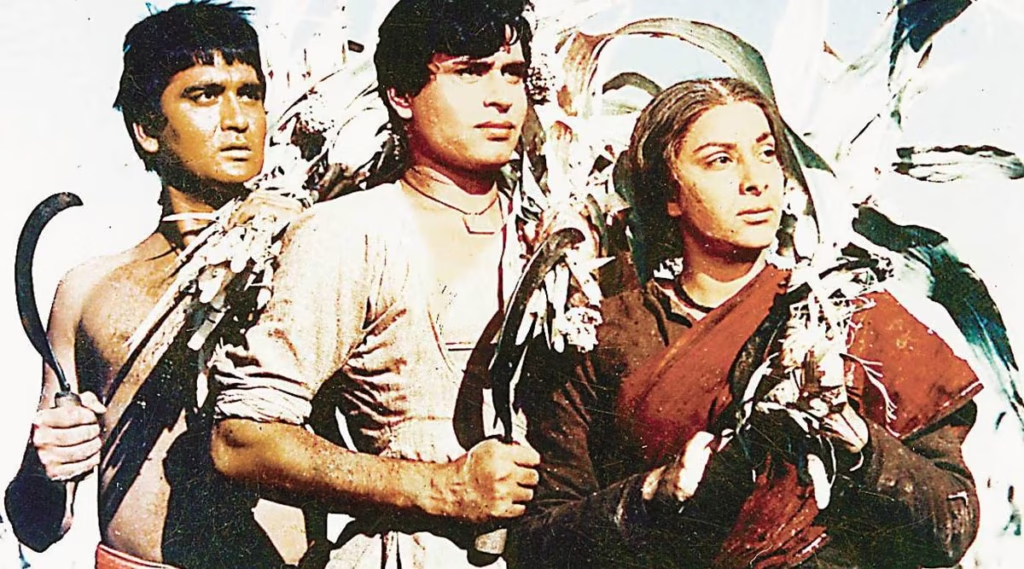
Her older son Ramu grows into a responsible, steady man. Her younger son Birju, played by Sunil Dutt in a role that made him a star overnight, is a blazing, resentful rebel who takes out his rage at poverty and injustice on everyone around him. He eventually becomes a dacoit. And the film ends with one of Hindi cinema’s most devastating sequences — Radha, the same mother who gave everything to hold her family together, shoots Birju herself because he has gone too far. She chooses her village’s honor over her own blood.
The film is shot on a sweeping, almost operatic canvas. The music by Naushad is magnificent — Duniya Mein Hum Aaye Hain, Holi Aayi Re Kanhai, Nagri Nagri Dware Dware — these are not just songs, they are state-of-mind anthems for an entire generation of Indians. The cinematography by Faredoon Irani captures something true and beautiful about the Indian countryside that has rarely been matched since.
During filming, something remarkable happened off-screen. There was a fire sequence being shot in the village of Umra. The fire got out of control and Nargis found herself trapped in the flames. Sunil Dutt, who was playing her son, threw a blanket around himself, rushed in, and pulled her to safety — sustaining burns in the process. They were quietly married by the time the film released, though they kept it a secret because he was playing her son in the movie. That love story, born from a fire on a film set, became as legendary as the movie itself.
At the 30th Academy Awards in 1958, Mother India was nominated for Best Foreign Language Film — making it the first Indian film ever to receive that honor. It went up against films from France, Germany, Italy, and Norway. And it came agonizingly close to winning. According to multiple accounts confirmed over the decades, the film lost to Federico Fellini’s Nights of Cabiria from Italy by a single vote in the deciding round. One vote. Had that vote gone the other way, Indian cinema would have won an Oscar sixty-seven years ago.
The loss did nothing to diminish the film’s legacy. It is still considered one of the greatest films ever made, not just in India but in the world. It appears in the book 1001 Movies You Must See Before You Die. It remains the benchmark against which every Hindi epic is measured. The image of Nargis carrying a plough on her shoulder, printed on the film’s iconic poster, is as much a symbol of independent India as any political image from that era.
2. Salaam Bombay! (1988) — Thirty Years Later, India Returns
Director: Mira Nair
Release Date: 1988
Cast: Shafiq Syed, Raghubir Yadav, Nana Patekar, Anita Kanwar, Irrfan Khan (early appearance), Hansa Vithal
Oscar Nomination: 61st Academy Awards, 1989 — Best Foreign Language Film
Result: Lost to Pelle the Conqueror (Denmark)
Thirty years passed between Mother India’s nomination and India’s second trip to the Oscars. Thirty years. Let that settle in for a moment. In those three decades, Indian cinema produced extraordinary work — Satyajit Ray’s entire filmography, the realism of Shyam Benegal, the fire of Govind Nihalani — and yet the official selection process, handled by the Film Federation of India, repeatedly chose films that failed to crack the nomination shortlist. By 1988, it had been nearly a generation since India had made even a dent.
Then Mira Nair arrived.
Nair was born in Rourkela and educated in Delhi and later at Harvard. She had spent years making documentary films before deciding to make her first feature. For Salaam Bombay!, she and her co-writer Sooni Taraporevala did something extraordinary. They went to the streets of Bombay and spent months interviewing real street children. They listened to their stories. Then they opened an acting school, trained actual street kids to perform naturally on camera, and cast the best of them. There was no concern about star power or box office. The only concern was truth.
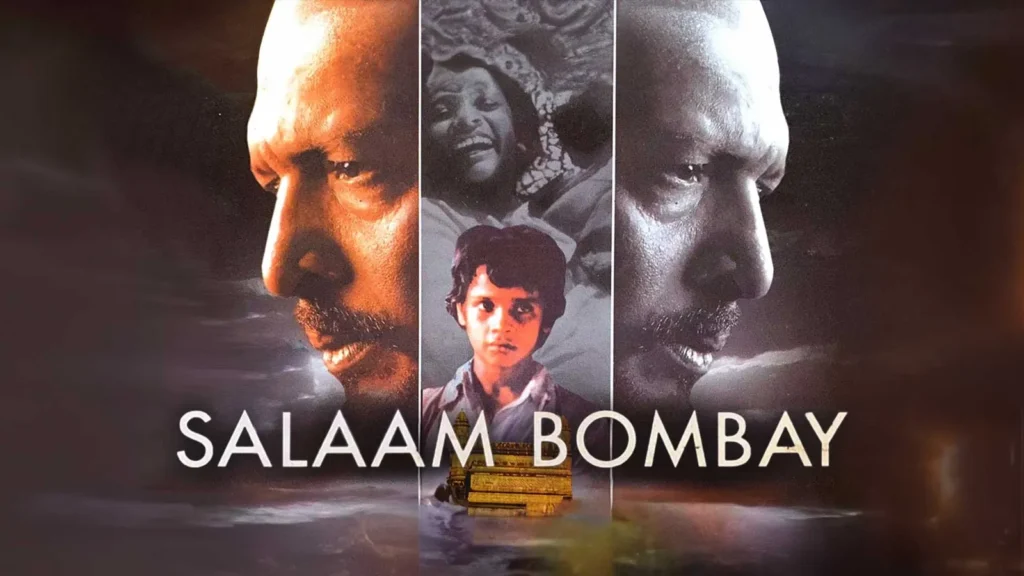
The film follows a boy named Krishna — given the street name Chaipau, meaning Tea Boy — played with heartbreaking naturalness by twelve-year-old Shafiq Syed, whom Mira Nair discovered in the slums of Bengaluru. Krishna is abandoned at a circus by his mother and told he cannot come home until he earns five hundred rupees to replace his brother’s bicycle that he destroyed. He makes his way to Bombay and finds himself navigating a world of drug dealers, pimps, addicts, and lost children — all trying to survive in the cracks of a city that barely knows they exist.
He befriends Chillum, a tragic heroin addict played brilliantly by Raghubir Yadav, and falls quietly in love with Manju, the young daughter of a pimp named Baba played by a menacing Nana Patekar. Woven through the film is the character of Rekha, a sex worker played by Anita Kanwar, who carries a quiet dignity that makes her story one of the film’s most affecting. A very young Irrfan Khan also appears in a small role — one of the first times the world saw a face that would eventually become one of Indian cinema’s greatest.
The film is shot in a raw, documentary style that puts you right on those streets. There is nothing glamorous about the Bombay of Salaam Bombay! — it is crowded, dangerous, indifferent, and utterly alive. You smell the tea stalls and the gutters. You feel the weight of every small defeat that accumulates until it becomes too heavy to carry.
When the film premiered at Cannes in 1988, it won the Camera d’Or for best debut film and the Audience Award — two of the most coveted prizes at one of the world’s most prestigious film festivals. It went on to collect more than twenty international awards. And then it came to the Oscars.
At the 61st Academy Awards in 1989, Salaam Bombay! was nominated for Best Foreign Language Film. It was India’s second nomination ever, and the first in thirty years. The film lost to the Danish film Pelle the Conqueror, directed by Bille August and starring Max von Sydow, which was a worthy winner. But the loss stung, especially because Salaam Bombay! had built such enormous global momentum.
What happened to Shafiq Syed after the film is one of the more poignant footnotes in Indian cinema history. He won the National Film Award for Best Child Artist and attended international film festivals. He was paid just twenty rupees a day during filming, with lunch often being vada pav. Decades later, reports confirmed that he had been working as an auto-rickshaw driver in Bengaluru to support his family, still hoping for a way back into cinema. A story about forgotten children made by a filmmaker who cared deeply about forgotten children — and one of its young stars lived out a version of that same story in real life.
Mira Nair, true to the spirit of the film, established a foundation for Bombay’s street children during the making of the movie. That foundation still operates today.
3. Lagaan: Once Upon a Time in India (2001) — Cricket, Colonialism, and a Nation Holding Its Breath
Director: Ashutosh Gowariker
Release Date: June 15, 2001
Cast: Aamir Khan, Gracy Singh, Rachel Shelley, Paul Blackthorne, Kulbhushan Kharbanda, Raghubir Yadav, Yashpal Sharma, Akhilendra Mishra
Oscar Nomination: 74th Academy Awards, 2002 — Best Foreign Language Film
Result: Lost to No Man’s Land (Bosnia and Herzegovina)
Lagaan is what happens when a filmmaker has a dream so large and stubborn that he refuses to let practicality kill it. Ashutosh Gowariker had been thinking about this story since 1996. A tale of Indian villagers challenging their British colonial rulers to a cricket match — winner takes all, or in this case, winner cancels the taxes. The pitch sounds almost absurd in a sentence. On screen, it becomes one of the most thrilling, emotionally complete Indian films ever made.
The story is set in 1893, in the fictional village of Champaner in a unnamed princely state during the British Raj. The region is experiencing a severe drought, and the villagers are already struggling to pay their land tax — lagaan — to the local ruler. Then Captain Andrew Russell, the arrogant British officer in command of the local regiment, arbitrarily doubles the tax. When Bhuvan, a young, spirited farmer played by Aamir Khan, speaks up in defiance, Russell makes him a wager: if the villagers can beat the British officers at cricket — a game most of them have never played — the entire province gets a three-year tax exemption. If the villagers lose, they pay triple.
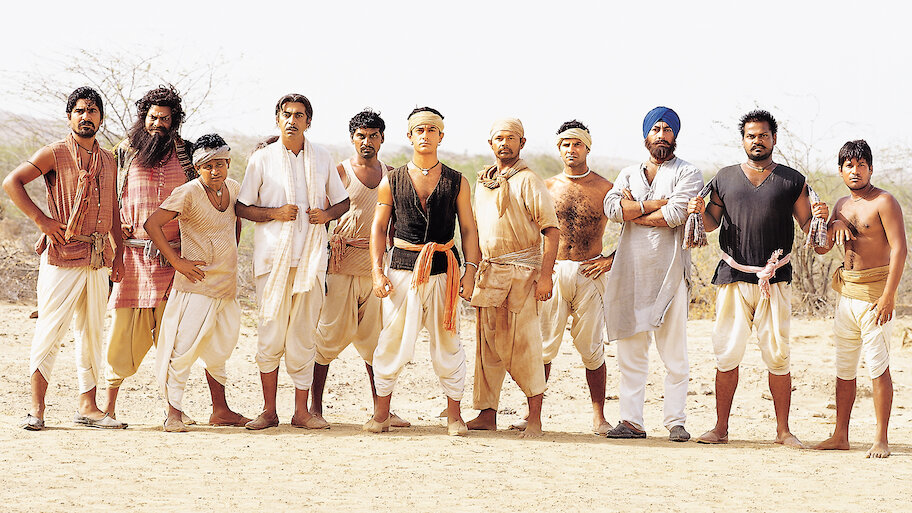
What follows is a three-hour film that builds with the patient confidence of great storytelling. Bhuvan assembles a team from the most unlikely corners of his community — an untouchable, a man who has never played the game, a man with only one hand — and begins training them. There is a subplot involving Elizabeth, Russell’s sister played by Rachel Shelley, who is moved by the villagers’ cause and secretly helps them understand cricket’s finer points. There is also a traitor within the group. There is romance. There is music by A.R. Rahman that is simply gorgeous — Radha Kaise Na Jale, Mitwa, O Rey Chhori, Chale Chalo — each song precisely calibrated to carry the film’s emotional weight at just the right moment.
The cricket match at the film’s climax, which takes up the better part of the third act, is one of the most genuinely exciting sporting sequences in world cinema. It should not work — cricket is a sport that confuses even some Indians when explained to outsiders — but Gowariker and his team make it completely accessible and thrillingly tense.
Aamir Khan was not just the lead. He produced the film himself — his first production — because he believed it needed a certain kind of protection and care that only someone with creative ownership could provide. He was right. The film ran for three hours and forty minutes in its full version. No studio would have greenlit that without heavy interference. Aamir simply refused to cut corners.
At the 74th Academy Awards held in 2002, Lagaan was nominated for Best Foreign Language Film. Aamir Khan and Ashutosh Gowariker flew to Los Angeles for the ceremony with real expectation. India was excited in a way it had rarely been about a film at the Oscars. The nomination had generated enormous global press coverage, and Lagaan had found genuine audiences in countries it had never been expected to reach.
The Oscar went to No Man’s Land, a Bosnian film about two soldiers — one Bosnian, one Serbian — trapped together in no man’s land during the Bosnian War. In retrospect, it was a hard film to beat in that political moment. Aamir Khan admitted years later that he was genuinely disappointed, but framed it with characteristic thoughtfulness. He pointed out that just being nominated meant the jury loved the film — the music, the length, the cricket, all of it. To be at the finish line at all was its own achievement.
Lagaan remains India’s most recent nomination in the Best International Feature Film category. More than two decades have passed since, during which the Film Federation of India’s selection decisions have repeatedly drawn controversy — most notably when The Lunchbox in 2013 and RRR in 2022 were considered favorites by critics worldwide but were passed over as India’s official entry.
4. RRR — Naatu Naatu (2022) — India Finally Wins
Director: S.S. Rajamouli
Film Release Date: March 25, 2022
Cast: Ram Charan, Jr. NTR (N.T. Rama Rao Jr.), Alia Bhatt, Ajay Devgn
Nominated For: 95th Academy Awards, 2023 — Best Original Song (Naatu Naatu)
Composer: M.M. Keeravaani | Lyrics: Chandrabose
Result: WON — Best Original Song
RRR was not India’s official Oscar submission. The Film Federation of India chose the Gujarati film Chhello Show instead. In a twist that felt both ironic and poetic, RRR went on to win an actual Oscar while India’s official entry did not even make the nomination shortlist.
The film itself is a gloriously excessive action spectacle — a fictional reimagining of a friendship between two real-life Indian revolutionaries, Alluri Sitarama Raju (played by Ram Charan) and Komaram Bheem (played by Jr. NTR), set against the backdrop of colonial British rule in the 1920s. Director S.S. Rajamouli, the man who gave India the Baahubali franchise, took those two historical figures and invented a story in which they meet, become friends without knowing each other’s true identities, and eventually stand on the same side in a breathtaking act of resistance against the colonizers.
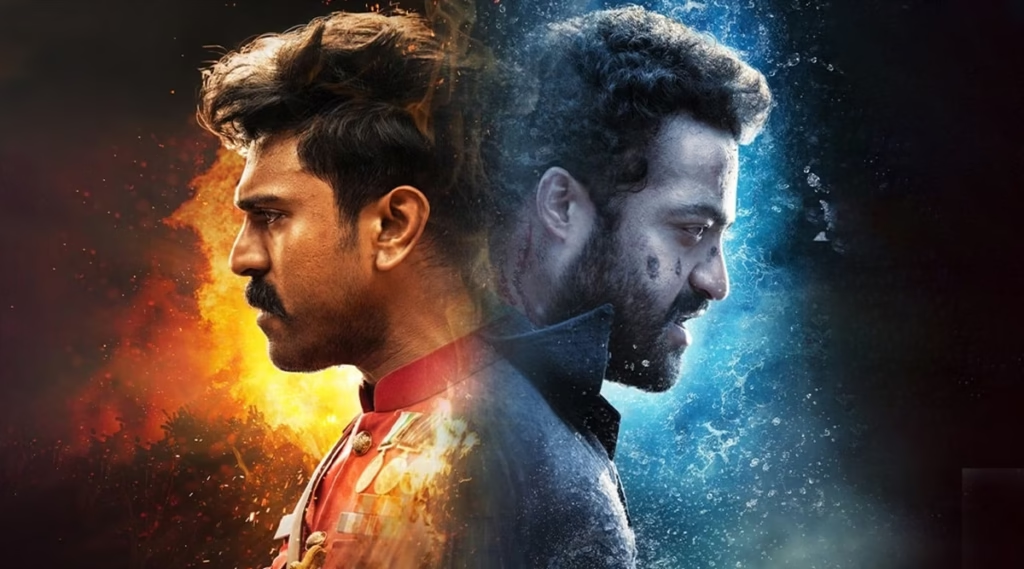
The film runs three hours. It features a tiger, a bear, a man throwing another man like a human javelin, a motorcycle used as a weapon, and choreography that makes no concessions to logic or physics. It is, deliberately and joyfully, the most Indian film imaginable — full of color, emotion, scale, music, and a complete disregard for restraint.
And then there is Naatu Naatu.
The song plays during a pivotal scene at a British colonial party. A young British man aims racist insults at the two leads, and they respond by launching into a dance that starts with the two of them and ends with everyone at the party — including the scoffing British man — trying desperately to keep up. The scene was filmed at the magnificent Mariinskyi Palace in Kyiv, Ukraine, just months before the Russian invasion made such filming impossible. The song itself is a high-energy, rhythmic Telugu number composed by M.M. Keeravaani with lyrics by Chandrabose. It became a global phenomenon, spawning challenges on every social media platform imaginable and accumulating hundreds of millions of views.
At the 95th Academy Awards on March 12, 2023, Naatu Naatu won Best Original Song — beating Lady Gaga’s Hold My Hand from Top Gun: Maverick and Rihanna’s Lift Me Up from Black Panther: Wakanda Forever, among others. Keeravaani accepted the award and, characteristically, burst into song himself while on the stage. He said backstage that he felt the win was a signal that the world was ready to pay more attention to Indian and Asian music. Television images showed people dancing in the streets across India within minutes of the announcement.
It was the first time a homegrown Indian production had won a competitive Oscar. The award felt, for many Indians, like a dam breaking.
5. The Elephant Whisperers (2022) — India’s Heart Wins the World Over
Director: Kartiki Gonsalves
Producer: Guneet Monga
Release: Netflix, December 8, 2022
Nominated For: 95th Academy Awards, 2023 — Best Documentary Short Film
Result: WON — Best Documentary Short Film
On the same night that Naatu Naatu brought a stadium to its feet, a quiet forty-minute documentary from Tamil Nadu also went home with an Oscar. The contrast in tone could not have been more striking — but both wins were equally meaningful.
The Elephant Whisperers tells the story of Bomman and Belli, a tribal couple living in the Nilgiri mountains of Tamil Nadu who are entrusted with the care of Raghu, a baby elephant who has been orphaned and separated from his herd. It follows them through the Mudumalai National Park as they raise Raghu, nurse him through illness, and develop a bond with him that is tender, complex, and deeply human.
Directed by debutante Kartiki Gonsalves and produced by Guneet Monga, the film is shot with extraordinary patience and care. It does not editorialize. It does not impose drama. It simply watches — and what it watches turns out to be one of the most beautiful things you can see on a screen: two people choosing love for something that cannot speak their language, in a place of extraordinary natural beauty.
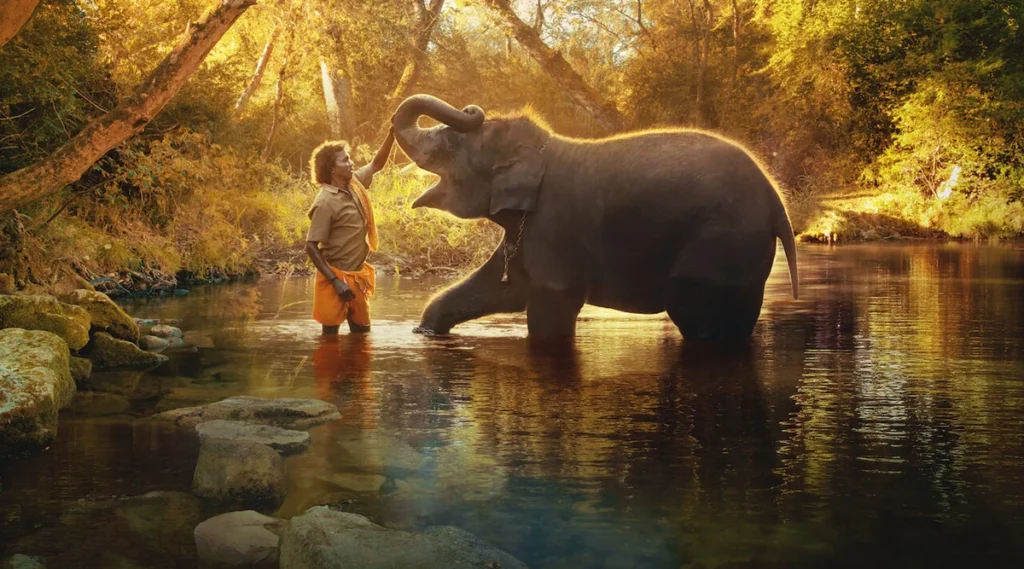
When Kartiki Gonsalves accepted the Oscar, she dedicated the win to India, calling it her motherland. She became the first Indian director to win an Oscar in any directing category. Guneet Monga, one of the most persistent and passionate forces in Indian independent cinema for over a decade, had finally won the ultimate recognition.
The film had been released on Netflix just a few months before the awards season. The win felt like proof that Indian storytelling, when it is given the space to be itself rather than trying to meet some imagined Western expectation, can move anyone in the world.
6. Laapataa Ladies (2024) — India’s Selection That Came Close But Didn’t Make It
Director: Kiran Rao
Release Date: March 1, 2024
Cast: Nitanshi Goel, Pratibha Ranta, Sparsh Shrivastav, Ravi Kishan, Chhaya Kadam
India’s Official Entry for: 97th Academy Awards, 2025 — Best International Feature Film
Result: Did not make the final nomination shortlist
Laapataa Ladies is a genuinely charming film — warm, funny, and deeply felt — which makes its exit from the Oscar race before the nomination stage all the more frustrating to discuss. But its story is worth telling in full, because it illustrates so precisely how India’s relationship with the Oscars works: a good film, controversial selection, and ultimately, another missed shot.
Directed by Kiran Rao and produced by Aamir Khan Productions — an interesting fact, given that Aamir Khan was also the producer and star of Lagaan, India’s last actual nomination — the film is set in rural India in the early 2000s. It tells the story of two new brides, Jaya and Phool, whose faces are hidden behind identical red bridal veils as they travel by train to their respective new homes. On the journey, in a moment of confusion, the two brides get off at the wrong station and end up at the wrong wedding. Jaya, played by Pratibha Ranta, is an educated, quietly determined young woman who has her own plans for her life. Phool, played with irresistible sweetness by Nitanshi Goel, is innocent, overwhelmed, and desperately lost. Each finds herself navigating a world that was meant for the other.
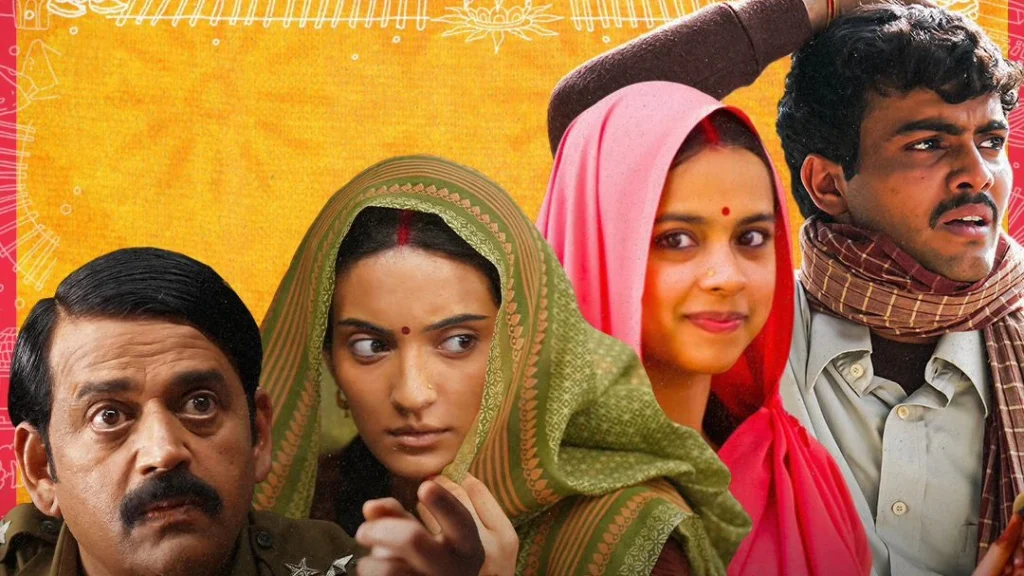
The film is a comedy of errors at its surface, but underneath it is a gentle, perceptive satire on patriarchy — on how thoroughly Indian society has historically treated women as interchangeable, identifiable only through their relationship to a husband. It premiered at the 2023 Toronto International Film Festival, where it found warm audiences, and released theatrically in India in March 2024 before landing on Netflix.
In September 2024, the Film Federation of India selected Laapataa Ladies as India’s official entry for the Best International Feature Film category at the 97th Academy Awards over 29 other films. The decision was controversial from the start. The film many critics and international observers felt should have been chosen was Payal Kapadia’s All We Imagine As Light — which had just won the Grand Prix at the 2024 Cannes Film Festival, the festival’s second-highest honor, making it the first Indian film in thirty years to compete in Cannes’ main competition. All We Imagine As Light had received rapturous international press, genuine awards season momentum, and was considered one of the finest films of 2024 globally. The FFI chose Laapataa Ladies anyway.
In December 2024, the Academy published its shortlist of fifteen films competing for the final five Best International Feature nominations. Laapataa Ladies was not on it. India’s official entry had been eliminated before reaching the nomination stage. The film that might have been India’s contender, All We Imagine As Light, was also not nominated — it had neither India nor France behind it as an official submission at the point that mattered most.
Laapataa Ladies remains a lovely film, and it deserves its audience. But the selection decision has added another chapter to the long, unresolved argument about whether the Film Federation of India’s jury is the right body to be making choices of this magnitude for Indian cinema.
7. All We Imagine As Light (2024) — The One That Got Away
Director: Payal Kapadia
Release Date: Cannes Film Festival, May 23, 2024
Cast: Kani Kusruti, Divya Prabha, Chhaya Kadam, Hridhu Haroon
Status: Not selected as India’s official Oscar entry. Did not receive an Oscar nomination.
This is not a film that received an Oscar nomination. It belongs here anyway, because leaving it out would mean leaving out what may be the most significant moment in Indian cinema’s international standing since Lagaan walked the Oscars red carpet in 2002.
Payal Kapadia is an alumna of the Film and Television Institute of India in Pune. Her debut feature, All We Imagine As Light, is a multilingual drama told in Malayalam, Hindi, and Marathi. It follows two nurses from Kerala — Prabha and Anu — who share a small apartment in Mumbai. Prabha’s husband has quietly vanished into a life abroad; she lives with the ghost of that marriage. Anu is navigating a secret romance across religious lines. The film follows them on a journey to a coastal town, where the forest becomes a space for things that cannot be said in the city.

The film is quiet, interior, and formally exquisite. It does not shout. It holds still and watches, and what it finds in the stillness is something profound about modern Indian women — their longing, their resilience, their refusal to stop wanting things.
When it premiered at Cannes on May 23, 2024, it received an eight-minute standing ovation. It went on to win the Grand Prix — the festival’s second-highest honor after the Palme d’Or — making Kapadia the first Indian filmmaker ever to win it, and making the film the first Indian production to compete in Cannes’ main competition in thirty years. The last time India had done so was Shaji N. Karun’s Swaham in 1994.
The accolades did not stop at Cannes. All We Imagine As Light won Best International Feature at the Gotham Awards. It was nominated for two Golden Globes — Best Non-English Language Film and Best Director, making Kapadia one of only a handful of female directors to earn that nomination. It appeared on Barack Obama’s list of favorite films of 2024. It won Best International Film at the New York Film Critics Circle. By any international measure, it was one of the most acclaimed films of the year.
And yet it did not represent India at the Oscars. The Film Federation of India passed it over for Laapataa Ladies. France, which co-produced the film through production company Petit Chaos, shortlisted it as a potential French entry — but it ultimately did not compete under any flag at the Academy Awards.
At the 97th Oscar nominations announced in January 2025, All We Imagine As Light was absent. So was any Indian film. It was another year of watching from the outside.
Payal Kapadia, to her credit, was not bitter about it in public. She said she was happy the film had found its audience. But for anyone watching India’s Oscar story closely, the omission of All We Imagine As Light from India’s submission — and then from the nominations entirely — was a painful echo of every other time the right film was in the room and the wrong decision was made.
You May Also Like:
Beyond the Big Films: Other Indian Connections to the Oscars Worth Knowing
The story of India at the Oscars is not just about the three nominated feature films and the two 2023 wins. There are other chapters worth knowing.
Bhanu Athaiya (1983) — The first Indian to win an Oscar. Athaiya was a costume designer from Kolhapur who had been working in Indian cinema for decades. When Richard Attenborough made Gandhi, he chose her to design the costumes. She shared the Oscar for Best Costume Design with John Mollo at the 55th Academy Awards in 1983, making her the first Indian to ever win a competitive Academy Award. She later returned her Oscar to the Academy, saying she feared she would not be able to care for it properly.
Satyajit Ray (1992) — The legendary Bengali filmmaker received an Honorary Oscar for lifetime achievement at the 64th Academy Awards. Ray was critically ill at the time and accepted the award from his hospital bed in Calcutta via satellite link. He died just twenty-five days later. He remains the only Indian filmmaker to have received this honor, and the most widely respected Indian director in world cinema history.
Slumdog Millionaire (2009) — Not an Indian film — it was a British production directed by Danny Boyle — but it is impossible to tell this story without it. Set in the slums of Mumbai, scored entirely by A.R. Rahman, and featuring an almost entirely Indian cast, the film won eight Oscars including Best Picture. Rahman won Best Original Score and Best Original Song for Jai Ho, alongside lyricist Gulzar. Sound mixer Resul Pookutty won Best Sound Mixing. These were Indian artists winning major Oscars — it simply happened under a British flag.
Smile Pinki (2009) — An Indian-American short documentary about a five-year-old girl in rural India born with a cleft lip, directed by Megan Mylan, won Best Documentary Short Subject at the 81st Academy Awards. The story, the child, and the world it depicted were entirely Indian.
Water (2005) — Deepa Mehta’s Banned Film That Won the World — This one belongs in a category of its own. Water is an Indian story, set in India, about Indian women, made by an Indian-born director — but it represented Canada at the Oscars, because India’s own political climate made it impossible to make the film here.
Director Deepa Mehta, who was born in India but had settled in Canada, began developing Water in 2000. The film was to be set in 1938 Varanasi, exploring the lives of Hindu widows condemned to live in ashrams — cut off from society, their heads shaved, dependent on alms and often exploited — while the winds of Gandhian reform were beginning to blow through India. The subject matter was culturally sensitive, and when Mehta arrived in Varanasi to start filming, Hindu nationalist groups attacked the set, smashed equipment, burned effigies of the director, and threatened the crew. The regional government withdrew filming permission. It took Mehta five years of distance, reflection, and quiet determination before she went back to the project — this time rebuilding the entire film in Sri Lanka.
The cast she assembled included Seema Biswas, Lisa Ray, and John Abraham in his finest dramatic performance. The story follows eight-year-old Chuyia, who is widowed as a small child and sent to the ashram. Her fearless, searching presence sets off a chain of events that slowly unravels the lives of the women around her, particularly Kalyani, a young widow of heartbreaking beauty who is being quietly prostituted by the ashram’s head to wealthy patrons. Into this world comes Narayan, an idealistic follower of Gandhi, who falls in love with Kalyani and tries to pull her into a different future.
The film won three Genie Awards in Canada and opened the 2005 Toronto International Film Festival. Canada selected it as its official Oscar submission — notably the first non-French-language Canadian film ever to receive an Oscar nomination in the international category. At the 79th Academy Awards in 2007, Water was nominated for Best Foreign Language Film. It lost to Das Leben der Anderen (The Lives of Others) from Germany, which was a very strong film and a deserving winner — but the loss did not diminish Water’s standing. It is, by any measure, one of the finest films ever made about India and has been screened in universities and film schools worldwide ever since.
There is a painful irony in the fact that the country whose story the film was telling refused to let it be made on its own soil. India’s political hostility towards Water is one of the more uncomfortable footnotes in the country’s cultural history. The film is now available on streaming and widely celebrated in India — but it arrived there the long way around.
Don’t miss the regular updates on Latest Movies and OTT Release, Follow Popnewsblend.com
Why Has India Not Won the Big One Yet?
This question has been asked so many times that it has become its own conversation in Indian cinema. The honest answer is complicated.
Part of it is the selection process. The Film Federation of India chooses just one film to submit as India’s official entry each year. That committee has, by widespread critical consensus, repeatedly made questionable choices — submitting mainstream Hindi films with broad commercial appeal while ignoring critically praised regional language films that might have had a stronger chance. The Lunchbox in 2013, widely praised internationally and a genuine festival circuit phenomenon, was passed over. RRR in 2022 was passed over. Satyajit Ray spent much of his career not being selected as India’s official entry.
Part of it is also that the Oscars have historically had a strong preference for a certain kind of quiet, naturalistic storytelling — the kind European cinema has perfected over decades. Indian cinema’s instinct for scale, emotion, music, and melodrama is not a flaw, but it has often sat uneasily with Academy voters who were not raised on it.
That is changing. The global reach of streaming platforms, the success of Parasite and other non-Western films at the Oscars in recent years, and the genuine international curiosity about Indian cinema that RRR ignited — all of this is shifting the landscape. The question now is not whether Indian cinema belongs on that stage. It clearly does. The question is whether the right films will be given the chance to get there.
Conclusion
From Nargis carrying a plough through fire and flood in 1957 to Ram Charan and Jr. NTR dancing in a palace in Kyiv, the story of India at the Oscars spans seven decades of extraordinary filmmaking, painful near-misses, and moments of pure, undeniable triumph.
Three feature film nominations. Two wins at the 2023 ceremony alone. A costume designer who made history in 1983. A legendary filmmaker accepting an honor from a hospital bed. A twelve-year-old street kid from Bengaluru delivering one of the most natural performances in cinema history. A tribal couple in Tamil Nadu raising an orphaned elephant into something that moved the whole world.
This is not a story of failure. It is a story of a cinema that is, finally, learning how to bring its full self to the world’s biggest table — and discovering that the world is ready to receive it.
The trophy for Best International Feature Film has not come home yet. But the conversation about Indian cinema has never been louder, more global, or more deserved. If the last few years have taught us anything, it is that the wait may not be very much longer.
Frequently Asked Questions
How many Indian films have been nominated for the Oscar for Best International Feature Film? As of 2025, only three Indian films have received a nomination in this category. Mother India in 1957 was the first, followed by Salaam Bombay! in 1988, and Lagaan in 2001. Despite India submitting films to the Academy every year since 1957, only these three have made it to the nomination shortlist.
Has any Indian film ever won the Oscar for Best International Feature Film? No. All three nominated films — Mother India, Salaam Bombay!, and Lagaan — lost to films from Italy, Denmark, and Bosnia and Herzegovina respectively. The closest India came was Mother India in 1958, which reportedly lost by a single vote.
Who was the first Indian to win an Oscar? Bhanu Athaiya became the first Indian to win a competitive Academy Award when she shared the Oscar for Best Costume Design for Gandhi at the 55th Academy Awards in 1983.
Did RRR win an Oscar? Yes. The song Naatu Naatu from RRR won the Best Original Song Oscar at the 95th Academy Awards in March 2023, becoming the first homegrown Indian production to win a competitive Oscar. RRR was not, however, India’s official entry for Best International Feature Film that year.
What was The Elephant Whisperers and why did it win an Oscar? The Elephant Whisperers is a forty-minute Tamil documentary directed by Kartiki Gonsalves and produced by Guneet Monga, released on Netflix in 2022. It follows a tribal couple named Bomman and Belli who raise an orphaned baby elephant named Raghu in the Nilgiri mountains of Tamil Nadu. It won Best Documentary Short Film at the 95th Academy Awards, making it the first Indian documentary production to win an Oscar and making Kartiki Gonsalves the first Indian director to win in any directing category at the Oscars.
Why has India not won Best International Feature Film despite producing thousands of films? Several factors have contributed. The Film Federation of India’s selection committee has drawn consistent criticism for submitting commercially oriented mainstream films rather than the critically acclaimed regional language films that might connect more strongly with international juries. The Academy has also historically favored a quieter, more restrained style of filmmaking that differs from Indian cinema’s natural strengths. Changing global tastes and the rise of streaming platforms are beginning to close this gap.
Did Satyajit Ray ever win an Oscar? Yes, though not a competitive one. Satyajit Ray received an Honorary Academy Award for lifetime achievement at the 64th Academy Awards in 1992. He accepted it from his hospital bed in Calcutta via satellite link while critically ill. He died twenty-five days after the ceremony. He is widely considered one of the greatest filmmakers in world cinema history.
What Indian connection does Slumdog Millionaire have to the Oscars? Slumdog Millionaire was a British film directed by Danny Boyle, not an Indian production. However, it was set in Mumbai, scored by Indian composer A.R. Rahman, and featured an almost entirely Indian cast. Rahman won two Oscars for it — Best Original Score and Best Original Song for Jai Ho (shared with lyricist Gulzar). Sound mixer Resul Pookutty also won Best Sound Mixing. The wins belonged to Indian artists even if the film itself flew the British flag.
Which Indian actor has attended the Oscar ceremony? Aamir Khan and director Ashutosh Gowariker attended the 74th Academy Awards in 2002 when Lagaan was nominated. Deepika Padukone was a presenter at the 95th Academy Awards in 2023. Ram Charan and Jr. NTR attended as stars of RRR when Naatu Naatu performed live on the Oscars stage the same night.
What is the Film Federation of India and how does it decide India’s Oscar entry? The Film Federation of India is a body that appoints a jury each year to select one film from India’s annual output to submit as the country’s official entry to the Academy Awards in the Best International Feature Film category. Only one film can be submitted per country. The FFI’s selections have been frequently controversial, with critics arguing the committee consistently overlooks the most internationally competitive films in favor of mainstream Hindi commercial productions.
Is it true that Mother India lost the Oscar by one vote? Yes, according to multiple historical accounts and industry sources, Mother India lost to Federico Fellini’s Nights of Cabiria in the deciding round of voting by a single vote. It remains one of the most discussed near-misses in the history of the Academy Awards, and the question of what Indian cinema’s trajectory might have looked like had that one vote gone differently is one that filmmakers and critics have pondered for decades.
Did Laapataa Ladies get nominated for an Oscar? No. Laapataa Ladies was selected by the Film Federation of India as India’s official entry for the Best International Feature Film category at the 97th Academy Awards in 2025, but it did not make the Academy’s shortlist of fifteen films announced in December 2024. The film — a warm feminist comedy-of-errors directed by Kiran Rao about two brides who are accidentally swapped on a train — was eliminated before reaching the final five nominations. Its selection over Payal Kapadia’s All We Imagine As Light, which had won the Grand Prix at Cannes 2024, drew considerable controversy at the time.
What happened to All We Imagine As Light at the Oscars? All We Imagine As Light, directed by Payal Kapadia, was not selected as India’s official Oscar entry despite winning the Grand Prix at the 2024 Cannes Film Festival — the festival’s second-highest honor — and becoming one of the most acclaimed films internationally that year. It was shortlisted by France as a possible French entry, given the film’s co-production, but ultimately competed under no country’s flag at the Academy Awards. It did not receive an Oscar nomination. The film earned two Golden Globe nominations (Best Director and Best Non-English Language Film), and appeared on numerous critics’ year-end lists. Many in the Indian film industry consider it one of the most significant missed opportunities in India’s Oscar history.
What is Water (2005) and why is it part of India’s Oscar story? Water is a 2005 film written and directed by Indian-born filmmaker Deepa Mehta, set in 1938 India and exploring the lives of Hindu widows condemned to live in ashrams. It stars Seema Biswas, John Abraham, and Lisa Ray. Mehta originally tried to make the film in Varanasi but was forced off the set by Hindu nationalist groups who attacked the crew. She rebuilt the entire production in Sri Lanka five years later. Because Mehta had settled in Canada, the film was submitted as Canada’s official Oscar entry — not India’s — and was nominated for Best Foreign Language Film at the 79th Academy Awards in 2007, losing to The Lives of Others from Germany. It is an entirely Indian story, set in India, told by an Indian director, that reached the Oscars under a different flag.

Hi, I’m Prashant Jain — a film enthusiast and critic who lives and breathes cinema. From big-screen releases to the latest drops on OTT, I watch extensively and review honestly, without hype or bias.
I believe a good review should go beyond just “good” or “bad.” It should help you understand what works, what doesn’t, and whether a film is truly worth your time. My reviews focus on storytelling, performances, direction, and overall impact — all through the lens of a genuine viewer.
I regularly cover new movie releases and trending web series across OTT, bringing clear, no-nonsense insights for audiences who want real opinions, not paid praise.
Through PopNewsBlend, I aim to cut through the noise and give you reviews you can trust — whether you’re deciding what to watch next or just love discussing cinema as much as I do.
Discover more from Popnewsblend
Subscribe to get the latest posts sent to your email.
Related posts:
 The Ultimate Guide to the Best Bollywood Comedy Movies Ever Made
 Tanvi: The Great – A Landmark in Indian Cinema
 Thug Life Movie (2025)Review: Kamal Haasan & Mani Ratnam’s Ambitious Reunion Delivers Style Over Substance
 Ek Din Movie Review (2026): Junaid Khan & Sai Pallavi Deliver a Soulful Love Story That Stays With You


Pingback: Most Awaited Indian Movie Sequels in 2026: From 3 Idiots 2 to Krrish 4, Fans Can’t Keep Calm
Pingback: Top Upcoming Movies Releasing in July 2026 You Shouldn't Miss
Pingback: Welcome to the Jungle 2026 Movie Review, Cast, Story & Box Office — Complete Guide