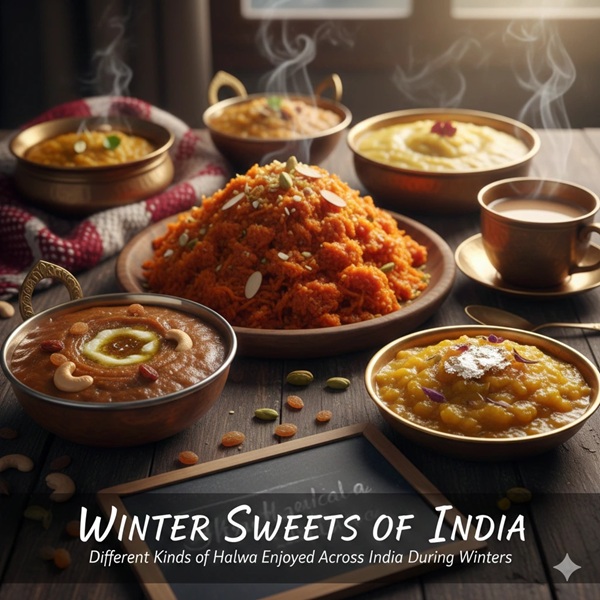
Winter in India does not begin with a date on the calendar. It begins in kitchens. The sound of ghee warming in a heavy pan, the slow roasting of flour or lentils, the gentle aroma of cardamom floating through the house — this is how winter announces itself. And at the heart of this seasonal ritual lies halwa.
Across India, halwa is more than a dessert. It is nourishment, tradition, celebration and comfort food all rolled into one. Different regions prepare different kinds of halwa using local ingredients, seasonal produce and age-old techniques passed down through generations. Winters, especially are incomplete without these warm, rich and soul-satisfying sweets.

Gajar Ka Halwa (Carrot Halwa)
Region: Punjab, Delhi, Uttar Pradesh, Rajasthan
Gajar ka halwa is the first sweet that comes to mind when winter arrives in North India. Made from fresh red winter carrots, it is deeply associated with the season.
Origin and Tradition:
The use of red carrots, available only in winters, made this halwa a seasonal favourite. It became popular in North Indian households due to its natural sweetness and warming nature.
How It Is Prepared:
Fresh carrots are grated and slow-cooked in full-cream milk for hours until the milk reduces and thickens. Sugar is added gradually, followed by generous amounts of ghee. The halwa is finished with cardamom and garnished with almonds, cashews and pistachios.
How to Enjoy:
Best eaten piping hot. Many enjoy it plain, while others pair it with vanilla ice cream for contrast.
Moong Dal Halwa
Region: Rajasthan, Madhya Pradesh, Uttar Pradesh
Moong dal halwa is rich, heavy and celebratory. It is not made often, but when it is, it marks something special.
Origin and Tradition:
This halwa originated in Rajasthan, where winters are harsh and food needs to be energy-rich. It is commonly prepared for weddings and festivals.
How It Is Prepared:
Yellow moong dal is soaked, ground into a paste and roasted slowly in ghee for a long time until it releases a nutty aroma. Milk, sugar and cardamom are then added, followed by dry fruits.
How to Enjoy:
Serve hot in small portions. It is filling and deeply warming.
Atta Halwa (Kadha Prasad)
Region: Punjab, Gurudwaras across India
Atta halwa is simplicity at its purest.
Origin and Tradition:
Prepared as Kadha Prasad in Sikh temples, this halwa represents equality, humility and devotion. It is always served warm and without discrimination.
How It Is Prepared:
Whole wheat flour is roasted in ghee and cooked with sugar and water in perfect proportion. No flavouring or garnish is added.
How to Enjoy:
Always eaten warm, with respect and mindfulness.
Besan Halwa
Region: North India, Gujarat, Rajasthan
Besan halwa has a comforting, roasted flavour that feels especially satisfying in cold weather.
Origin and Tradition:
Gram flour is known for its warming properties, making this halwa ideal for winters. It is often prepared during festivals.
How It Is Prepared:
Besan is roasted patiently in ghee until golden and aromatic. Sugar syrup, cardamom and chopped nuts are added.
How to Enjoy:
Serve hot with extra ghee on top for enhanced flavour.
Sooji Halwa (Sheera)
Region: Pan India
Simple, quick and deeply nostalgic.
Origin and Tradition:
Sooji halwa is commonly prepared during religious rituals and fasting days. It is often the first halwa many people learn to cook.
How It Is Prepared:
Semolina is roasted in ghee, then cooked with sugar syrup and water or milk. Cardamom adds warmth.
How to Enjoy:
Best eaten warm, often as breakfast or an evening snack in winter.
Badam Halwa
Region: Tamil Nadu
Badam halwa is luxurious and festive.
Origin and Tradition:
Prepared during weddings and special occasions, it is associated with prosperity and celebration.
How It Is Prepared:
Almonds are soaked, peeled, ground into a paste and cooked with sugar, ghee, saffron and cardamom until glossy.
How to Enjoy:
Serve warm or slightly cooled, in small portions.
Don’t miss out on our latest updates. Follow us on Instagram and Youtube.
Tirunelveli Halwa
Region: Tamil Nadu
This halwa is known for its unique texture and deep flavour.
Origin and Tradition:
Named after the town of Tirunelveli, it is made using wheat milk and palm jaggery.
How It Is Prepared:
Wheat milk is extracted, then cooked slowly with jaggery and ghee until it reaches a stretchy, glossy consistency.
How to Enjoy:
Best enjoyed fresh and warm.
Ragi Halwa
Region: Karnataka, Tamil Nadu
Nutritious and comforting.
Origin and Tradition:
Ragi is a staple grain known for its warming and health benefits, making it ideal for winter.
How It Is Prepared:
Ragi flour is cooked with jaggery, ghee, coconut and cardamom.
How to Enjoy:
Serve warm as a wholesome dessert or evening snack.
Lauki Halwa (Bottle Gourd Halwa)
Region: North India
Light yet satisfying.
Origin and Tradition:
Prepared as a lighter alternative to heavier halwas.
How It Is Prepared:
Grated bottle gourd is slow-cooked with milk, sugar, ghee and cardamom.
How to Enjoy:
Can be eaten warm or chilled.
Kerala Halwa (Calicut Halwa)
Region: Kerala (Kozhikode / Calicut)
Kerala halwa is unlike any other halwa in India. Dark, glossy, chewy and deeply aromatic, it feels more like a celebration than a dessert.
Origin and Tradition:
Popularly known as Calicut Halwa, this sweet originates from Kozhikode, a city famous for its spice trade and rich food culture. It is an essential part of weddings, festivals and family gatherings in Kerala. Winters make it even more enjoyable due to its richness and warming ingredients.
How It Is Prepared:
Kerala halwa is traditionally made using wheat flour or rice flour, coconut oil or ghee, sugar or jaggery and spices like cardamom and dry ginger. The mixture is cooked for hours until it thickens and turns glossy. Different natural flavours like coconut, banana, pineapple, or black sesame are often added.
How to Enjoy:
Cut into small squares and enjoyed at room temperature or slightly warm. Best paired with black tea or filter coffee.
Conclusion: Why Halwa Defines Indian Winters
Halwa is not just food, it is a seasonal ritual that brings warmth to the body and comfort to the soul. Each variety reflects regional ingredients, climate and cultural wisdom. In Indian winters, halwa becomes a reminder that slow cooking, shared meals and simple ingredients create the most lasting memories.
Frequently Asked Questions
Which halwa is best for winters?
Moong dal halwa, gajar ka halwa and ragi halwa are especially suited for cold weather.
Is halwa healthy?
When eaten in moderation and prepared traditionally, halwa provides warmth and energy during winter.
Can halwa be made with jaggery?
Yes. Many regional halwas traditionally use jaggery instead of sugar.
Which halwa is the richest?
Moong dal halwa and badam halwa are among the richest varieties.
For latest Food Updates, Follow Popnewsblend.com

Hi, I’m Prashant Jain — a curious soul, storyteller, and content creator at heart.I’ve always been drawn to the world of entertainment, travel, sports, health & lifestyle — not just as a writer, but as someone who genuinely lives these experiences. Whether I’m binge-watching the latest OTT series, exploring offbeat spiritual destinations in India, or diving deep into wellness routines and cricket match insights, I love sharing what I discover with like-minded readers.
PopNewsBlend is my way of blending personal journeys with meaningful stories — ones that inform, inspire, and keep you ahead of the curve. Everything I write comes from real observations, hands-on experiences, and a deep passion for understanding the world around us.
Discover more from Popnewsblend
Subscribe to get the latest posts sent to your email.
Related posts:
 10 Irresistible Mango Dishes to Try This Summer — Easy Recipes You’ll Crave Again & Again!
 Mumbai Street Food vs Delhi Street Food: Who Wins the Ultimate Flavor Battle?
 One Dish from Every Indian State You Must Try Once in Your Life
 The Great Indian Food Rivalry: Who Wins the Battle of Biryani, Dosa, Paratha & More?