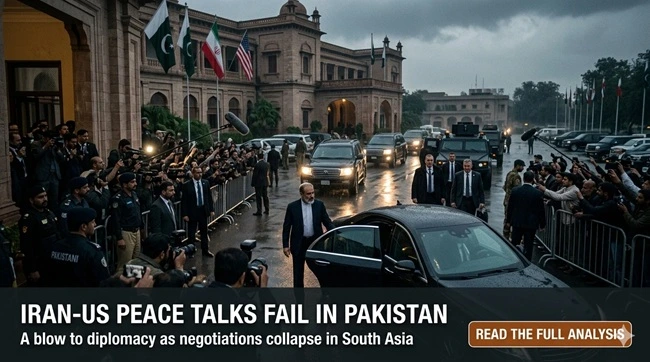
The recent peace talks between the United States and Iran in Pakistan were seen as a crucial moment for global stability. With tensions already high due to ongoing conflict in the Middle East, the world was watching closely. There was hope that these talks could bring an end to hostilities, stabilize oil markets and reduce the risk of a larger regional war.
However, after nearly 21 hours of intense negotiations in Islamabad, the talks ended without any agreement. What was expected to be a breakthrough moment turned into another reminder of how complex and fragile international diplomacy can be.
This article explains in detail what happened during the talks, what both sides wanted, why the negotiations failed and what it means for the future.
Background: Why These Talks Were So Important
The peace talks were part of ongoing efforts to end the 2026 Iran–US conflict, which had already caused significant damage both regionally and globally. A temporary ceasefire had been agreed upon earlier, but it was fragile and needed a long-term solution.
Pakistan stepped in as a mediator and hosted the talks in Islamabad, marking one of the highest-level direct engagements between the two nations in decades.
The stakes were extremely high:
- Preventing escalation into a full-scale regional war
- Reopening the Strait of Hormuz, a key global oil route
- Stabilizing global energy prices
- Reducing military tensions in the Middle East
What Happened During the Talks
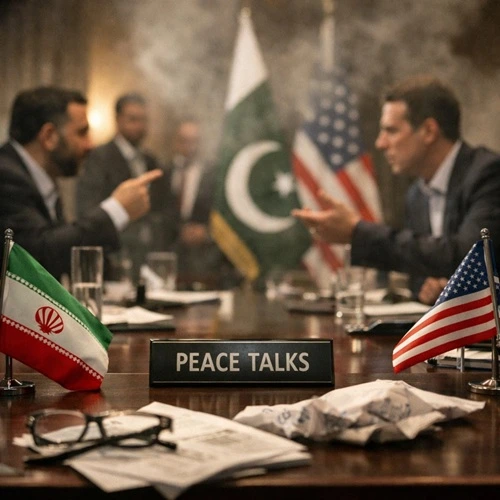
The negotiations took place over two days and lasted nearly 21 hours. Despite the long discussions, both sides failed to reach common ground.
The US delegation, led by Vice President JD Vance, left Pakistan without signing any agreement.
Both sides later blamed each other:
- The US said Iran refused to accept key conditions
- Iran said US demands were unrealistic and excessive
The talks were described as intense, with fluctuating moods and increasing tension throughout the discussions.
Key Issues Discussed in the Talks
1. Iran’s Nuclear Program
This was the biggest issue.
The United States demanded a clear and firm commitment from Iran that it would not develop nuclear weapons.
Iran, however, resisted strict restrictions, arguing that it had the right to develop nuclear technology for peaceful purposes.
This disagreement became the central roadblock.
2. Sanctions and Frozen Assets
Iran demanded the removal of economic sanctions and the release of its frozen assets held in foreign countries.
The US was not ready to agree to these demands without strong commitments from Iran, leading to a major gap in expectations.
3. Control of the Strait of Hormuz
The Strait of Hormuz is one of the most important shipping routes in the world, carrying a large portion of global oil supply.
- Iran wanted greater control over the strait
- The US insisted on free and unrestricted global access
This issue had serious global economic implications and became another major point of conflict.
4. War Reparations and Security Guarantees
Iran demanded compensation for damages caused during the conflict and guarantees against future attacks.
The US did not agree to these terms, making negotiations even more difficult.
5. Regional Conflicts and Military Presence
The talks were not just about the US and Iran. They were also influenced by:
- Ongoing tensions in Lebanon
- Israel’s military actions
- US military presence in the region
These external factors made it harder to reach a simple agreement.
Why the Peace Talks Failed
1. Deep Trust Deficit
There has been decades of mistrust between the US and Iran. This made it difficult for either side to compromise or accept the other’s intentions.
Negotiations were marked by tension, disagreements and a lack of confidence.
2. Completely Different Expectations
Both countries came to the table with very different goals:
- The US wanted nuclear restrictions and security guarantees
- Iran wanted economic relief and recognition of its regional role
These expectations were too far apart to reconcile in a single round of talks.
3. Timing and Pressure
The talks were happening under extreme pressure:
- Ongoing conflict
- Global political attention
- Economic consequences
This urgency made it harder for negotiators to take time and build consensus.
4. External Geopolitical Factors
Simultaneous military actions in the region, including strikes in Lebanon, created an unstable environment for diplomacy.
Peace talks rarely succeed when conflict is still actively unfolding.
5. No Immediate Willingness to Compromise
Both sides maintained strong positions:
- The US insisted on strict conditions
- Iran refused to accept what it saw as unfair demands
Without flexibility, the talks were bound to fail.
Role of Pakistan in the Talks
Pakistan played a significant role as a mediator and host.
- It facilitated dialogue between both nations
- It helped establish the earlier ceasefire
- It provided a neutral platform for negotiations
Despite its efforts, Pakistan could not bridge the deep divide between the two sides.
However, its role in bringing both parties to the table was still seen as a diplomatic achievement.
Global Impact of the Failed Talks
The failure of these talks has several important consequences:
1. Continued Uncertainty in the Middle East
The risk of renewed conflict remains high.
2. Impact on Oil Prices
Any disruption in the Strait of Hormuz can affect global oil supply and increase fuel prices worldwide.
3. Economic Instability
Global markets react quickly to geopolitical tensions, and uncertainty can impact economies across the world.
4. Diplomatic Setback
This was one of the most important opportunities for peace, and its failure is a major setback.
What Happens Next?
Although the talks failed, both sides have not completely ruled out future negotiations.
- There is still a temporary ceasefire in place
- Diplomatic channels remain open
- International pressure for peace continues
However, any future talks will require more flexibility, trust-building and realistic expectations from both sides.
Conclusion
The failure of the Iran–US peace talks in Pakistan is a reminder of how complex global diplomacy can be. Despite hours of discussions and global hopes, deep-rooted differences, mistrust, and conflicting priorities prevented any agreement.
While the situation remains uncertain, one thing is clear: peace cannot be achieved without compromise from both sides.
For now, the world watches and waits, hoping that future negotiations will succeed where this one failed.
Frequently Asked Questions (FAQ)
1. Why did the Iran–US peace talks fail?
The talks failed mainly due to disagreements over Iran’s nuclear program, sanctions, control of the Strait of Hormuz, and lack of mutual trust.
2. Where were the talks held?
The talks were held in Islamabad, Pakistan, with Pakistan acting as a mediator.
3. How long did the talks last?
The negotiations lasted for approximately 21 hours over two days.
4. What was the main issue between the US and Iran?
The biggest issue was Iran’s nuclear program and the US demand for strict guarantees that Iran would not develop nuclear weapons.
5. Will there be more talks in the future?
Possibly. While no immediate plans were confirmed, both sides have indicated that future negotiations are still an option.
6. Why is the Strait of Hormuz important?
It is one of the world’s most important oil shipping routes, and any disruption can impact global fuel prices and trade.
7. What role did Pakistan play?
Pakistan acted as a mediator and host, helping bring both sides together for negotiations.
For the Latest Trending News, Please Follow Popnewsblend.com

Hi, I’m Prashant Jain — a curious soul, storyteller, and content creator at heart.I’ve always been drawn to the world of entertainment, travel, sports, health & lifestyle — not just as a writer, but as someone who genuinely lives these experiences. Whether I’m binge-watching the latest OTT series, exploring offbeat spiritual destinations in India, or diving deep into wellness routines and cricket match insights, I love sharing what I discover with like-minded readers.
PopNewsBlend is my way of blending personal journeys with meaningful stories — ones that inform, inspire, and keep you ahead of the curve. Everything I write comes from real observations, hands-on experiences, and a deep passion for understanding the world around us.
Discover more from Popnewsblend
Subscribe to get the latest posts sent to your email.
Related posts:
 Elon Musk Officially Launches “America Party”: What It Means for the U.S., Global Politics, and the Future of Power
 Dreaming of a U.S. Green Card? Here’s the New Citizenship Rule Every Indian Must Know
 Apollo Tyres Takes Over as Indian Cricket Team’s Jersey Sponsor: A Deep Dive
 Fatima Bosch from Mexico Crowned Miss Universe 2025: Complete Highlights, Winner Breakdown, Runners-Up and India’s Final Position