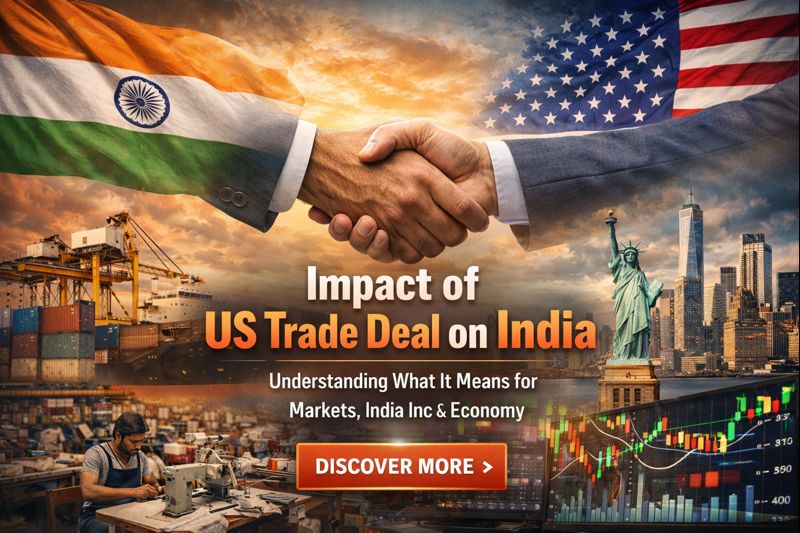
Imagine two of the world’s biggest economies — India and the United States — finally agreeing on a major trade deal after years of negotiation. This isn’t just diplomacy talk; it’s a real pact that changes how goods flow, how businesses plan, and how markets react around the world.
At its core, the deal means:
- The United States will cut high tariffs on Indian goods down significantly (from around 50 % on many products to about 18 % in the near term).
- India will reduce or eliminate its tariffs on many U.S. products, including key imports like energy and machinery.
- Both countries agreed to reduce trade barriers and uncertainty, which were major problems for businesses for many months.
In normal language: exports from India become cheaper for American buyers and U.S. products become cheaper for Indian consumers and companies.
This handshake is more than just tariff figures — it reshapes expectations for markets, companies and everyday economic life.
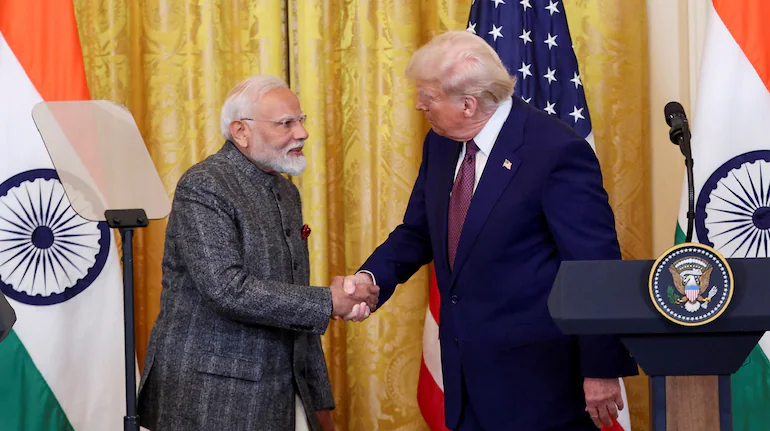
1. What This Means for Indian Markets
Big Boost to Stock Prices and Sentiment
Indian stock markets reacted enthusiastically the day the deal was announced. Major indices like Sensex and Nifty rose sharply, showing that investors see the deal as a positive shift.
Why this matters:
- Stocks in export-focused sectors — like textiles, gems & jewellery, engineering goods and auto components — jumped because lower U.S. tariffs mean better pricing and competitiveness abroad.
- Foreign investors — known as FIIs — started buying Indian stocks again after months of selling pressure, showing renewed confidence.
- The Indian rupee strengthened (it rose against the U.S. dollar), which makes imports cheaper and lowers inflation worries.
In simple terms:
Markets like certainty. This deal removed a major uncertainty that was weighing on Indian markets, and that’s why prices jumped.
What Analysts Are Saying
Most market experts believe this trade deal:
- Improves export competitiveness for Indian companies.
- Encourages foreign investment, reversing recent outflows.
- Supports medium-term growth expectations for both markets and the economy.
This doesn’t mean every sector wins equally — but broadly, the market sees more growth and less risk now.
2. What It Means for India Inc
The term “India Inc” refers to Indian companies across industries — from big conglomerates to medium and small exporters.
Winners: Export-Oriented Businesses
Indian industries that ship to the U.S. are the biggest beneficiaries:
- Textiles & Apparel: Lower tariffs make Indian garments and fabrics cheaper and more attractive to U.S. buyers.
- Gems & Jewellery: India is a global hub for diamonds and gold work. Lower tariff barriers mean higher order flows.
- Engineering Goods & Auto Components: Better access can boost volume and margins.
- IT and Services: Though services are less tariff-sensitive than goods, clearer trade rules help Indian tech companies win more business.
In plain language:
Companies that sell products abroad now have more customers, better pricing power and a reason to expand operations.
What About Energy and Oil Companies?
One big part of the deal involves reducing dependence on Russian crude oil and moving toward U.S. energy products. This matters because:
- Tariffs on Indian exports were partly linked to energy sourcing decisions.
- It means oil companies might rethink where they buy fuel, which could impact margins and refinery strategies.
So while many sectors gain, energy imports face a structural shift and corporations in that space will need to adapt.
3. What It Means for the Indian Economy
This trade deal isn’t just about markets or companies — it has real effects on broader economic growth, jobs and everyday life.
Stronger Economic Growth Ahead?
With easier exports and better access to the U.S. market:
- India’s GDP growth outlook improves because more business means more production, jobs, and income.
- Labour-intensive industries (like apparel and textiles) could add more employment.
This can benefit millions of workers and families tied to manufacturing and exports.
Better Capital Flows and Confidence
Investor confidence fuels economic activity:
- With tariff uncertainty gone, foreign investors feel safer deploying money into India.
- More investment can translate into more factories, more tech hubs, more innovation.
It’s like giving a confidence boost to both global investors and local businesses.
Balance of Payments & Currency Stability
A stronger rupee is good for:
- Cheaper imports (like fuel and machinery)
- Lower inflation pressure
- Better foreign debt servicing
This helps the economy stay stable and gives policymakers more options.
4. Bottom Line: What This Trade Deal Really Means
Here’s a simple summary you can understand even without any economic degree:
Markets: More confidence, higher stock prices, stronger rupee
Businesses: Cheaper access to U.S. customers and better export prospects
Economy: Potential faster growth, more jobs and stronger investment flows
Sentiment: Overall optimism — businesses and investors now see a clearer path forward
5. But It’s Not All Instant Magic
To be clear, this deal isn’t a cure-all. Some important points to keep in mind:
- The full benefits will take time to show up — months or years, not days.
- Not every sector will benefit equally, especially where tariffs are already low or non-existent.
- Details still matter — exactly what products get tariff cuts, when, and how rules are implemented will determine who actually wins the most.
Final Thoughts: A Big Step Forward for India and Global Trade
This India-US trade deal is a major milestone — not just for markets or companies, but for how India engages with the global economy. It cuts away years of uncertainty and opens the door for stronger growth, more jobs, and deeper business ties.
For the average person, the benefits may show up gradually — through more jobs, more demand for Indian goods abroad, and hopefully a stronger economy at home. For investors and businesses, today’s renewed confidence could translate into tangible gains in the months and years to come.
For the Latest Trending News & Updates, Please Follow Popnewsblend.com

Hi, I’m Prashant Jain — a curious soul, storyteller, and content creator at heart.I’ve always been drawn to the world of entertainment, travel, sports, health & lifestyle — not just as a writer, but as someone who genuinely lives these experiences. Whether I’m binge-watching the latest OTT series, exploring offbeat spiritual destinations in India, or diving deep into wellness routines and cricket match insights, I love sharing what I discover with like-minded readers.
PopNewsBlend is my way of blending personal journeys with meaningful stories — ones that inform, inspire, and keep you ahead of the curve. Everything I write comes from real observations, hands-on experiences, and a deep passion for understanding the world around us.
Discover more from Popnewsblend
Subscribe to get the latest posts sent to your email.
Related posts:
 Elon Musk Officially Launches “America Party”: What It Means for the U.S., Global Politics, and the Future of Power
 Dreaming of a U.S. Green Card? Here’s the New Citizenship Rule Every Indian Must Know
 Apollo Tyres Takes Over as Indian Cricket Team’s Jersey Sponsor: A Deep Dive
 Fatima Bosch from Mexico Crowned Miss Universe 2025: Complete Highlights, Winner Breakdown, Runners-Up and India’s Final Position