
Winter in India is the season of warmth — thick scarves, smoky chulha aromas and food that hugs you from the inside. While winter food often brings indulgence, many traditional dishes were built on the twin principles of warming the body and boosting immunity. Below are 12 winter favorites from different corners of India that are delicious and largely healthy — each entry includes origin, where it’s famous, key ingredients, health benefits, simple cooking notes, variations and practical tips so you can enjoy them guilt-free.
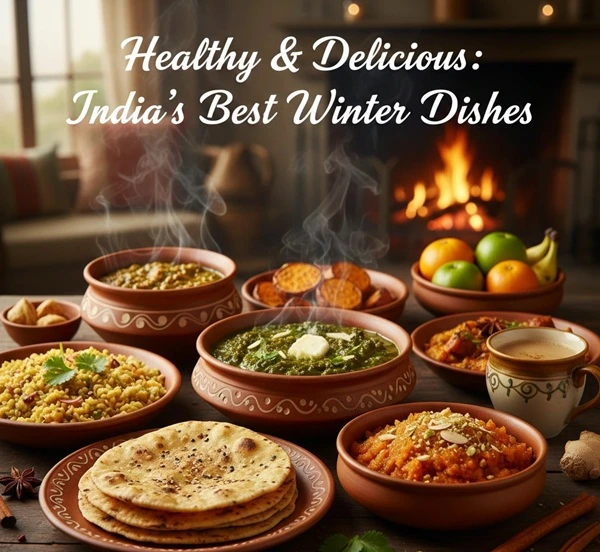
Best Winter Dishes in India Are :
1. Sarson ka Saag + Makki ki Roti
Origin / Famous in: Punjab and North India
Main ingredients: Mustard greens (sarson), spinach, bathua (optional), maize flour (makki), ghee, garlic, ginger, green chillies.
Why it’s winter food: Mustard greens reach peak nutrition in winter, they’re warming when cooked with spices and ghee.
Health benefits: Rich in vitamin K, vitamin A, folate, calcium and iron from the greens, fiber supports digestion. Makki (maize) roti provides complex carbs and slow-release energy.
Quick method: Blanch and pressure-cook the greens, mash with a tempering of ghee, garlic, ginger and red chili, simmer until flavors marry. Serve with hot makki ki roti, brushed with ghee.
Variations & tips: Add bathua for a milder flavor, reduce ghee and use a light tempering to cut calories. Pair with a bowl of low-fat curd to aid calcium absorption.
2. Gajar ka Halwa (Carrot Halwa) — Healthier Version
Origin / Famous in: North India (Uttar Pradesh, Punjab, Delhi)
Main ingredients: Carrots, low-fat milk or almond milk, small amount of jaggery or sugar, cardamom, chopped nuts.
Why it’s winter food: Carrots are sweetest in winter, making halwa naturally comforting and nutrient-dense.
Health benefits: High in beta-carotene (vitamin A) for skin and immunity, using milk supplies protein and calcium. Using jaggery or less sugar improves mineral content.
Quick method: Grate carrots, cook in low-fat milk until soft, sweeten lightly, finish with cardamom and chopped nuts. Use minimal ghee or substitute with a tablespoon of chopped nuts for richness.
Variations & tips: Roast grated carrots first for deeper flavor. For diabetes-friendly options, reduce sweetener and add more milk for volume.
3. Bajra Khichdi (Millet Khichdi)
Origin / Famous in: Rajasthan, Gujarat, North-West India
Main ingredients: Bajra (pearl millet), moong dal or masoor dal, spices (cumin, turmeric), ghee.
Why it’s winter food: Millets are warming, hardy grains historically consumed in cold months, they provide sustaining heat.
Health benefits: Bajra is high in fiber, magnesium and iron — supports heart health and keeps you full longer. Combined with lentils, it forms a balanced protein–carb meal.
Quick method: Pressure-cook bajra and lentils together with turmeric and salt, temper with cumin and ghee. Serve with a dollop of ghee and raw onion salad.
Variations & tips: Add seasonal greens (fenugreek or spinach) toward the end to boost micronutrients. Makes a wholesome one-pot meal.
4. Thukpa (Himalayan Noodle Soup)
Origin / Famous in: Ladakh, Sikkim, Arunachal Pradesh, Tibetan communities across India
Main ingredients: Whole-wheat or rice noodles, chicken or vegetable broth, ginger, garlic, greens, carrot, spring onion, soy/tomato base.
Why it’s winter food: Hot, spiced broths warm the body and help relieve cold symptoms.
Health benefits: Hydrating, easy to digest; ginger and garlic add anti-inflammatory and immunity-boosting properties. Load with vegetables for fiber and vitamins.
Quick method: Simmer a light broth with ginger-garlic, add shredded chicken or tofu and vegetables, drop in noodles and cook until done. Finish with coriander and lemon.
Variations & tips: Make a vegan version with mushrooms and tofu. Use whole-grain noodles to increase fiber.
5. Makhana Kheer (Foxnut Pudding)
Origin / Famous in: Bihar, Uttar Pradesh and widely popular across India
Main ingredients: Makhana (foxnuts), milk, a little jaggery or sugar, cardamom, almonds.
Why it’s winter food: Makhana is known in Ayurveda as a warming, light yet nourishing food often consumed in winter months.
Health benefits: Low-fat, good source of protein, magnesium and phosphorus; easy to digest and ideal for light dessert.
Quick method: Roast makhana, simmer in milk until soft, sweeten with jaggery or sugar, flavor with cardamom and top with chopped nuts.
Variations & tips: Use skimmed or nut milks for lighter versions. For extra nutrition, mash some roasted makhana into the kheer for thicker texture.
6. Til (Sesame) Laddoo & Sesame Chikki
Origin / Famous in: Pan-India, especially Maharashtra, Gujarat, Rajasthan
Main ingredients: Sesame seeds (til), jaggery, sometimes peanuts or coconut.
Why it’s winter food: Sesame and jaggery are classic winter pairings (Ayurvedic warmth); these are made during festivals and for boosting energy in cold months.
Health benefits: Sesame seeds provide calcium, healthy fats and antioxidants; jaggery adds iron and minerals. Good quick-energy snack and bone-supporting.
Quick method: Roast sesame seeds lightly, melt jaggery, mix and shape into laddoos or press into chikki. Store in airtight container.
Variations & tips: Mix sesame with crushed peanuts or add a pinch of cardamom. Keep portions small — calorically dense but nutrient-packed.
7. Panjeeri (Traditional Winter Energy Mix)
Origin / Famous in: North India (Punjab, Haryana, Rajasthan)
Main ingredients: Whole-wheat flour, ghee, sugar or jaggery, dry fruits (almonds, pistachios), fennel seeds, edible gum (gond), sesame, spices.
Why it’s winter food: Historically used to build strength and warmth after childbirth and during harsh winters. High-calorie, nutrient-rich.
Health benefits: Rich in healthy fats, proteins, iron and warming spices — supports energy and immunity. Gond (edible gum) is considered warming and good for joints.
Quick method: Roast wheat flour and dry fruits in ghee until aromatic; mix in powdered jaggery and fennel; store. Eat a tablespoon as a snack.
Variations & tips: Reduce sugar to taste; add roasted oats for modern twist. Ideal as a winter superfood snack — but eat in moderation.
To get the regular updates follow us on Instagram and Youtube.
8. Peanut/Chana Sundal & Chikki (Roasted Legume Snacks)
Origin / Famous in: South India (sundal) and pan-India for roasted peanuts/chikki
Main ingredients: Peanuts or chana (chickpeas), curry leaves, mustard seeds, grated coconut (for sundal), jaggery for chikki.
Why it’s winter food: Legumes provide protein and warmth; roasted snacks are commonly enjoyed with evening tea.
Health benefits: High in plant protein, B-vitamins, magnesium and healthy fats. When lightly tempered or roasted without excess oil, they’re a nutritious snack.
Quick method: For sundal, boil chana, toss with mustard-tempered oil, curry leaves and coconut. For chikki, melt jaggery and combine with roasted peanuts, set and break into pieces.
Variations & tips: Use minimal oil and salt, sundal makes an excellent post-walk snack.
9. Kashmiri Kahwa & Spiced Teas
Origin / Famous in: Kashmir (kahwa), Pan-India for spiced chai variants
Main ingredients: Green tea leaves or black tea, saffron, cardamom, cinnamon, almonds, honey/jaggery.
Why it’s winter food: Warm infusions increase circulation and provide comforting antioxidants.
Health benefits: Antioxidant-rich (green/black tea), saffron and cardamom have mood and digestion benefits; honey/jaggery provide gentle warmth and minerals.
Quick method: Boil water with spices and saffron, add tea leaves, simmer briefly, strain into cups; garnish with slivered almonds.
Variations & tips: Reduce sugar, use honey or a touch of jaggery. Kahwa is soothing after a cold day and aids sleep.
10. Kadhi with Bajra/Whole-Wheat Rotis
Origin / Famous in: Gujarat, Rajasthan, Punjab (variations pan-India)
Main ingredients: Yogurt, besan (gram flour), turmeric, ginger, curry leaves (regional tempering), bajra or whole-wheat rotis.
Why it’s winter food: Warm kadhi with tempering is light yet comforting; combined with hearty rotis it forms a balanced meal.
Health benefits: Yogurt provides probiotics and calcium; besan gives protein. Ginger and turmeric add anti-inflammatory and warming properties.
Quick method: Whisk yogurt and besan, simmer with turmeric and cook until slightly thick; temper with mustard seeds, curry leaves and red chili. Serve with bajra roti.
Variations & tips: Use low-fat yogurt to control calories. Add seasonal greens like methi (fenugreek) for more nutrients.
11. Mixed Dal & Seasonal Greens (Sarson / Methi / Spinach)
Origin / Famous in: Pan-India
Main ingredients: Assorted lentils (toor, masoor, moong), seasonal greens, cumin, garlic, turmeric.
Why it’s winter food: Lentil stews are warming and filling; paired with greens they make a nutrient-dense combo.
Health benefits: Lentils are rich in plant protein, fiber, iron and folate; greens add vitamins A, C and K along with minerals. Great for sustained energy and immunity.
Quick method: Pressure-cook mixed dal with turmeric; in separate pan, lightly sauté greens with garlic and add to dal. Finish with a cumin-ghee tadka.
Variations & tips: Vary the lentil mix for different textures. For diabetics, pair with a small portion of millet roti.
12. Nihari / Slow-cooked Mutton Stew — (Lightened Up Version)
Origin / Famous in: Lucknow, Delhi, Lucknow-style (Awadhi), Pakistan regions — widely eaten across North India in winter.
Main ingredients: Mutton shanks, bone marrow (optional), ginger, garlic, warming spices, slow-cooked broth.
Why it’s winter food: Heavy slow-cooked stews preserve heat and provide calories needed in cold months.
Health benefits: Bone broths supply collagen, minerals and easily absorbed proteins. When prepared with lean cuts and moderate oil, it’s a nourishing winter meal.
Quick method: Slow-cook mutton with spices and minimal oil until tender; skim excess fat and serve with whole-wheat or millet rotis.
Variations & tips: Use more bones for a flavorful broth and remove excess fat before serving. Add a side salad of raw onions and lemon to aid digestion.
Winter Cooking Tips — Eat Warm, Eat Smart
- Prioritize seasonal vegetables and millets — mustard greens, carrots, bajra and millet are nutrient-rich during winter.
- Use warming spices like ginger, cinnamon, black pepper, cardamom and turmeric — they add flavor and support circulation.
- Balance indulgence with lighter choices — if enjoying a rich dish like halwa or nihari, pair with a fresh salad or steamed greens.
- Portion control for calorie-dense items — sesame laddoos, chikki and panjeeri are nutritious but calorie-packed. A small portion goes a long way.
- Hydrate with warm fluids — herbal teas, kahwa and light broths keep mucous membranes healthy and help with cold-season immunity.
Best Winter Dishes in India : FAQ
Q: Which winter dish is best for boosting immunity?
A: Dishes that combine greens, lentils and warming spices — e.g., sarson ka saag with dal or mixed dal with methi — are excellent. Ginger, turmeric and citrus help too.
Q: Can I make these dishes healthier without losing taste?
A: Yes — reduce ghee/sugar, increase vegetables, use jaggery or honey moderately, choose whole grains like bajra and whole wheat.
Q: Are these dishes suitable for children?
A: Most are — adjust spice levels for children and serve smaller portions of calorie-dense sweets.
Best Winter Dishes in India: Conclusion — Winter Food That Cares
India’s winter cuisine is a celebration of warmth, seasonal produce and traditional wisdom. From the iron-rich sarson ka saag of Punjab to the nourishing makhana kheer and energy-packed til laddoo, winter dishes are designed to comfort and to fortify. With small tweaks — less ghee, more greens, whole grains instead of refined flour — you can enjoy each plate guilt-free while reaping the health benefits winter foods were meant to deliver.
For more such Health and Food Updates , Please follow Popnewsblend.com

Hi, I’m Prashant Jain — a curious soul, storyteller, and content creator at heart.I’ve always been drawn to the world of entertainment, travel, sports, health & lifestyle — not just as a writer, but as someone who genuinely lives these experiences. Whether I’m binge-watching the latest OTT series, exploring offbeat spiritual destinations in India, or diving deep into wellness routines and cricket match insights, I love sharing what I discover with like-minded readers.
PopNewsBlend is my way of blending personal journeys with meaningful stories — ones that inform, inspire, and keep you ahead of the curve. Everything I write comes from real observations, hands-on experiences, and a deep passion for understanding the world around us.
Discover more from Popnewsblend
Subscribe to get the latest posts sent to your email.
Related posts:
 Top 10 Refreshing Indian Drinks to Beat the Summer Heat in 2025 ☀️🍹
 🌞 What to Drink in Summer for Glowing, Hydrated Skin: 10 Refreshing Drinks Your Skin Will Love
 Desi Ghee: The Misunderstood Hero of Indian Kitchens—Why Modern Health Gurus Got It Wrong”
 Indian Sweets vs Foreign Desserts: A Sweet Dilemma for Health-Conscious Food Lovers