
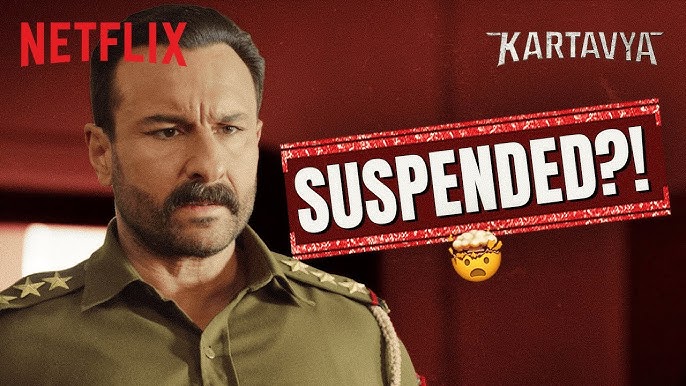
Released: May 15, 2026 | Streaming on Netflix | Runtime: 1 hr 40 mins | Genre: Crime Drama, Thriller | Language: Hindi
Let me just say this upfront — Kartavya is not the film you think it is from the trailer. And I mean that in the best possible way.
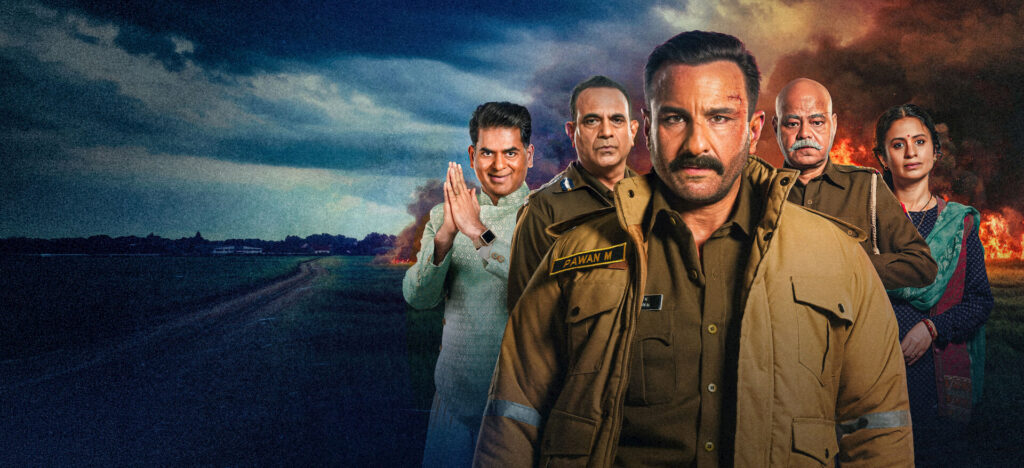
When the first look dropped and we saw Saif Ali Khan in a khaki uniform, standing against a background of flames with that brooding expression, most of us assumed we were in for another slick, high-octane Bollywood cop actioner. The kind where the hero beats up ten guys, delivers a punchline, and walks away in slow motion. That film would have been fine. Forgettable, but fine.
What director Pulkit actually made is something far more unsettling and far more honest. Kartavya is a film about the quiet violence of doing your job when the cost of that job is your own family. It’s slow-burning, uncomfortable, and surprisingly affecting. And Saif Ali Khan, arguably one of the most underutilized actors of his generation, delivers the kind of performance here that makes you genuinely angry we don’t see him in roles like this more often.
So is Kartavya worth watching on Netflix? Let’s get into it properly.
What Is Kartavya Actually About?
The title translates to “Duty” in English, and the film earns that title every single minute.
Saif plays Pawan Malik, a senior police officer stationed somewhere in the Indian heartland — the kind of dusty, politically charged small-town India that director Pulkit clearly knows intimately, the same terrain he explored in his earlier Netflix film Bhakshak. Pawan is not a super-cop. He’s not exceptional. He is, in fact, deliberately ordinary — a man who has spent his career following orders, navigating the system, and keeping his head down because he has a family to protect.
Then something goes wrong. A shooting incident under his watch — involving a journalist and what appears to be a political whistleblower — sets off a chain of events that drag Pawan into a relentless manhunt through corridors of power, deception, and corruption. His senior officers apply increasing pressure. The system, which he has loyally served for decades, begins to turn on him. And at the same time, threats begin to close in on his family, forcing him into the most impossible position a man can face: the job he swore to uphold, or the people he lives for.
The film’s narrative strength is in how it refuses to give Pawan easy choices. Every decision he makes comes with a cost. There is no clean victory. There is no moment where the hero speech lands and everyone applauds. It’s messier than that, and Pulkit and his writing deserve enormous credit for not blinking.
Saif Ali Khan as Pawan Malik — A Career-Defining Turn
Here is the thing about Saif Ali Khan that most people miss. He is not a loud actor. His best work — Omkara, Sacred Games, Dil Chahta Hai — has always come when a filmmaker has trusted him to do less. When directors let him be still. When the camera holds on his face and he doesn’t explain himself.
Pulkit, who has said he was inspired by Vishal Bhardwaj’s use of Saif in Omkara and always wanted to revisit that untapped side of the actor, has essentially given Saif a permission slip to strip everything back. And Saif takes it.
Pawan Malik is exhausted. You feel it in his posture, the way he holds his chai, the fraction of a second he hesitates before he speaks. This is a man who has made too many compromises and knows it, and the guilt of that has calcified somewhere deep inside him. What’s remarkable is that Saif communicates all of this without a single monologue about it. You just know. That is acting.
There is one scene — no spoilers — where Pawan has to make a phone call to his wife while being watched by people who would destroy him if they knew what he was thinking. The conversation is about something mundane. Dinner, maybe. And Saif makes that three-minute scene one of the most tense things you will watch all year. It is extraordinary work from an actor who too often gets dismissed as a star playing at being an actor, when the truth is exactly the opposite.
The Supporting Cast: Where Kartavya Really Shines
Rasika Dugal as Pawan’s wife brings her characteristic precision to a role that in lesser hands would have been the Worried Wife Who Exists to Be Threatened. She doesn’t let that happen. She gives the character agency, intelligence, and a quiet fury that makes you root for her as a person, not just as a stake in Pawan’s story.
Sanjay Mishra, who can do absolutely no wrong in this current phase of his career, is playing on a completely different frequency here than his usual work. He’s playing against type — or maybe he’s playing with type, aware of the audience’s expectations and using them against us. His character has a surface warmth that curdles slowly over the film’s runtime, and Mishra engineers that curdling with terrifying precision.
Zakir Hussain and Manish Chaudhari round out the ensemble in roles that serve the story efficiently without overstaying their welcome. Saurabh Dwivedi, making his acting debut here, brings a raw, unpolished quality to his role that actually works in the film’s favor — he feels like he genuinely belongs in that world.
The ensemble casting is one of Kartavya’s great strengths. Nobody feels imported from a different movie. Everyone is in the same story, breathing the same humid, politically charged air.
You May Also Like :
Pulkit’s Direction: Confidence Without Flash
This is where Kartavya earns its reputation as a serious piece of filmmaking.
Pulkit, who made the quietly devastating Bhakshak in 2024, has leveled up here in terms of visual control. He works with cinematographer Anil Mehta — best known for Lagaan and Dil Chahta Hai, which tells you something about the pedigree he’s brought to this — to create a visual language that is deliberately unglamorous. The heartland is shown without nostalgia or condescension. The police station looks like a police station. The political offices look like political offices. There is no soft focus on corruption here. It is shown clearly, in ordinary light, because Pulkit understands that that’s actually more disturbing.
The pacing is deliberate, and yes, there are stretches in the second act where the film slows to a crawl. Some viewers will find this frustrating. But Pulkit is doing something specific — he’s making you feel Pawan’s own sense of being trapped, of time moving too slowly while the situation deteriorates. Whether that works for you will depend on your patience as a viewer. For me, it mostly worked.
What doesn’t always work is the film’s handling of its political subtext. Kartavya clearly has things to say about the relationship between law enforcement and power, about how systems protect themselves at the cost of individuals, about the silence that corruption demands. But in places, it pulls its punches. It gets close to something really sharp and then retreats to safer ground. You get the sense that a harder cut of this film exists somewhere, and it would have been even better.
The Music and Atmosphere
The background score is understated and effective — it never telegraphs emotion, which is the right choice for this kind of film. It sits underneath scenes rather than sitting on top of them, which is rarer than it should be in Hindi cinema.
The sound design deserves a specific mention. Distant vehicles, the hum of ceiling fans, the ambient noise of an overcrowded police station — these details build a texture that makes the world feel real. You are in that place.
To get the regular updates on Latest Movie Release and Reviews, Follow Popnewsblend.com
What Works and What Doesn’t
Let’s be honest about both.
What works: Saif’s performance, which is genuinely one of his best. The supporting ensemble. The visual restraint. The refusal to give the audience the easy ending they might want. The way Pulkit shoots the Indian hinterland — with respect and without romanticization. The tension in the third act, which escalates in ways you genuinely don’t fully anticipate.
What doesn’t work: The second act pacing will lose some viewers. The political thread is slightly underdeveloped — it feels like the film is aware of something it wants to say but isn’t quite ready to say it fully. There are a couple of scenes in the first hour that feel like they’re from a slightly different, more conventional film, and they create tonal inconsistency. And while the ending is earned emotionally, it might frustrate viewers who want a cleaner resolution.
None of these are fatal flaws. They are the flaws of an ambitious film that is reaching for something difficult and mostly grabbing it.
Is Kartavya Better Than Sacred Games?
People will ask this. It’s inevitable. Saif is back as a cop on Netflix, so the comparison is coming whether we like it or not.
Here’s my honest answer: they are almost incomparable as experiences. Sacred Games is sprawling, operatic, intricately plotted across years and timelines. Kartavya is contained, intimate, and character-focused in a way that Sacred Games, with all its ambitions, never needed to be. Sartaj Singh is a character trying to save a city. Pawan Malik is a character trying to save himself, and maybe his family, and maybe his conscience. Different scales. Different textures.
What I can say is that Pawan Malik is a more complete human being than Sartaj Singh ever got to be on screen. And that is a tribute to both the writing and to what Saif brings to the role.
The Red Chillies and Netflix Partnership
It’s worth pausing on the production context for a moment, because it matters to understanding what Kartavya is.
This is the second time Gauri Khan’s Red Chillies Entertainment has partnered with Pulkit after Bhakshak. That consistency is not an accident. Red Chillies and Netflix are clearly building something here — a lane for prestige Hindi-language drama that is rooted in social reality, anchored by serious performers, and made for a streaming audience rather than multiplexes. The decision to skip theatres entirely and go direct-to-Netflix is pragmatic, yes, but it also frees the film from the commercial pressures that would have demanded a different kind of third act.
In many ways, Kartavya is exactly the film it needs to be precisely because it was never going to play in a Friday-night FDFS crowd.
Final Verdict
Kartavya is not a perfect film. But it is an important one for Hindi cinema on streaming platforms. It demonstrates that you can make a serious, adult, morally complex film in Hindi — one that trusts its audience to sit with discomfort — and have it come out the other side as something genuinely worth your two hours.
Saif Ali Khan reminds everyone watching exactly how good he is when given the right material. Pulkit cements his position as one of the most interesting directors working in the OTT space in India right now. And the film leaves you with questions that don’t have easy answers, which is the highest compliment you can pay to any thriller.
Watch it. Talk about it afterward. That’s what good films are for.
Kartavya Movie Ratings
| Category | Rating |
|---|---|
| Story & Screenplay | 8/10 |
| Direction (Pulkit) | 8.5/10 |
| Saif Ali Khan’s Performance | 9/10 |
| Supporting Cast | 8.5/10 |
| Cinematography (Anil Mehta) | 8/10 |
| Background Score | 7.5/10 |
| Pacing | 7/10 |
| Emotional Impact | 8.5/10 |
| Overall | 8.1 / 10 |
Our Verdict: A must-watch for anyone who takes Hindi cinema seriously. Not a masala entertainer — a genuine, gritty, character-driven drama that stays with you.
Kartavya 2026 — Full FAQ
Q: Where can I watch Kartavya? Kartavya is streaming exclusively on Netflix worldwide. It is available in over 190 countries with subtitles in multiple languages including English, Tamil, and Telugu. There is no theatrical release.
Q: Who directed Kartavya? Kartavya is written and directed by Pulkit, the filmmaker behind the acclaimed Netflix film Bhakshak (2024). This is his second collaboration with Red Chillies Entertainment and Netflix.
Q: Who produced Kartavya? The film is produced by Gauri Khan under the Red Chillies Entertainment banner, the production company founded by Shah Rukh Khan and Gauri Khan.
Q: What is the full cast of Kartavya? The main cast includes Saif Ali Khan as Pawan Malik, Rasika Dugal, Sanjay Mishra, Zakir Hussain, Manish Chaudhari, Saurabh Dwivedi (acting debut), Yudhvir Ahlawat, Saharsh Kumar Shukla, Swastik Bhagat, and Saurabh Abrol.
Q: Who is the cinematographer of Kartavya? Kartavya’s cinematography is handled by Anil Mehta, the acclaimed DOP known for landmark Indian films including Lagaan and Dil Chahta Hai.
Q: Is Kartavya related to the 1995 film of the same name? No. The 1995 Kartavya starred Sanjay Dutt and was an action film. The 2026 Netflix film is a completely separate and original story with no connection whatsoever to that film.
Q: What is Kartavya’s content rating? Kartavya is rated TV-MA on Netflix. It contains themes of violence, political corruption, and moral complexity. It is not recommended for young children.
Q: What language is Kartavya in? The film is originally in Hindi. Netflix offers it with audio in multiple languages and subtitles in German, English, Spanish, Filipino, French, Hindi, Chinese (Simplified), Chinese (Traditional), and more.
Q: What is Pawan Malik’s character about in Kartavya? Pawan Malik, played by Saif Ali Khan, is a seasoned police officer who becomes entangled in a morally complex case involving a journalist and a political whistleblower. As the investigation deepens, his family faces threats, and he is forced to decide how far he will go to protect them while staying true to his oath.
Q: Is Kartavya connected to Sacred Games? No. While both feature Saif Ali Khan as a police officer on Netflix, they are completely unrelated. Sacred Games is a multi-season web series set in Mumbai. Kartavya is a standalone film set in the Indian heartland.
Q: Is Kartavya part of a franchise or universe? As of its release, Kartavya is a standalone film. However, reports suggest that if viewership targets are met, Red Chillies Entertainment may use the film as the foundation for a larger slate of prestige crime dramas on Netflix.
Q: How long is Kartavya? Kartavya’s exact runtime has not been officially confirmed, but it is classified as a film (not a series) on Netflix. Based on the scope of the story, it runs approximately 2 to 2.5 hours.
Q: Why did Kartavya skip a theatrical release? Director Pulkit has spoken openly about preferring OTT platforms for this type of story-driven film. He has noted that theatrical releases create commercial pressure that can compromise the final product. Netflix allows the film to reach a global audience without box-office performance dictating its creative choices.
Q: Is Kartavya worth watching? Yes. Kartavya is a well-crafted, seriously acted crime drama that stands out in the Hindi OTT space for its restraint and emotional honesty. It is not a mass entertainer, but for viewers who appreciate character-driven thrillers, it is genuinely one of the better Hindi films to land on streaming in 2026.
Q: What is similar to Kartavya that I should watch? If you enjoyed Kartavya, you will likely appreciate Bhakshak (2024, Netflix), Sacred Games (Netflix), Vidya (Amazon Prime), Paatal Lok (Amazon Prime), and Talvar (Amazon Prime). All share a similar tone — gritty, rooted in Indian social reality, and focused on moral ambiguity over spectacle.
Q: Did Shah Rukh Khan promote Kartavya? Yes. Shah Rukh Khan shared the official release poster on his social media with the message “Kartavya ke iss chakravyuh mein, har faisla ek imtihaan hoga” (In the labyrinth of Kartavya, every decision will be a test), giving the film significant visibility ahead of its May 15 premiere.
Kartavya is now streaming on Netflix worldwide. This review reflects the complete film as released on May 15, 2026. No major spoilers have been disclosed.
Hi, I’m Prashant Jain — a film enthusiast and critic who lives and breathes cinema. From big-screen releases to the latest drops on OTT, I watch extensively and review honestly, without hype or bias.
I believe a good review should go beyond just “good” or “bad.” It should help you understand what works, what doesn’t, and whether a film is truly worth your time. My reviews focus on storytelling, performances, direction, and overall impact — all through the lens of a genuine viewer.
I regularly cover new movie releases and trending web series across OTT, bringing clear, no-nonsense insights for audiences who want real opinions, not paid praise.
Through PopNewsBlend, I aim to cut through the noise and give you reviews you can trust — whether you’re deciding what to watch next or just love discussing cinema as much as I do.
Discover more from Popnewsblend
Subscribe to get the latest posts sent to your email.
Related posts:
 Dacoit: A Love Story Review — Adivi Sesh’s Revenge Drama Is Flawed, Fierce, and Surprisingly Hard to Shake
 The Ultimate Guide to the Best Bollywood Comedy Movies Ever Made
 Anil Kapoor’s 24 Series on Jio Hotstar (April 24): Why This Iconic Thriller Is a Must-Watch Again
 Ek Din Movie Review (2026): Junaid Khan & Sai Pallavi Deliver a Soulful Love Story That Stays With You


Pingback: Berlin and the Lady with an Ermine Review: Is Netflix's Money Heist Prequel Worth Watching in 2026?
Pingback: Aakhri Sawal Review (2026): Sanjay Dutt Delivers a Powerful Political Drama
Pingback: Is Pati Patni Aur Woh Do (2026) Worth Watching? Full Review, Cast, Plot & Critic Ratings
Pingback: Indian Movies at the Oscars: Every Indian Film Nominated for Academy Awards (1957–2025)