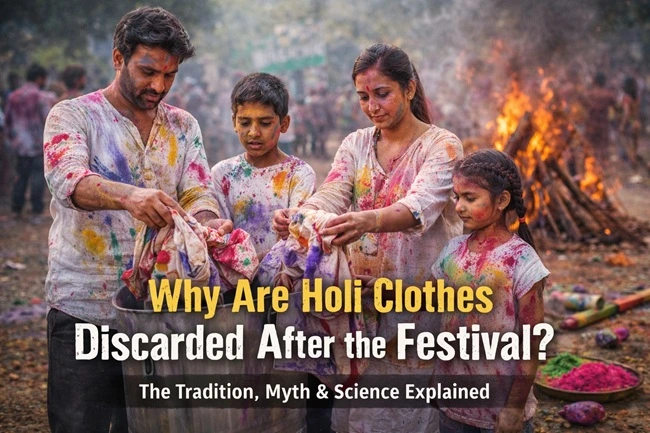
Holi is not just a festival. It is an explosion of colour, laughter, childhood memories, loud music, sweets, water balloons and playful chaos. For a few magical hours, age, status and worries dissolve into clouds of gulal. Streets turn pink, green, and purple. Faces become unrecognizable. Even the shyest person cannot escape a splash of colour.
But once the celebration ends and everyone returns home, something interesting happens in many Indian households. The colourful clothes worn during Holi are quietly set aside. Sometimes they are washed and reused as home wear. Sometimes they are donated. And very often, they are simply discarded.
Have you ever wondered why?
Is it just because the stains don’t go away? Or is there something deeper behind this tradition?
Let’s explore the cultural beliefs, mythological connections and scientific reasons that explain why Holi clothes are often not worn again.
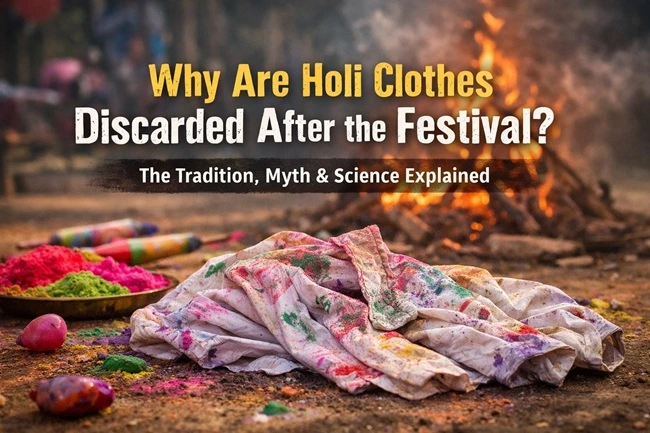
The Cultural Context of Holi
Holi is deeply rooted in Indian tradition and is celebrated across the country in different forms. In North India, especially in places like Mathura and Vrindavan, the festival is grand and spiritually intense. In West Bengal, it is celebrated as Dol Jatra. In Punjab, it coincides with Hola Mohalla. Across India, the essence remains the same — the victory of good over evil and the arrival of spring.
The festival is closely associated with the story of Prahlada and Holika, symbolizing the burning of negativity during Holika Dahan. The next day, Rangwali Holi is celebrated with colours, marking joy, forgiveness and renewal.
This idea of renewal plays a key role in understanding why clothes are often discarded afterward.
The Symbolism of Letting Go
Holi marks the end of winter and the beginning of a new agricultural cycle. Traditionally, it was seen as a time to cleanse the old and welcome the new. Just as homes are cleaned before Diwali, Holi too carries the subtle message of emotional and physical cleansing.
Throwing away or not reusing Holi clothes symbolically represents letting go of past negativity. The clothes, now stained with colours, become a metaphor for the burdens, grudges and negativity that people wish to leave behind.
In many families, elders say that just as Holika burned in the fire, old troubles should burn away too. The coloured clothes, once worn during carefree celebration, are not meant to return to everyday routine. The ritual subtly signals a fresh beginning.
Mythological Beliefs Around Holi Clothes
Some traditional beliefs suggest that clothes worn during Holi absorb negative energies. Since the festival involves large gatherings, loud celebrations and high emotional energy, it is believed that the garments carry both positive and negative vibrations.
In certain regions, especially rural areas, it is said that discarding Holi clothes prevents any leftover negativity from re-entering daily life. Though this belief is more spiritual than scriptural, it has been passed down through generations.
While ancient texts do not directly instruct people to discard Holi garments, the practice evolved culturally over time, influenced by regional customs and interpretations of purification rituals.
Follow our Instagram and Youtube account for regular updates.
The Practical and Scientific Reasons
Beyond symbolism and myth, there are strong scientific and practical reasons behind this tradition.
Chemical Colors and Fabric Damage
In earlier times, colours were made from natural sources like turmeric, sandalwood, neem, flowers, and herbs. These were safe for skin and fabric.
However, with commercialization, many synthetic colours entered the market. Some of these contain industrial dyes, heavy metals and chemical pigments. These substances bind strongly to fabric fibers, making stains extremely difficult to remove.
Repeated washing often weakens the cloth. Cotton fibers may lose strength, and synthetic fabrics may become rough. In many cases, the garment simply does not return to wearable condition.
Skin Safety Concerns
Chemically treated fabrics that retain strong colours may irritate sensitive skin. Even after washing, traces of certain dyes can remain. For children and people with allergies, wearing such clothes again might cause itching or rashes.
Discarding the garment eliminates that risk.
Bacteria and Hygiene
Holi is often celebrated outdoors. Clothes are exposed to mud, sweat, water from unknown sources, and sometimes contaminated surfaces. If not washed thoroughly and dried properly under sunlight, bacteria may remain trapped in the fabric.
In earlier times, access to advanced detergents and washing machines was limited. Discarding heavily soiled garments was seen as a safer hygienic choice.
Why White Clothes Are Preferred on Holi
Another interesting aspect is the tradition of wearing white on Holi. White symbolizes peace, equality, and simplicity. When colours fall on white fabric, they appear brighter and more vibrant.
But white fabric also stains more visibly and permanently. Once deeply coloured, restoring it to its original form becomes nearly impossible. That is another practical reason why Holi clothes rarely return to normal wardrobe use.
Psychological Impact of Ritual Disposal
There is also a psychological angle to this practice.
Festivals create emotional intensity. By discarding the clothes worn during Holi, people subconsciously close that chapter of celebration. It becomes a clear mental signal that life is moving forward.
Rituals help humans process transitions. Just like children outgrow school uniforms, Holi garments symbolize a moment that has passed. Letting them go can feel satisfying and symbolic.
Modern Changes in the Tradition
In urban India today, the practice is evolving. With increased awareness about sustainability, many families prefer to:
Wear old clothes specifically chosen for Holi.
Wash and reuse them as nightwear or cleaning cloths.
Donate wearable garments.
Use eco-friendly colours to reduce fabric damage.
The shift toward organic and herbal colours is encouraging. Natural gulal made from flowers and plant extracts is safer for skin and fabric, making it easier to reuse clothes.
Environmental Perspective
Discarding clothes every year can contribute to textile waste. The fashion industry already generates significant environmental impact. Mindless disposal increases landfill burden.
Responsible celebration involves balance. Choosing old clothes intentionally, avoiding harmful chemical colours, and repurposing garments afterward can preserve both tradition and sustainability.
Does Religion Mandate Discarding Holi Clothes?
It is important to clarify that no major Hindu scripture specifically commands the disposal of Holi garments. The practice is largely cultural rather than religiously mandatory.
Holi itself is rooted in stories like that of Hiranyakashipu and Prahlada, emphasizing faith and righteousness. The burning of Holika represents destruction of evil, not destruction of clothing.
Therefore, whether to discard, donate, or reuse Holi clothes is ultimately a personal or family choice.
The Real Meaning Behind the Practice
When we look beyond the surface, the tradition teaches something deeper.
Holi reminds us that life is temporary and moments are fleeting. The clothes we wear during celebration capture laughter, friendships, playful fights, and shared joy. But holding onto every material object is not necessary.
Letting go can be liberating.
In a way, discarding Holi clothes reflects acceptance of change. Seasons change. Festivals come and go. People grow older. What remains are memories.
How to Celebrate Responsibly Today
If you wish to honor tradition while being practical, consider these tips:
Choose old cotton clothes for Holi.
Use herbal or organic colours.
Wash garments separately in mild detergent.
Repurpose lightly stained clothes as home wear.
Avoid burning clothes, as it increases pollution.
Celebration and responsibility can go hand in hand.
Final Thoughts
The tradition of discarding Holi clothes is a blend of symbolism, hygiene, practicality, and cultural habit. For some, it represents purification and new beginnings. For others, it is simply because the stains refuse to disappear.
There is no strict rule carved in stone. What matters most is the spirit of Holi — forgiveness, renewal, and joy.
This year, when you look at your colour-stained kurta after Holi, pause for a moment. Ask yourself what you want to carry forward and what you want to leave behind.
Because perhaps the real meaning of discarding Holi clothes is not about fabric at all. It is about letting go of negativity and stepping into a brighter season with a lighter heart.

Hi, I’m Prashant Jain — a film enthusiast and critic who lives and breathes cinema. From big-screen releases to the latest drops on OTT, I watch extensively and review honestly, without hype or bias.
I believe a good review should go beyond just “good” or “bad.” It should help you understand what works, what doesn’t, and whether a film is truly worth your time. My reviews focus on storytelling, performances, direction, and overall impact — all through the lens of a genuine viewer.
I regularly cover new movie releases and trending web series across OTT, bringing clear, no-nonsense insights for audiences who want real opinions, not paid praise.
Through PopNewsBlend, I aim to cut through the noise and give you reviews you can trust — whether you’re deciding what to watch next or just love discussing cinema as much as I do.
Discover more from Popnewsblend
Subscribe to get the latest posts sent to your email.
Related posts:
 International Yoga Day 2025: A Global Celebration of Mind-Body Harmony
 Roth Teej: A Sacred Jain Festival of Fasting, Devotion, and Gratitude
 Is Diwali Only a Hindu Festival? Exploring the Universal Spirit of the Festival of Lights
 Holi Celebrations in India: The Ultimate Guide for an Unforgettable Color-Filled Adventure