Parenting is beautiful. But let’s be honest — it’s also exhausting.
As parents, we naturally want to do everything for our children. We pack their bags, clean their rooms, remind them of homework, pick up their plates, organize their schedules and sometimes even complete their projects. It feels like love. It feels like protection.
But at some point, love must shift from doing everything for them to preparing them for life.
The real question is not whether children should do chores and take responsibility — it’s when and how to start teaching kids responsibility without damaging their confidence or your bond with them.
This guide will help you understand:
- The right age to introduce chores
- How to transition from doing everything to monitoring
- How to build independence in children
- How to raise responsible kids without constant fights
Let’s dive deep.

Why Teaching Responsibility Early Matters
Every parent wants their child to grow up confident, capable and independent. But independence doesn’t magically appear at 18. It is built slowly, through daily habits.
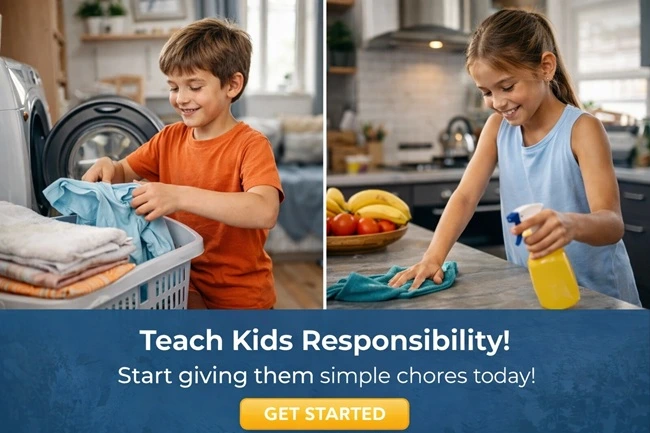
Teaching kids to do chores and take responsibility helps them:
- Build self-discipline
- Develop life skills
- Improve time management
- Increase confidence
- Learn accountability
- Reduce entitlement
Children who contribute at home often grow into adults who contribute to society.
Responsibility is not punishment. It is preparation.
What Real Parents Learn Over Time
Many parents realize too late that over-helping creates dependency. When children are used to everything being done for them, they struggle with basic self-care, decision-making and problem-solving.
Parents often say:
“I didn’t realize I was doing too much until my child couldn’t do basic things alone.”
The transition from caretaker to guide is not sudden. It’s gradual.
And the earlier you start, the smoother it becomes.
At What Age Should Kids Start Doing Chores?
The biggest myth is that children are “too young.”
Children can start taking responsibility much earlier than most parents think.
Age 2–3: Foundation Stage
Yes, toddlers can begin.
Simple tasks:
- Putting toys back in a basket
- Placing clothes in a laundry bin
- Wiping small spills
- Carrying their own water bottle
At this stage, it’s about routine — not perfection.
Age 4–6: Learning Ownership
Children at this stage can:
- Make their bed (simple version)
- Set the table
- Help water plants
- Arrange school bag with supervision
- Put away folded clothes
This is when children begin understanding the idea of contribution.
Age 7–9: Responsibility Stage
Now they can:
- Pack their own school bag
- Organize homework schedule
- Clean their room weekly
- Help with simple kitchen prep
- Feed pets
This is a critical age where parents must begin stepping back.
Age 10–13: Independence Building
Children should now:
- Manage their school responsibilities
- Handle personal hygiene independently
- Manage pocket money
- Help with cooking basic meals
- Complete chores without reminders
If parents continue doing everything at this stage, dependency increases.
Age 14+ : Accountability Stage
Teenagers should:
- Manage their time
- Do laundry
- Cook simple meals
- Handle personal schedules
- Take responsibility for mistakes
This prepares them for adult life.
When Should Parents Start Stepping Back?
The answer: Gradually, not suddenly.
The transition from “doing” to “monitoring” should begin around age 6–7.
Here’s how:
Step 1: Do Together
First, demonstrate the task.
Example: “Let’s clean your room together.”
Step 2: Let Them Try
Allow mistakes.
Resist correcting every small detail.
Step 3: Supervise Without Interfering
Say:
“I’m here if you need help.”
Instead of:
“Give it to me, I’ll do it.”
Step 4: Move to Monitoring
Instead of doing the task, check the result.
This shift is powerful.
You are no longer the doer. You are the guide.
For the latest updates Follow our Instagram and Youtube account
How to Transition Without Causing Resistance
Children resist sudden change.
If you’ve been doing everything for 8 years and suddenly say, “Now you do it,” it will create frustration.
Here’s a smoother approach:
1. Have an Honest Family Conversation
Explain:
“You’re growing up. That means more freedom and more responsibility.”
Children respond better when they understand the reason.
2. Start With One Task at a Time
Don’t assign ten chores overnight.
Start small:
- Clean your study table daily
- Pack your school bag
- Keep your shoes properly
Build consistency first.
3. Create a Chore Routine
Consistency builds habit.
Use:
- Weekly responsibility chart
- Simple checklists
- Clear expectations
Avoid micromanaging.
4. Stop Rescuing Immediately
If they forget homework once, let them face the natural consequence.
Natural consequences teach more than lectures.
5. Appreciate Effort, Not Perfection
Say:
“I like how you tried organizing your shelf.”
Not:
“This is still messy.”
Confidence fuels responsibility.
Signs Parents Are Doing Too Much
If you notice these, it may be time to step back:
- You remind your child of everything
- You complete unfinished school projects
- You clean their room daily
- You handle all their time management
- Your child avoids basic tasks
Over-parenting reduces problem-solving ability.
Children need room to struggle safely.
How Stepping Back Builds Stronger Kids
When parents step back:
Children learn:
- Decision-making
- Time management
- Consequences
- Self-reliance
It builds resilience.
And resilience is more important than convenience.
Common Parenting Fears (And the Truth)
“What if my child fails?”
Failure teaches accountability.
“What if it takes too long?”
Yes, it will.
But independence saves years later.
“What if they don’t do it properly?”
They will improve with practice.
Remember:
Perfect children are not the goal.
Capable adults are.
Long-Term Benefits of Teaching Kids Responsibility
Children who grow up doing chores often show:
- Higher self-esteem
- Better academic discipline
- Improved emotional maturity
- Strong work ethic
- Leadership skills
Responsibility builds character.
Character builds future success.
Final Thoughts: The Loving Shift
There comes a moment in parenting when love must evolve.
The shift from doing everything to teaching everything is uncomfortable. But it is necessary.
The goal is not to raise children who need us forever.
The goal is to raise children who can stand on their own — and still choose to come back for advice.
Start early.
Start small.
Be consistent.
And remember — stepping back is not stepping away.
It is stepping into your true role as a parent.
For More Parenting Tips , Follow Popnewsblend.com

Hi, I’m Prashant Jain — a curious soul, storyteller, and content creator at heart.I’ve always been drawn to the world of entertainment, travel, sports, health & lifestyle — not just as a writer, but as someone who genuinely lives these experiences. Whether I’m binge-watching the latest OTT series, exploring offbeat spiritual destinations in India, or diving deep into wellness routines and cricket match insights, I love sharing what I discover with like-minded readers.
PopNewsBlend is my way of blending personal journeys with meaningful stories — ones that inform, inspire, and keep you ahead of the curve. Everything I write comes from real observations, hands-on experiences, and a deep passion for understanding the world around us.
Discover more from Popnewsblend
Subscribe to get the latest posts sent to your email.
Related posts:
 How to Reduce Screen Time for Kids Without Stress: A Friendly Parent’s Guide
 Mental Health of Kids: Are We Failing Them by Not Talking About It Early?
 How To Protect Kids From Bullying : A Parent’s Guide to Understanding, Preventing, and Responding the Right Way
 Helping Your Child Overcome Fear: A Parent’s Guide to Raising a Confident, Emotionally Secure Kid