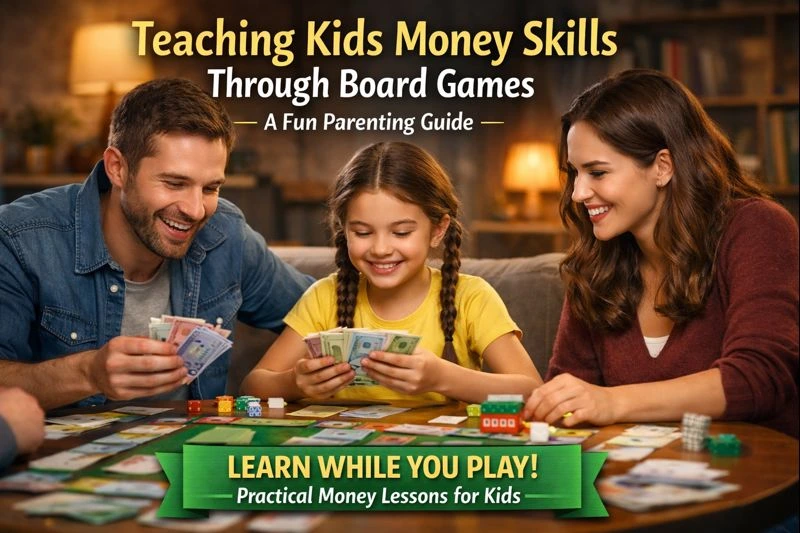
As a parent, one thing I’ve learned the hard way is this: kids don’t learn money habits from lectures. You can explain saving, spending and budgeting a hundred times, but it rarely sticks. What does stick is play. Real play. The kind where they laugh, argue, make mistakes and try again.
That’s where board games quietly become one of the best tools for teaching kids money skills—without them ever feeling like they’re being taught.
This guide is written from a parent’s point of view, based on real experiences at home, real conversations with kids and real lessons that unfold naturally during game nights.
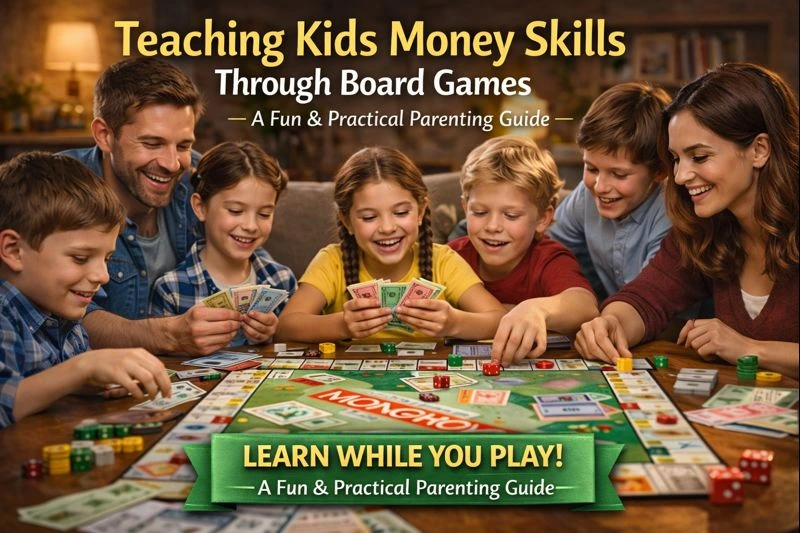
Why Teaching Money Skills Early Matters More Than Ever
Kids today are growing up in a world of digital payments, instant buying and invisible money. They rarely see cash change hands. This makes money feel endless and abstract.
If children don’t learn early:
- They struggle with delayed gratification
- They confuse wants with needs
- They grow up fearing money or misusing it
Teaching money skills early isn’t about turning kids into mini accountants. It’s about helping them:
- Make thoughtful choices
- Understand consequences
- Build confidence around money
And the best part? You don’t need textbooks. You need a board game and some time together.
Why Board Games Work Better Than Traditional Teaching
When kids play board games involving money, three powerful things happen:
First, money becomes visible. Fake notes, coins, property cards—all make money tangible.
Second, decisions feel real. When they spend everything and can’t pay rent, the lesson hits harder than any lecture.
Third, learning feels safe. Mistakes don’t hurt. They can lose, learn, and try again.
As parents, we often forget that children learn best when they feel relaxed, curious, and emotionally engaged. Board games naturally create that environment.
What Kids Really Learn From Money-Based Board Games
1. Earning Before Spending
Most money-based games require players to earn before they spend. Kids quickly realize that money doesn’t just appear. It comes from effort, turns, choices, or luck.
This builds an early understanding of value.
2. Budgeting Without Fear
When kids receive a limited amount of money in a game, they instinctively start planning:
- Should I buy this now or wait?
- What if I need money later?
- What happens if I spend everything?
This is budgeting in its most natural form.
3. Consequences of Poor Decisions
One impulsive purchase can leave them bankrupt in the next round. Instead of scolding, the game teaches the lesson gently and effectively.
4. Delayed Gratification
Saving in a game to buy something bigger later mirrors real-life money behavior. Kids feel proud when patience pays off.
5. Negotiation and Communication
Trading, bargaining, and negotiating teach kids confidence, fairness, and communication—essential life skills connected to money.
Age-Wise Learning Through Board Games
Ages 5–7: Understanding Basics
At this stage, kids learn:
- Identifying coins and notes
- Counting money
- Basic buying and selling
Keep it simple. Focus on fun, not winning.
Parent tip: Let them make mistakes. Don’t correct every move.
Ages 8–10: Planning and Choices
Kids start understanding:
- Saving vs spending
- Basic budgeting
- Risk and reward
They enjoy strategy and start thinking ahead.
Parent tip: Ask questions instead of giving advice. “What do you think will happen if you buy this?”
Ages 11–13: Strategy and Responsibility
Now kids can handle:
- Long-term planning
- Investment-like thinking
- Loss and recovery
Games become a mirror of real financial behavior.
Parent tip: Let them lead. Resist the urge to guide every decision.
Turning Game Night Into a Learning Experience (Without Ruining the Fun)
The biggest mistake parents make is turning games into lessons. Kids shut down the moment they feel tested.
Here’s what works better:
Let the Game Do the Teaching
Stay quiet during bad decisions. Let consequences unfold naturally.
Ask Reflective Questions After the Game
Not during. After.
- What worked for you?
- What would you do differently next time?
- Why do you think you ran out of money?
Share Your Own Mistakes
Kids relate better when parents admit they’ve made money mistakes too.
Real-Life Conversations That Naturally Follow Games
One of the best parts of using board games is what happens after.
Kids start asking:
- “Why didn’t I have enough money?”
- “How do people save in real life?”
- “Why do we need to pay bills?”
These questions are gold. They show curiosity, not fear.
Use simple, honest answers. Avoid numbers that overwhelm them. Keep it relatable.
Follow our Instagram Page for Latest Parenting Tips updates.
How Board Games Build Emotional Intelligence Around Money
Money is emotional. Adults know this well. Kids feel it too.
Board games help kids:
- Handle loss without panic
- Celebrate wins without arrogance
- Stay calm under pressure
- Accept uncertainty
These emotional skills matter as much as financial knowledge.
A Personal Parenting Reflection
Some of our best family conversations didn’t happen at the dining table or during homework time. They happened over a board game, with laughter, arguments, silly negotiations, and dramatic defeats.
Money skills didn’t feel heavy. They felt human.
And that’s exactly how children should learn them.
Final Thoughts for Parents
You don’t need perfection. You don’t need expert knowledge. You don’t need expensive tools.
You need:
- Time
- Presence
- Willingness to let kids learn by doing
Board games don’t just teach kids about money. They teach them about life—one playful decision at a time.
If you’re looking for a way to raise confident, thoughtful, money-aware kids without pressure, start with a game night. The lessons will follow naturally.
For More Parenting Tips , Please Follow Popnewsblend.com

Hi, I’m Prashant Jain — a curious soul, storyteller, and content creator at heart.I’ve always been drawn to the world of entertainment, travel, sports, health & lifestyle — not just as a writer, but as someone who genuinely lives these experiences. Whether I’m binge-watching the latest OTT series, exploring offbeat spiritual destinations in India, or diving deep into wellness routines and cricket match insights, I love sharing what I discover with like-minded readers.
PopNewsBlend is my way of blending personal journeys with meaningful stories — ones that inform, inspire, and keep you ahead of the curve. Everything I write comes from real observations, hands-on experiences, and a deep passion for understanding the world around us.
Discover more from Popnewsblend
Subscribe to get the latest posts sent to your email.
Related posts:
 How to Reduce Screen Time for Kids Without Stress: A Friendly Parent’s Guide
 Mental Health of Kids: Are We Failing Them by Not Talking About It Early?
 How To Protect Kids From Bullying : A Parent’s Guide to Understanding, Preventing, and Responding the Right Way
 Helping Your Child Overcome Fear: A Parent’s Guide to Raising a Confident, Emotionally Secure Kid