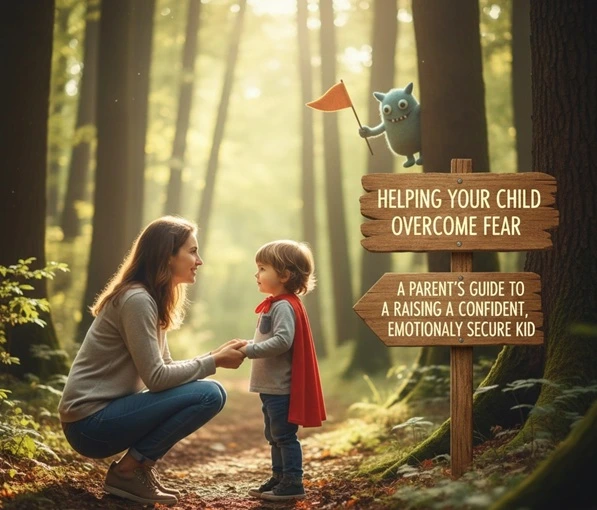
Every parent goes through that moment — the one where your child grabs your hand tightly, hides behind you or bursts into tears because something scared them. For some kids, it’s the dark. For others, it’s small insects, pets like cats or dogs, loud noises, falling down or even the fear of getting a scratch. And as parents, we genuinely want to help them feel safe, strong and brave… but sometimes we’re not sure how.
If you’re going through this phase with your child, let me tell you something very important — you’re not alone and neither is your child. Fear is a natural part of growing up. What matters is how we guide our kids through these emotions so they learn to manage their fears instead of running from them.
In this blog, I’m sharing a detailed, experience-based, emotionally grounded guide on how to help your kid overcome everyday fears, written from the point of view of a fellow parent who has been through this journey.
Why Kids Develop These Fears
Before solving the problem, it’s important to understand it. Most childhood fears come from:
1. Imagination and limited understanding
Kids create their own interpretations of the world. Darkness becomes a place where “something might be hiding.” A harmless insect looks scary because it moves unpredictably.
2. Past experiences
A sudden bark from a dog, a fall at the playground or a painful injection can create lasting fear.
3. Observing others
Kids absorb fear from parents or relatives without us realizing it. If a child sees someone scream at a cockroach, they learn that insects are “dangerous.”
4. Need for safety and control
Children rely on routines. Anything unfamiliar feels threatening — be it an animal, a dark room or the thought of getting hurt.
5. Developmental phases
Most fears are age-appropriate.
Kids between 3–7 especially go through a stage where imagination is strong and emotional regulation is still developing.
Understanding this helps us respond with empathy rather than frustration.
To get the regular updates, follow and subscribe our Instagram and Youtube account.
How to Help Your Child Overcome Fear — A Parent’s Practical Guide
Below are approaches that actually work, tested by parents and backed by child psychology principles, simplified in a warm and relatable way.
1. First, Acknowledge Their Fear — Don’t Dismiss It
Saying things like “It’s nothing,” “Don’t be silly,” “You’re a big kid now,” shuts the child down.
Instead, say:
- “I understand that this feels scary.”
- “It’s okay to feel afraid; I’m right here.”
- “Let’s face this together.”
When a child feels understood, half the fear melts automatically.
2. Become Their Safe Space
A kid who knows their parent won’t judge them becomes far more confident.
You can say things like:
- “I’ll hold your hand.”
- “You can hide behind me if you want.”
- “Tell me what part scared you.”
Fear reduces when the child knows they don’t have to handle it alone.
3. Introduce the Fear Slowly — Never Forcefully
Don’t push a child suddenly into a dark room or force them to pet a dog. It creates trauma, not courage.
Use gentle exposure:
For darkness:
- Start by dimming lights instead of switching them off completely.
- Use fairy lights or a soft night lamp.
- Sit with them and tell a fun bedtime story.
For insects:
- Start with pictures.
- Then show harmless tiny bugs from a distance.
- Teach them how insects help nature — this shifts perception from “scary” to “interesting.”
For pets:
- Show videos of cute animals.
- Visit a friend’s home with a calm pet.
- Let your child watch you pet the animal first.
For fear of falling or pain:
- Let them try small, low-risk activities first.
- Celebrate their attempts, not the results.
Exposure works only when paced slowly and respectfully.
4. Make Fear Fun Through Play
Kids learn best through play. Turn the fearful situation into a positive association.
Examples:
- Use a torch and make shadow animals on the wall.
- Read storybooks where animals are friendly characters.
- Create a “bravery game” where every small victory earns a sticker.
- Let them act out situations with dolls or action figures.
Children often overcome fear faster when the brain feels safe and playful.
5. Teach Them About the Fear—Knowledge Reduces Anxiety
Kids fear what they don’t understand.
Explain things in simple language:
- Why the room becomes dark.
- Why insects behave a certain way.
- Why dogs bark.
- Why scratches heal and the body becomes stronger after falling.
When kids feel informed, they feel more in control.
6. Model Courage — Kids Copy What You Do
If you scream when you see a spider, your child learns that insects are dangerous.
If you panic in the dark, the child absorbs that reaction.
But if your child sees you:
- calmly picking up a bug with a tissue,
- petting a dog confidently,
- or walking in the dark without fear,
they naturally follow your lead.
Your behavior is their biggest teacher.
7. Build Their Confidence Through Everyday Wins
A child who believes “I can do things” is less likely to be overwhelmed by fear.
Encourage them to:
- climb small playground structures,
- pour their own water,
- pick their outfit,
- help with small chores,
- try new activities.
Every small success builds emotional stability and reduces overall anxiety.
8. Create Routines for Predictability and Safety
Children thrive on structure. Predictability makes them feel safe.
Simple routines like:
- night-time rituals,
- consistent meal times,
- fixed wind-down habits,
- calm bedtime reading,
help reduce anxiety and fears naturally.
9. Avoid Comparisons or Labels
Never say:
- “Look at that kid, he’s not scared.”
- “You behave like a baby.”
- “Why are you always scared?”
These comments damage confidence and make the fear worse.
Instead say:
- “Every child learns at their own pace.”
- “You’re becoming braver every day.”
- “I’m proud of the way you’re trying.”
10. Teach Them Deep Breathing and Emotional Vocabulary
Most kids don’t fear the thing — they fear the feeling inside their body.
Teach simple tools:
- Taking slow breaths.
- Naming emotions: “I’m scared,” “I’m nervous,” “I’m unsure.”
When the child names the feeling, it loses power.
This builds emotional intelligence for life.
11. Don’t Overprotect Too Much
We love our kids and want to protect them from everything, but overprotection sometimes amplifies fear.
Instead of always saying “Careful!” “Don’t fall!”, try:
- “I’m here if you need me.”
- “Try it slowly.”
- “You can tell me if something feels uncomfortable.”
Let them explore safely without wrapping them in fear.
12. Celebrate Every Small Improvement
Don’t wait for the day they become totally fearless.
Celebrate moments like:
- sitting in a dim room,
- touching a soft toy shaped like a dog,
- letting you show them a butterfly,
- climbing one step higher on the slide.
Acknowledge it with phrases like:
- “This was a brave moment.”
- “I’m so proud of you for trying.”
Progress doesn’t happen in leaps — it happens in small steps.
When Should You Seek Additional Help?
Most childhood fears are normal and temporary.
However, consider professional help if:
- The fear affects daily life significantly.
- The child refuses school, outdoor play or social interactions.
- The fear causes sleep disturbances or panic-like reactions.
- They talk constantly about the fear in distress.
Child psychologists and counselors can guide with structured techniques like play therapy, CBT for kids, or behavioral therapy — all gentle and child-safe.
Final Thoughts — Your Child Doesn’t Need to Be Fearless, Just Supported
Every child is unique. Some bloom early, some take their time. Fear is not a weakness, it’s simply a signal that they need comfort, guidance and patience.
As parents, our role is not to eliminate every fear for them — but to walk alongside them until they feel strong enough to face the world.
With love, consistency, empathy and gentle exposure, your child won’t just overcome their fears…
they’ll grow into a confident, emotionally resilient human being who trusts themselves — and trusts you.
For more such Parenting Tips, Follow Popnewsblend.com

Hi, I’m Prashant Jain — a curious soul, storyteller, and content creator at heart.I’ve always been drawn to the world of entertainment, travel, sports, health & lifestyle — not just as a writer, but as someone who genuinely lives these experiences. Whether I’m binge-watching the latest OTT series, exploring offbeat spiritual destinations in India, or diving deep into wellness routines and cricket match insights, I love sharing what I discover with like-minded readers.
PopNewsBlend is my way of blending personal journeys with meaningful stories — ones that inform, inspire, and keep you ahead of the curve. Everything I write comes from real observations, hands-on experiences, and a deep passion for understanding the world around us.
Discover more from Popnewsblend
Subscribe to get the latest posts sent to your email.
Related posts:
 How to Reduce Screen Time for Kids Without Stress: A Friendly Parent’s Guide
 Mental Health of Kids: Are We Failing Them by Not Talking About It Early?
 How To Protect Kids From Bullying : A Parent’s Guide to Understanding, Preventing, and Responding the Right Way
 The Lost Art of Eating Together: Why It Matters More Than Ever