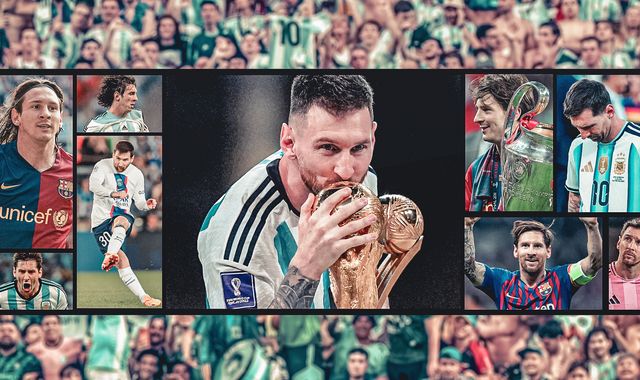
Lionel Messi has retired from international football.
After more than two decades wearing Argentina’s famous blue-and-white shirt, the 39-year-old captain has announced that his extraordinary journey with the national team is over.
Messi made the announcement on August 31, 2026, in an emotional farewell letter published on social media. He said the decision “hurt and hurts in the soul,” but that he understood the time had come.
And then came the line that may stay with Argentina supporters forever:
“Now I’m going to be one more of you, cheering and supporting from the outside.”
It is difficult to imagine Argentina without Messi.
For more than 20 years, he was not simply the team’s No. 10. He was the player millions waited for when the pressure was highest, the free kick was 25 yards away, or Argentina desperately needed one moment of magic.
Now, he will watch like the rest of us.
Messi leaves the Argentina national team as its most-capped player and all-time leading scorer, with 207 appearances and 125 goals.
His final match came in the 2026 FIFA World Cup final, when defending champions Argentina lost 1-0 to Spain after extra time on July 19.
There was no fairytale ending.
But perhaps Messi’s story never really needed one.
Because the ending had already been written in gold four years earlier in Qatar.
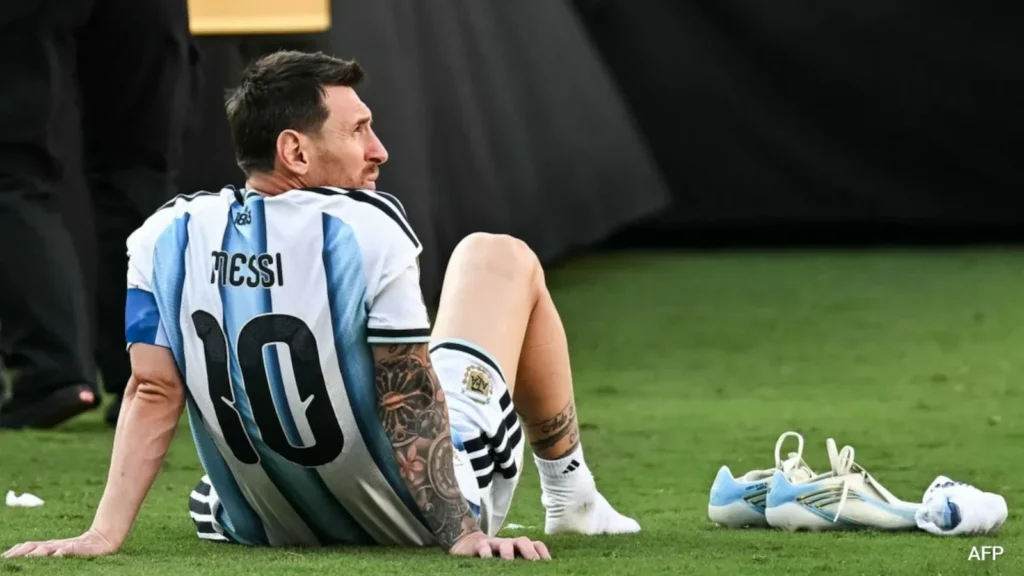
Why Did Lionel Messi Retire From International Football?
Messi said he had spent time thinking about the decision following the 2026 World Cup final.
In his farewell message, he explained that he felt the time had come, that he had given everything he had to the Argentina shirt and that younger players deserved opportunities.
He wrote that he had “emptied himself” and had nothing more to give.
Messi also revealed an important detail: he had actually written the farewell message on July 21, two days after Argentina lost the World Cup final to Spain.
He did not publish it immediately.
Following the death of his father, Jorge Messi, on August 8, he said he was more convinced than before about the decision.
That makes the timing of the announcement even more poignant.
Messi wasn’t making an impulsive decision immediately after losing the World Cup final.
He had already thought about it.
The loss, the passing of his father and the feeling that his international chapter had reached its natural conclusion all formed part of an intensely emotional period.
Importantly, Messi’s announcement is about international football, not necessarily football altogether. He remains a club footballer with Inter Miami.
Messi’s Emotional Farewell: “Now I’m Going to Be One More of You”
Messi’s farewell wasn’t written like a corporate retirement announcement.
It sounded like a footballer talking directly to the people who had followed him for 20 years.
He thanked Argentina’s supporters for their love and said he would miss hearing them from inside the stadium.
Then he promised to support the national team from the outside.
That sentence carries enormous emotional weight. For two decades, Argentine fans heard Messi’s name announced before matches.
- They watched him walk out wearing No. 10.
- They watched him take the captain’s armband.
- They watched him score.
- They watched him lose.
- They watched him cry.
- They watched him lift trophies.
- And now they will watch him from the stands.
Messi ended his letter by thanking his family, coaches, teammates and administrators who accompanied him throughout his journey.
He also wrote:
“Thanks God for making me Argentine.”
It is a remarkably simple ending for one of the most extraordinary international careers football has ever seen.
Lionel Messi’s Final Argentina Match Was the 2026 World Cup Final
Messi’s final appearance for Argentina came on July 19, 2026, at the FIFA World Cup final in New York New Jersey Stadium.
Argentina faced Spain in a meeting between the defending champions and one of the strongest teams in the tournament.
The match remained goalless after 90 minutes.
Then, in the 106th minute, Spain’s Ferran Torres scored the decisive goal.
Spain won 1-0 after extra time and became world champions for the second time.
For Argentina, it was heartbreaking.
For Messi, it was the final international appearance of his career.
There was no last-minute equaliser.
No trophy lift.
No perfect Hollywood ending.
Instead, Messi walked away from the biggest stage in football with a runner-up medal.
And perhaps that makes his career feel even more real.
Football doesn’t always give legends the ending they deserve.
Messi’s International Career by the Numbers
The numbers are staggering.
| Statistic | Lionel Messi’s Argentina Career |
|---|---|
| Argentina senior debut | 2005 |
| International appearances | 207 |
| International goals | 125 |
| World Cups | 6 |
| World Cup appearances | 34 |
| World Cup goals | 21 |
| Copa América titles | 2 |
| FIFA World Cup titles | 1 |
| Finalissima titles | 1 |
| Olympic gold | 2008 |
| FIFA U-20 World Cup | 2005 |
Messi retires as Argentina’s record appearance holder and leading scorer, with 207 caps and 125 goals.
At the World Cup, he finished with 34 appearances across six tournaments and 21 goals. FIFA confirms that his 34 appearances are an all-time World Cup record.
He also became the oldest outfield player to play in a World Cup final, at 39 years and 25 days.
These aren’t simply statistics.
They are a timeline of an entire football generation.
Six World Cups: Messi’s Extraordinary Journey
Messi’s World Cup story began in Germany in 2006.
He was a teenager then.
Twenty years later, he walked onto the field for his sixth World Cup.
That longevity alone is extraordinary.
His six World Cups were:
- 2006 – Germany
- 2010 – South Africa
- 2014 – Brazil
- 2018 – Russia
- 2022 – Qatar
- 2026 – Canada, Mexico and the United States
FIFA confirms that Messi became the first player to reach six World Cup tournaments and finished his World Cup career with 34 appearances and 21 goals.
But the numbers don’t capture the emotional journey.
Because Messi’s World Cup career was filled with both heartbreak and redemption.
2014: The World Cup Final That Got Away
For Messi, the 2014 World Cup in Brazil was painfully close to perfection.
Argentina reached the final against Germany at the Maracanã. The match remained goalless after 90 minutes. Then Mario Götze scored in extra time.
Germany became world champions. Messi received the Golden Ball as the tournament’s best player, but the trophy he wanted most remained out of reach.
The image of Messi walking away from the World Cup final without the trophy became one of the defining images of his career.
At that moment, many wondered whether he would ever win the World Cup.
Nobody knew that eight years later, the answer would finally come.
2016: Messi Walked Away — Then Came Back
The road to international glory wasn’t smooth.
In 2016, Argentina again reached a major final. Again, the opponent was Chile. Again, the match went to penalties. And again, Argentina lost.
After the defeat in the Copa América Centenario final, Messi announced his international retirement.
For a moment, it looked like the end.
But Argentine supporters didn’t want that ending.
Messi eventually returned.
That decision would change everything.
Because the player who came back wasn’t simply chasing another trophy.
He was about to lead Argentina through the most successful period of his international career.
2021 Copa América: The Trophy That Changed Everything
The breakthrough came at the 2021 Copa América.
Argentina defeated Brazil 1-0 in the final at the Maracanã.
Messi finally had his major senior international trophy.
For years, the question had been:
“Can Messi win something with Argentina?”
After that night, the question disappeared.
The weight on his shoulders began to lift.
The relationship between Messi and Argentine supporters changed.
And Argentina’s golden era was only beginning.
2022 Finalissima: Another Sign of What Was Coming
In 2022, Argentina defeated Italy in the Finalissima at Wembley.
It was another piece of silverware.
Another confidence boost.
Another sign that this Argentina team was different.
The team looked united.
Messi looked comfortable.
And then came Qatar.
2022 World Cup: The Dream Finally Came True
This was the chapter Messi had spent his entire career waiting for.
Argentina entered the 2022 FIFA World Cup as one of the favourites.
Then came the shock. Argentina lost its opening match to Saudi Arabia. Suddenly, the dream looked fragile.
But Messi responded. He scored, He created, He led.
Argentina kept moving forward. And eventually came the final against France.
What happened next became football history. Argentina and France played out an unforgettable 3-3 draw after extra time.
Messi scored twice. Argentina eventually won the penalty shootout 4-2. Lionel Messi lifted the World Cup.
The trophy that had escaped him in 2014 was finally in his hands. He had become a world champion.
And for millions of fans, that was the moment the debate ended.
2024 Copa América: Messi Keeps Winning
After winning the World Cup, Messi could have walked away. Instead, he continued.
Argentina won the 2024 Copa América, giving Messi another major international title.
His Argentina career had gone from:
Heartbreak → criticism → retirement → comeback → Copa América → World Cup → another Copa América.
It was one of the most remarkable transformations in sporting history.
For the latest Sports Update, Please follow Popnewsblend.com
2026 World Cup: One Last Dance
Messi entered the 2026 World Cup at 39.
Many wondered how much he could still contribute. The answer came quickly.
Against Algeria, Messi scored a hat-trick as Argentina won 3-0. The performance was historic.
Messi became the first player to score a World Cup hat-trick at the age of 39, while also reaching the 200-match milestone for Argentina during the game. FIFA reported that his three goals took him level with Miroslav Klose’s then-record 16 World Cup goals.
He then went beyond Klose’s record by scoring twice against Austria.
By the end of the tournament, Messi had 21 World Cup goals, making him Argentina’s all-time leading World Cup scorer.
He also scored against Jordan, Cabo Verde and Egypt during the tournament.
FIFA records Messi as having scored eight goals at the 2026 World Cup, taking his career World Cup total to 21.
And Argentina kept winning. Until the final.
Spain 1-0 Argentina: The Ending Nobody Wanted
Argentina reached the 2026 World Cup final unbeaten in its previous 13 World Cup matches.
Spain stood in the way. The final was played at New York New Jersey Stadium on July 19.
Spain controlled much of the match. Argentina struggled to create clear chances.
After 90 minutes, it was still 0-0. Then came extra time.
Ferran Torres scored in the 106th minute. Spain won 1-0.
Argentina’s reign as world champions was over. And Messi’s final World Cup appearance ended without another trophy.
But Messi still left the tournament with another collection of records. He extended his World Cup appearance record to 34 matches and became the second-oldest player ever to appear in a World Cup final and the oldest outfield player to do so.
The Most Emotional Detail: Messi Had Already Written His Goodbye
Perhaps the most remarkable detail surrounding Messi’s retirement is that his farewell letter was not written on August 31.
Messi said he wrote it on July 21, 2026 — two days after the World Cup final.
He simply didn’t publish it immediately.
Then his father, Jorge Messi, died on August 8 at the age of 68.
Jorge had been one of the most important people in Lionel Messi’s life and career, supporting and representing him from his early years.
In the final note attached to his farewell, Messi wrote that after what happened with his father, he was even more convinced of his decision.
It would be wrong to say that his father’s death caused his retirement.
Messi had already written the farewell before Jorge died.
But it is clear from Messi’s own words that the loss influenced how certain he felt about closing this chapter.
That makes the timing even more emotional.
Messi and Argentina: From Complicated Relationship to Love Story
There was a time when Messi’s relationship with Argentina wasn’t always comfortable.
Despite becoming one of the greatest players in Barcelona history, he was repeatedly questioned for his performances with the national team.
The comparison with Diego Maradona was relentless. Every final lost became another criticism.
Every missed opportunity became another debate. Some supporters wondered whether Messi could ever reproduce his club brilliance for Argentina. Then everything changed.
The 2021 Copa América gave him his first major senior international trophy. The 2022 World Cup gave him the prize he wanted most. The 2024 Copa América added another.
And by the time Messi walked onto the field for Argentina’s final matches, he was no longer the player trying to prove himself.
He was the captain of a generation that had already changed Argentine football history.
Messi vs Maradona: A Debate That Will Never Really End
Argentina has produced two players who occupy a special place in football history:
Diego Maradona and Lionel Messi.
Maradona led Argentina to the 1986 World Cup. Messi led Argentina to the 2022 World Cup.
Their careers were different. Their football was different. Their personalities were different.
Trying to decide who was “better” will probably remain a debate for generations.
But perhaps Argentina doesn’t need to choose. It can celebrate both.
Maradona gave the country one of its greatest footballing triumphs.
Messi gave another generation its own World Cup dream.
And Messi’s international career ended with his place alongside Argentina’s greatest football icons firmly established.
What Happens to Argentina Without Messi?
This is the question that will dominate Argentine football now.
- Who wears No. 10?
- Who becomes captain?
- Who takes the free kicks?
- Who becomes the creative focal point?
- Who takes responsibility when Argentina needs a goal?
There won’t be one direct replacement. Messi’s role was too large for one player.
Argentina’s next generation will have to share the responsibility. And that may ultimately be healthy for the team. For 20 years, Argentina had Messi. Now Argentina has to learn how to play without him.
Who Will Replace Messi as Argentina’s No. 10?
There is no obvious way to replace Lionel Messi. A player may eventually wear the No. 10 shirt. Another may take his position.
Someone else may become captain. But Messi’s combination of scoring, creativity, leadership, longevity and emotional connection with Argentina cannot simply be transferred to another player.
The better question may not be:
“Who is the next Messi?”
It should be:
“What can Argentina become after Messi?”
That is the challenge waiting for the next generation.
Will Messi Retire From Football Completely?
No — not based on his August 31 announcement.
Messi announced his retirement from the Argentina national team, not from professional football altogether.
He continues his club career with Inter Miami. Reuters described him as remaining an Inter Miami player following his international retirement.
That means fans can still see Messi on a football pitch. But the emotional connection will be different.
There will be no more Argentina World Cup campaigns with Messi. No more Copa América tournaments with Messi. No more national-team nights waiting for No. 10 to produce another miracle.
That chapter is over.
Messi’s Argentina Legacy Is Bigger Than His Trophies
If we reduce Messi’s international career to statistics, we miss the best part.
- His legacy is about persistence.
- He lost finals.
- He was criticised.
- He retired.
- He returned.
- He lost again.
- He kept going.
- Eventually, he won.
- And then he kept winning.
That’s what makes his Argentina story so powerful.
- It wasn’t perfect.
- It wasn’t easy.
- It wasn’t a straight line from teenage prodigy to world champion.
- It was messy.
- Painful.
- Beautiful.
- Human.
- And perhaps that is why millions connected with it.
For a Generation, Messi Was Simply Always There
Think about someone who watched Messi’s Argentina debut in 2005.
That person was probably a teenager.
- They watched the 2006 World Cup.
- Then 2010.
- Then 2014.
- Then 2018.
- Then Qatar in 2022.
- Then the 2026 World Cup.
Twenty years passed.
- People grew up.
- They went to university.
- They started careers.
- They got married.
- They had children.
- And throughout much of that time, Messi was still there.
- Still wearing No. 10.
- Still playing for Argentina.
- Still giving fans something to believe in.
That is why his retirement feels bigger than the retirement of an ordinary footballer.
For an entire generation, Messi was part of life.
The Next Argentina Match Will Feel Strange
The first time Argentina plays a major match without Messi, something will feel missing.
- The anthem will play.
- The blue-and-white shirts will appear.
- The crowd will sing.
- The cameras will scan the players.
- But No. 10 won’t be there.
- There will be no Messi standing over the ball.
- No familiar left foot.
- No sudden acceleration.
- No impossible pass.
- No last-minute free kick.
- Instead, somewhere away from the pitch, Messi will be watching.
- Supporting.
- Cheering.
- Arguing with the referee like every other fan.
- He has finally become what he said he would become:
one of them.
One more Argentina supporter.
Lionel Messi’s International Career: The Complete Legacy
Messi leaves Argentina with:
- 207 senior international appearances
- 125 international goals
- 6 World Cup appearances
- 34 World Cup matches
- 21 World Cup goals
- 1 FIFA World Cup
- 2 Copa América titles
- 1 Finalissima
- 2008 Olympic gold
- 2005 FIFA U-20 World Cup
- Argentina’s record for international appearances
- Argentina’s record for international goals
- FIFA’s record for World Cup appearances
The numbers are extraordinary.
But the story behind them is even greater.
Lionel Messi Retirement: Frequently Asked Questions
Is Lionel Messi retired from international football?
Yes. Lionel Messi announced his retirement from the Argentina national team on August 31, 2026, ending a senior international career that began in 2005. Reuters confirmed that he finished with 207 appearances and 125 goals for Argentina.
Why did Messi retire from Argentina?
Messi said he had thought deeply about the decision and felt the time had come. He said he had given everything to the Argentina shirt and that younger players deserved opportunities. He had written his farewell message on July 21, two days after the 2026 World Cup final.
Did Messi retire because of his father’s death?
Messi’s own statement does not say that his father’s death caused the retirement. He had already written the farewell on July 21. However, he said after his father Jorge Messi died on August 8 that he was more convinced than before about the decision.
What was Messi’s last match for Argentina?
Messi’s final match for Argentina was the 2026 FIFA World Cup final against Spain on July 19, 2026. Spain won 1-0 after extra time, with Ferran Torres scoring in the 106th minute.
Did Messi win the 2026 World Cup?
No. Argentina reached the final but lost 1-0 to Spain after extra time. Spain became the 2026 FIFA World Cup champions.
How many World Cups did Messi play?
Messi played in six FIFA World Cups: 2006, 2010, 2014, 2018, 2022 and 2026.
How many World Cup goals did Messi score?
Messi finished with 21 FIFA World Cup goals across six tournaments. FIFA lists him as Argentina’s all-time leading World Cup scorer.
How many World Cup appearances did Messi make?
Messi finished with 34 World Cup appearances, an all-time tournament record.
How many goals did Messi score for Argentina?
Messi finished his Argentina senior career with 125 goals in 207 appearances, making him the country’s all-time leading scorer.
How many matches did Messi play for Argentina?
He played 207 senior international matches for Argentina, a national record.
When did Messi make his Argentina debut?
Messi made his senior Argentina debut in 2005.
How many Copa América titles did Messi win?
Messi won the Copa América with Argentina in 2021 and 2024.
Did Messi ever retire from Argentina before?
Yes. Messi announced his international retirement after Argentina lost the 2016 Copa América Centenario final to Chile. He later reversed that decision and returned to the national team.
Is Messi retiring from football completely?
No. His August 31 announcement concerns the Argentina national team. Messi continues his club career with Inter Miami.
What did Messi say in his farewell letter?
Messi said the decision hurt deeply but that he understood the time had come. He thanked supporters for 20 years of affection and said he would now support Argentina from outside the team as “one more” fan. He also said he had no more to give and that younger players deserved opportunities.
When did Messi write his retirement letter?
Messi said he wrote the farewell letter on July 21, 2026, two days after Argentina’s World Cup final defeat to Spain. He published it on August 31.
Who will replace Messi in Argentina?
No single player can realistically replace Messi’s entire contribution. Argentina will need to distribute his creative, scoring and leadership responsibilities among a new generation.
Will Argentina retire Messi’s No. 10 shirt?
There has been no confirmed announcement that Argentina will permanently retire the No. 10 shirt as a result of Messi’s retirement. Any future decision would need to come from the relevant football authorities.
The End of the Messi Era
There is something strangely beautiful about Messi’s farewell.
He didn’t get the final trophy.
He didn’t score the winning goal in his last match.
He didn’t walk away after another World Cup victory.
Instead, he lost.
And then, weeks later, he quietly told the world that it was time.
Maybe that’s fitting.
Because Messi’s Argentina story was never really about perfection.
It was about persistence.
The boy from Rosario who left Argentina as a youngster became the man who carried the country’s hopes for two decades.
He endured criticism.
He lost finals.
He briefly walked away.
He came back.
He won the Copa América.
He won the World Cup.
He won another Copa América.
He became Argentina’s most-capped player and greatest scorer.
And then, after giving everything he had, he decided to step aside.
The next time Argentina walks onto a football pitch, millions will look for him.
They’ll instinctively search for No. 10.
But he won’t be there.
He’ll be watching from somewhere else.
Cheering.
Supporting.
Probably suffering through every missed chance.
Just like everyone else.
Because after 20 years of being Argentina’s Messi, Lionel Messi has finally become what he said he would:
one more of us.
And for those who grew up watching him, that may be the hardest part to accept.
Goodbye, Leo.
Thank you for the goals.
Thank you for the trophies.
Thank you for the heartbreak.
Thank you for making us believe.
Gracias, Messi.

Hi, I’m Prashant Jain — a film enthusiast and critic who lives and breathes cinema. From big-screen releases to the latest drops on OTT, I watch extensively and review honestly, without hype or bias.
I believe a good review should go beyond just “good” or “bad.” It should help you understand what works, what doesn’t, and whether a film is truly worth your time. My reviews focus on storytelling, performances, direction, and overall impact — all through the lens of a genuine viewer.
I regularly cover new movie releases and trending web series across OTT, bringing clear, no-nonsense insights for audiences who want real opinions, not paid praise.
Through PopNewsBlend, I aim to cut through the noise and give you reviews you can trust — whether you’re deciding what to watch next or just love discussing cinema as much as I do.
Discover more from Popnewsblend
Subscribe to get the latest posts sent to your email.
Related posts:
 GT vs DC IPL 2025: Jos Buttler’s Heroics Lead Gujarat Titans to a Thrilling Win at Narendra Modi Stadium
 PBKS vs DC IPL 2025 Match 66 – Full Match Recap and Key Highlights
 Epic Chase in Vadodara: India Beat New Zealand in Thrilling 1st ODI After Chasing 301
 Thunder in Colombo: New Zealand Crush Sri Lanka in Super 8 T20 World Cup Thriller