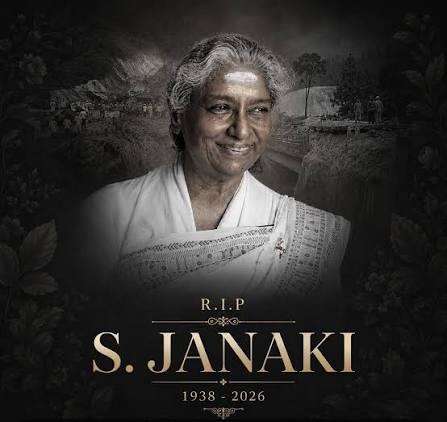
There are some voices that never really belong to just one person. They become part of weddings, funerals, lazy afternoons, first heartbreaks, and quiet nights when nothing else made sense except a song playing softly in the background. S. Janaki’s voice was one of those. And on the 11th of July, 2026, that voice went silent forever. She was 88.
I am writing this not as a formal obituary but as something closer to a letter, the kind you write when someone who felt like family, even though you never met them, is suddenly gone. If you grew up anywhere in South India, or even if you didn’t but happened to fall in love with a Tamil, Telugu, Kannada, or Malayalam film song at some point in your life, chances are you have heard her sing. Chances are she shaped a memory of yours without you ever knowing her name properly.
This is for her.
Who Was S. Janaki
Sistla Sreeramamurthy Janaki was born on 23rd April 1938 in a small village called Pallapatla, in the Repalle taluka of Guntur district, in what was then Madras Presidency and is now Andhra Pradesh. Her father, Sistla Sreeramamurthy, worked as an Ayurvedic doctor and teacher, and it was in this modest, disciplined household that a little girl began humming tunes almost as soon as she could speak.
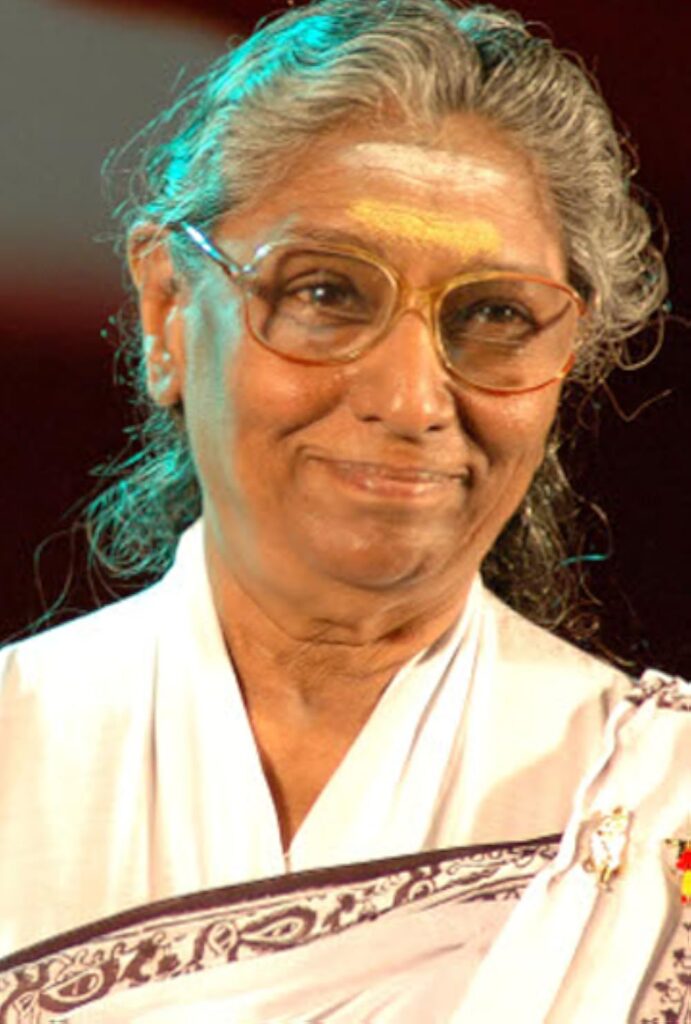
People close to her often said she started performing on stage from the age of three. That is not an exaggeration people add for effect after someone becomes famous. It was simply who she was from the very beginning. She trained under Sree Paidiswamy, a respected nadaswaram vidwan, learning the discipline and depth that would later let her sing in ways almost no one else could match.
The world came to know her simply as Janaki, or with the deep affection reserved for someone who feels like everybody’s own, as Janaki Amma. Over the decades, she earned a title that felt less like a nickname and more like a fact: the Nightingale of South India.
The Journey That Built A Legend
Her professional break came in 1957, when she was just nineteen. She moved to Chennai on her uncle’s advice to work with music director R. Sudarsanam at AVM Studios, and her first playback song was for the Tamil film Vidhiyin Vilayattu. What followed in that very first year is almost hard to believe even now. She recorded songs in six different languages within twelve months of stepping into the industry.
From there, she simply never stopped. Across a career spanning nearly six decades, she went on to record more than 48,000 songs, in solos, duets, chorus pieces, and title tracks, spread across 20 Indian languages including Telugu, Tamil, Kannada, Malayalam, Hindi, Odia, Sanskrit, Bengali, Tulu, Konkani, Punjabi, Urdu, and Badaga, along with a handful of recordings in English, Japanese, German, and Sinhala.
It is worth pausing on that number. 48,000 songs is not a career, it is a life fully given to music, one recording booth, one melody, one emotion at a time.
Interestingly, the language she sang the most in was not her mother tongue Telugu, but Kannada, followed closely by Malayalam. She worked with composers across generations, from G. K. Venkatesh and Rajan-Nagendra in her earlier Kannada years to Hamsalekha later on. In Malayalam, she became the trusted voice for composers like V. Dakshinamoorthy, M. S. Baburaj, Shyam, M. B. Sreenivasan, A. T. Ummer, and Salil Chowdhury through the seventies and into the mid-eighties.
In Tamil cinema, her song Singaravelane Deva from the film Konjum Salangai brought her early recognition, and composer M. S. Viswanathan gave her a steady stream of hits through the sixties and early seventies. Her Telugu career, which began the same year with the film M.L.A., saw her voice attached to some of the most loved melodies of that industry.
Her Hindi film career, interestingly, happened almost by accident. Composer Bappi Lahiri heard one of her Hindi songs recorded for a Tamil film while visiting Prasad Studios and was so struck by it that he decided to bring her into Bollywood, where she went on to sing several memorable duets with Kishore Kumar.
Later in her career, during the nineties, she lent her voice to a young A. R. Rahman, on songs that are still played today, songs like Ottagatha Kattiko, Gopala Gopala, and Mudhalvane. Her rendition of Margazhi Thingal for Rahman’s composition even won her a state award decades into her career, a reminder that her artistry never really aged.
She also shared what can only be described as one of the most beloved singing partnerships in Indian film history with S. P. Balasubrahmanyam, with the two of them believed to have recorded somewhere between five and ten thousand songs together. Her duets with K. J. Yesudas, P. B. Srinivas, and legendary actor-singer Dr. Rajkumar are still considered evergreen classics, especially in Kannada cinema, where she remained the undisputed leading female voice through the seventies and eighties.
Her Family, Her Quiet Life Away From The Microphone
For someone whose voice reached millions, S. Janaki kept her personal life remarkably private and grounded.
She married V. Ramprasad in 1959, a year after they first met, and he became far more than a husband to her. He accompanied her to nearly every recording session for the rest of his life, and in her own words shared during an interview once, he loved every song she sang and never wanted to leave her side even during recordings, just as she could never imagine being without him. He was, in every sense, the quiet support behind the loud, joyous, aching beauty of her music. He passed away in 1997 after suffering a cardiac arrest, a loss that changed her deeply.
The couple had one son, Murali Krishna, who went on to work in the film industry himself as an actor. Heartbreakingly, Murali Krishna passed away on the 22nd of January 2026, just a few months before his mother’s own passing, a personal grief that Janaki carried quietly in her final months.
She is survived by her granddaughters, including Apsara Vydyula, who shared the news of her grandmother’s passing with the world through a deeply emotional social media post. She described watching her grandmother leave peacefully, surrounded by the love of her family, and spoke of the immeasurable joy that voice had given to millions, even while asking, gently, for the family’s privacy to be respected during such a painful time.
That request feels important to honour, even here. Behind every legendary artist is a family quietly living with loss long after the applause has died down.
Retirement, And A Goodbye Sung In A Lullaby
In 2017, after sixty years of an almost unimaginable singing career, Janaki Amma decided it was time to step back. She chose to end her journey not with a grand chart-topping number but with a Malayalam lullaby called Amma Poovinum, from the film 10 Kalpanakal. She retired formally on the 28th of October 2017 with a farewell concert held in Mysuru, the city that had become her home in later years.
There was something quietly poetic about that choice. A woman who had sung joy, sorrow, devotion, romance, rebellion, and everything in between across an entire subcontinent’s worth of languages chose, in the end, to leave the stage the way a mother sings her child to sleep. Gentle. Complete. Unhurried.
Awards, Recognition, And The One Honour She Turned Down
Her shelf of awards reads like a record book of Indian cinema itself. She won four National Film Awards across her career, for Senthoora Poove in the Tamil film 16 Vayathinile in 1976, for Ettumanoorambalathil in the Malayalam film Oppol in 1980, for Vennello Godari Andham in the Telugu film Sithara in 1984, and for Inji Idupazhagi in the Tamil film Thevar Magan in 1992.
Beyond the national honours, she collected an extraordinary 33 state film awards across her career, along with 12 Nandi awards in Telugu cinema alone. She received the Kalaimamani award from the Tamil Nadu government, the Rajyotsava Prashasti from the Karnataka government in 2014, and an honorary doctorate from the University of Mysore for her contribution to Kannada film and music.
Perhaps the most telling moment of her career, though, came in 2013, when she was offered the Padma Bhushan, India’s third-highest civilian honour. She respectfully declined it, saying that after everything she had given to Indian music across six decades and twenty languages, she felt she deserved the Bharat Ratna, the nation’s highest civilian award, instead. It was a bold thing to say publicly, and it was not arrogance. It was simply a woman who knew, with complete clarity, the true scale of what she had built with her voice, and who was not willing to accept less than what that work had earned.
To get the regular updates on Indian Cinema Follow Popnewsblend.com
Why People Admired Her So Much
Ask anyone who grew up listening to South Indian film music what made Janaki Amma different, and you will hear some version of the same answer. It was never just about hitting the right notes. It was about how she could become the character in the song.
She was often called the Queen of Expression and Modulation, and it is not hard to understand why. She could sing a devotional bhajan with the stillness of prayer, a playful duet with mischievous energy, a heartbroken solo with a crack in her voice that felt too real to be performed, and a lullaby so tender it genuinely sounded like a mother’s own whisper. Few singers in the history of Indian cinema could move between such emotional registers and languages with the same ease she carried her entire life.
She worked with almost every major composer of her era, was deeply devoted to Lord Krishna and Shirdi Sai Baba, and recorded devotional music dedicated to Meera Bai alongside her film work. Her contemporaries and collaborators included some of the greatest names in Indian music history, and even among that company, she stood distinctly apart.
For younger singers who came after her, she was not just an idol but a kind of proof that discipline, versatility, and honesty in performance could carry an artist further than trends ever could.
A Personal Note
I did not know S. Janaki personally, and I imagine most people writing about her today did not either. But that is exactly what makes her passing feel so personal. Her songs were playing in the background of so many ordinary, unremarkable, precious moments of everyday life, a mother cooking in the kitchen with the radio on, a long bus journey with earphones in, a wedding function where an elderly relative suddenly went quiet listening to a song from their youth.
That is the strange gift great singers give us. They become part of memories that have nothing to do with them directly, and yet everything to do with them at the same time.
Rest peacefully, Janaki Amma. Thank you for six decades of a voice that never once sounded tired, never once sounded like it was simply doing a job. Thank you for choosing to end your journey with a lullaby, as if you wanted your final gift to the world to be a moment of rest, the very thing you are receiving now. Millions of us are quietly grieving today, even though we never got to say thank you in person. Consider this our attempt.
Frequently Asked Questions
When did S. Janaki pass away? She passed away on 11th July 2026, at a private hospital in Mysuru, at the age of 88, following age-related health complications.
What was S. Janaki’s full name? Her full name was Sistla Sreeramamurthy Janaki. She was widely known simply as S. Janaki, and affectionately called Janaki Amma by fans and colleagues.
How many songs did S. Janaki sing in her career? Over her nearly six-decade career, she recorded more than 48,000 songs across films, private albums, television, and radio, spanning 20 Indian languages plus a few foreign languages.
In which languages did S. Janaki sing the most? She sang the largest number of songs in Kannada, followed closely by Malayalam, though she was equally celebrated in Tamil, Telugu, and Hindi cinema.
Who was S. Janaki’s husband? She married V. Ramprasad in 1959. He supported her career closely, accompanying her to most of her recordings, until his passing in 1997 due to cardiac arrest.
Did S. Janaki have children? Yes, she had one son, Murali Krishna, who worked as an actor in the film industry. He passed away on 22nd January 2026, just months before his mother.
Who are S. Janaki’s surviving family members? She is survived by her granddaughters, including Apsara Vydyula, who publicly shared the news of her grandmother’s passing.
How many awards did S. Janaki win? She won four National Film Awards, 33 state film awards, 12 Nandi awards, the Kalaimamani award, the Rajyotsava Prashasti, and an honorary doctorate from the University of Mysore, among other honours.
Why did S. Janaki refuse the Padma Bhushan? In 2013, she declined the award, stating that given her decades of contribution to Indian music, she felt she deserved the Bharat Ratna, India’s highest civilian honour, instead.
When did S. Janaki retire from singing? She officially retired on 28th October 2017 after a farewell concert in Mysuru, choosing the Malayalam lullaby Amma Poovinum as her final recorded song.
What was S. Janaki known as? She was popularly known as the Nightingale of South India and also referred to as the Queen of Expression and Modulation for her exceptional vocal range and emotional depth.

Hi, I’m Prashant Jain — a film enthusiast and critic who lives and breathes cinema. From big-screen releases to the latest drops on OTT, I watch extensively and review honestly, without hype or bias.
I believe a good review should go beyond just “good” or “bad.” It should help you understand what works, what doesn’t, and whether a film is truly worth your time. My reviews focus on storytelling, performances, direction, and overall impact — all through the lens of a genuine viewer.
I regularly cover new movie releases and trending web series across OTT, bringing clear, no-nonsense insights for audiences who want real opinions, not paid praise.
Through PopNewsBlend, I aim to cut through the noise and give you reviews you can trust — whether you’re deciding what to watch next or just love discussing cinema as much as I do.
Discover more from Popnewsblend
Subscribe to get the latest posts sent to your email.
Related posts:
 The Ultimate Guide to the Best Bollywood Comedy Movies Ever Made
 Fatima Bosch from Mexico Crowned Miss Universe 2025: Complete Highlights, Winner Breakdown, Runners-Up and India’s Final Position
 Asha Bhosle (1933–2026): A Voice That Defined Generations, A Legacy That Will Never Fade
 Anil Kapoor’s 24 Series on Jio Hotstar (April 24): Why This Iconic Thriller Is a Must-Watch Again