

Vishu is more than just a festival—it’s a feeling of new beginnings, prosperity and positivity. Celebrated with deep devotion and vibrant traditions, Vishu marks the Malayalam New Year and holds a special place in the hearts of people, especially in Kerala. From the first sight of prosperity in the morning to grand feasts and fireworks, every moment of Vishu reflects hope, abundance and cultural pride.
If you’ve ever wondered what makes Vishu so unique and spiritually powerful, this detailed guide covers everything—from its meaning and rituals to how it is celebrated across regions.
What is Vishu Festival?
Vishu is the traditional New Year festival celebrated by Malayalis, usually falling on April 14 or 15 every year. It marks the beginning of the Malayalam calendar month “Medam” and symbolizes a fresh start filled with prosperity and success.
The word “Vishu” comes from the Sanskrit word “Vishuvam,” meaning equal, representing the spring equinox and balance in nature.
Significance of Vishu Festival
Vishu is deeply rooted in spirituality and belief. It is believed that how you begin your year determines how the rest of it will unfold.
One of the core beliefs is that the first sight you see on Vishu morning—known as Vishukkani—sets the tone for the entire year. This makes the festival highly symbolic of positivity, wealth and blessings.
Many devotees also associate Vishu with Lord Krishna, especially in temples like Guruvayur, where special prayers and rituals are conducted.
Where is Vishu Festival Celebrated Most?
Vishu Festival is predominantly celebrated in:
- Kerala (main hub of celebrations)
- Parts of Tamil Nadu (especially among Malayali communities)
- Karnataka (coastal regions like Mangalore)
- Among Malayali communities worldwide (UAE, US, UK, Australia)
What is Vishu Festival Called in Other Parts of India?
Interestingly, Vishu coincides with several other regional New Year festivals across India:
- Puthandu in Tamil Nadu
- Baisakhi in Punjab
- Pohela Boishakh in West Bengal
- Bohag Bihu in Assam
Though the names and rituals differ, the core idea remains the same—welcoming a new year with positivity and gratitude.
Vishu Festival Rituals and Traditions
1. Vishukkani – The First Auspicious Sight
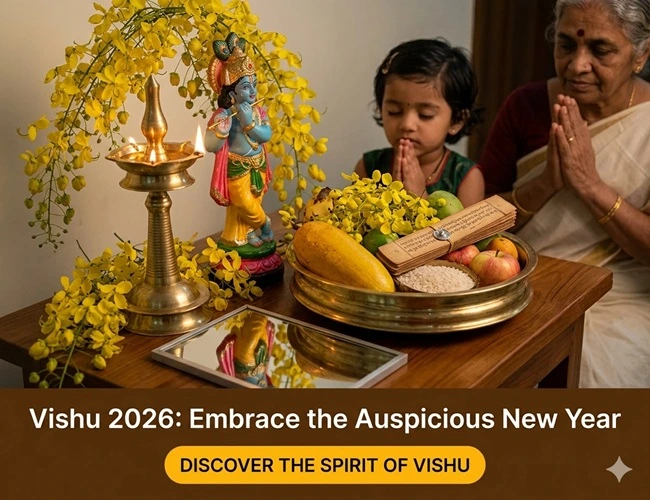
The most important ritual of Vishu is preparing the Vishukkani the night before.
It includes:
- Rice, fruits, vegetables
- Golden cucumber
- Betel leaves and nuts
- Coins and currency
- Mirror (symbolizing self-reflection)
- Holy texts like Bhagavad Gita
- Idol or image of Lord Krishna
- Traditional lamp (Nilavilakku)
This arrangement is placed in front of the deity and lit with a lamp.
On Vishu morning, family members wake up early and are guided to see the Vishukkani first, often with eyes closed until they reach the setup.
2. Vishu Kaineettam – Gift of Prosperity
After seeing Vishukkani, elders give money (coins or cash) to younger members of the family.
This tradition symbolizes:
- Sharing wealth
- Blessings for prosperity
- A gesture of goodwill
3. Vishu Sadya – Grand Festive Feast
No festival in Kerala is complete without a feast, and Vishu Sadya is a grand one.
Served on banana leaves, it includes dishes like:
- Sambar
- Avial
- Thoran
- Olan
- Pickles
- Payasam (sweet dessert)
The meal is purely vegetarian and represents abundance and gratitude.
To Get Daily Updates, Follow us on Instagram @Popnewsblend
4. Fireworks and Celebrations
Firecrackers are an important part of Vishu, especially among children. The celebrations begin early in the morning and continue throughout the day, creating a festive atmosphere.
5. Temple Visits and Prayers
Devotees visit temples early in the morning to seek blessings. Special Vishu prayers and rituals are conducted in temples across Kerala.
How is Vishu Festival Celebrated at Home?
Vishu celebrations are deeply personal and family-oriented.
Typical flow of the day:
- Early morning Vishukkani darshan
- Vishu Kaineettam exchange
- Bath and wearing new clothes
- Temple visit
- Preparing and enjoying Vishu Sadya
- Spending time with family
The entire day is about positivity, gratitude and togetherness.
Cultural Style and Dressing
On Vishu, people wear traditional attire:
- Women wear Kasavu sarees (off-white with golden borders)
- Men wear Mundu
The golden color symbolizes prosperity and is an integral part of the festival’s aesthetic.
What Should You Do on Vishu?
To make the most of Vishu:
- Start your day early with positive thoughts
- Participate in Vishukkani ritual
- Seek blessings from elders
- Wear new traditional clothes
- Donate or share with the needy
- Enjoy a festive meal with family
- Avoid negativity and arguments
Vishu Festival Wishes and Messages
Here are some heartfelt Vishu wishes you can share:
- Wishing you a Vishu filled with happiness, prosperity, and new beginnings.
- May this Vishu bring light, success, and positivity into your life.
- Let this New Year be the start of something beautiful and meaningful.
- May your home be filled with joy, peace, and abundance this Vishu.
- Sending warm Vishu wishes to you and your family for a bright and successful year ahead.
Why Vishu Still Matters in Modern Times
In today’s fast-paced world, festivals like Vishu remind us to pause, reflect, and restart. It’s not just about rituals—it’s about mindset.
Vishu teaches:
- The importance of beginnings
- The power of positivity
- The value of family traditions
- Gratitude for what we have
Conclusion
Vishu is not just a festival—it’s a celebration of hope, prosperity, and new beginnings. Rooted deeply in tradition yet relevant in modern life, it brings families together and encourages a positive start to the year.
Whether you celebrate it traditionally or simply embrace its spirit, Vishu is a beautiful reminder that every new beginning holds the promise of something wonderful.
Frequently Asked Questions (FAQs)
1. When is Vishu celebrated?
Vishu is usually celebrated on April 14 or 15 every year, marking the Malayalam New Year.
2. What is Vishukkani?
Vishukkani is the first auspicious sight seen on Vishu morning, believed to bring prosperity for the entire year.
3. Why is Vishu Kaineettam important?
It symbolizes blessings, sharing wealth, and wishing prosperity for younger family members.
4. What is special about Vishu Sadya?
It is a grand vegetarian feast served on banana leaves, representing abundance and tradition.
5. Is Vishu only celebrated in Kerala?
Primarily yes, but it is also celebrated by Malayali communities across India and worldwide.
6. What should you avoid on Vishu?
Avoid negativity, arguments, and starting the day late. The first moments of the day are considered very important.
7. What does Vishu symbolize?
It symbolizes new beginnings, prosperity, balance, and positivity.
If you’re experiencing Vishu for the first time, embrace it with an open heart. Because sometimes, all it takes is one beautiful beginning to change everything.
To get more Spiritual and Religious Updates, Follow Popnewsblend.com

Hi, I’m Prashant Jain — a film enthusiast and critic who lives and breathes cinema. From big-screen releases to the latest drops on OTT, I watch extensively and review honestly, without hype or bias.
I believe a good review should go beyond just “good” or “bad.” It should help you understand what works, what doesn’t, and whether a film is truly worth your time. My reviews focus on storytelling, performances, direction, and overall impact — all through the lens of a genuine viewer.
I regularly cover new movie releases and trending web series across OTT, bringing clear, no-nonsense insights for audiences who want real opinions, not paid praise.
Through PopNewsBlend, I aim to cut through the noise and give you reviews you can trust — whether you’re deciding what to watch next or just love discussing cinema as much as I do.
Discover more from Popnewsblend
Subscribe to get the latest posts sent to your email.
Related posts:
 International Yoga Day 2025: A Global Celebration of Mind-Body Harmony
 Roth Teej: A Sacred Jain Festival of Fasting, Devotion, and Gratitude
 Is Diwali Only a Hindu Festival? Exploring the Universal Spirit of the Festival of Lights
 Holi Celebrations in India: The Ultimate Guide for an Unforgettable Color-Filled Adventure


Good .very interesting knowledge giving by this .